Sutoko Stephanie, Masuda Akira, Kandori Akihiko, Sasaguri Hiroki, Saito Takashi, Saido Takaomi C, Funane Tsukasa
Hitachi, Ltd, Research and Development Group, Center for Exploratory Research, Kokubunji, Tokyo 185-8601, Japan.
Laboratory for Proteolytic Neuroscience, RIKEN Center for Brain Science, Wako, Saitama 351-0198, Japan.
iScience. 2021 Feb 16;24(3):102198. doi: 10.1016/j.isci.2021.102198. eCollection 2021 Mar 19.
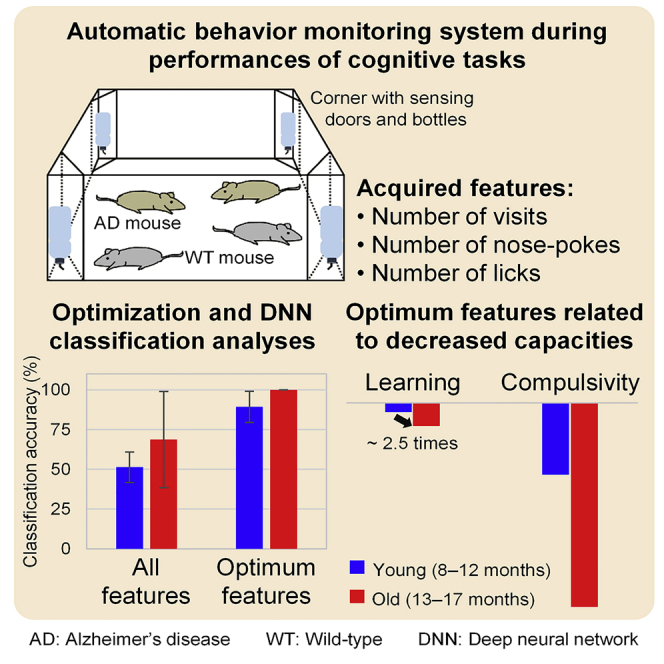
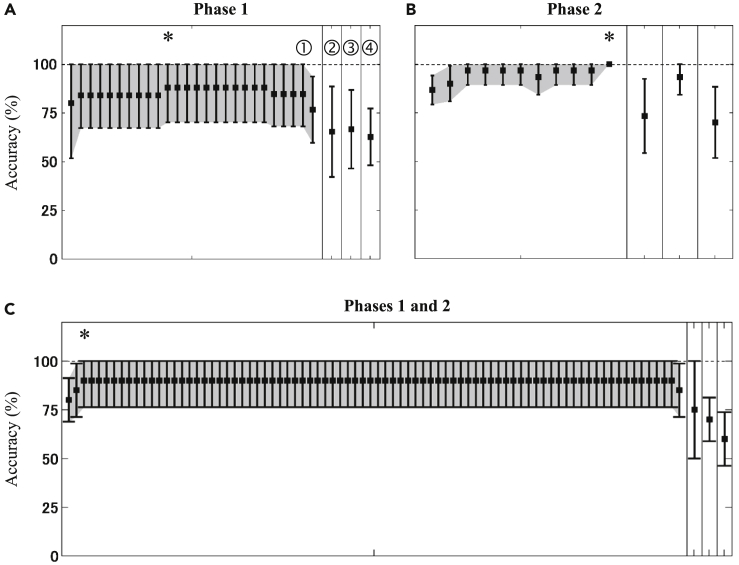
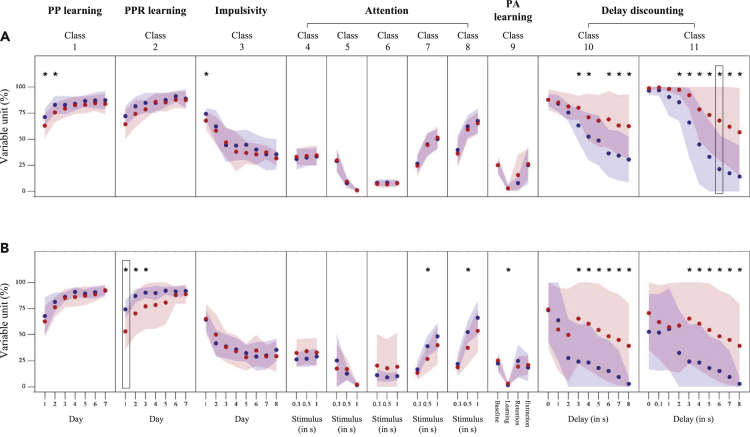
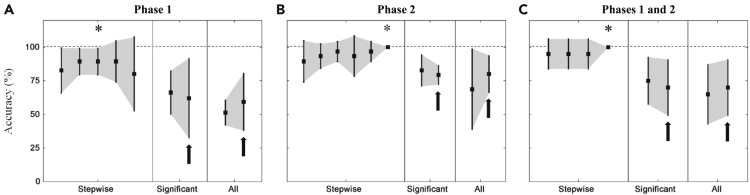
Alzheimer's disease (AD) is a worldwide burden. Diagnosis is complicated by the fact that AD is asymptomatic at an early stage. Studies using AD-modeled animals offer important and useful insights. Here, we classified mice with a high risk of AD at a preclinical stage by using only their behaviors. Wild-type and knock-in AD-modeled ( ) mice were raised, and their cognitive behaviors were assessed in an automated monitoring system. The classification utilized a machine learning method, i.e., a deep neural network, together with optimized stepwise feature selection and cross-validation. The AD risk could be identified on the basis of compulsive and learning behaviors (89.3% ± 9.8% accuracy) shown by AD-modeled mice in the early age (i.e., 8-12 months old) when the AD symptomatic cognitions were relatively underdeveloped. This finding reveals the advantage of machine learning in unveiling the importance of compulsive and learning behaviors for early AD diagnosis in mice.
阿尔茨海默病(AD)是一项全球性负担。由于AD在早期阶段没有症状,其诊断较为复杂。使用AD模型动物的研究提供了重要且有用的见解。在此,我们仅通过小鼠的行为对处于临床前阶段的高AD风险小鼠进行分类。饲养野生型和基因敲入AD模型( )小鼠,并在自动监测系统中评估它们的认知行为。该分类采用了一种机器学习方法,即深度神经网络,同时结合了优化的逐步特征选择和交叉验证。在AD症状性认知相对未充分发展的早期阶段(即8至12个月大),基于AD模型小鼠表现出的强迫行为和学习行为(准确率为89.3%±9.8%)能够识别AD风险。这一发现揭示了机器学习在揭示强迫行为和学习行为对小鼠早期AD诊断的重要性方面的优势。