Jo Taeho, Nho Kwangsik, Saykin Andrew J
Department of Radiology and Imaging Sciences, Center for Neuroimaging, Indiana University School of Medicine, Indianapolis, IN, United States.
Indiana Alzheimer Disease Center, Indiana University School of Medicine, Indianapolis, IN, United States.
Front Aging Neurosci. 2019 Aug 20;11:220. doi: 10.3389/fnagi.2019.00220. eCollection 2019.
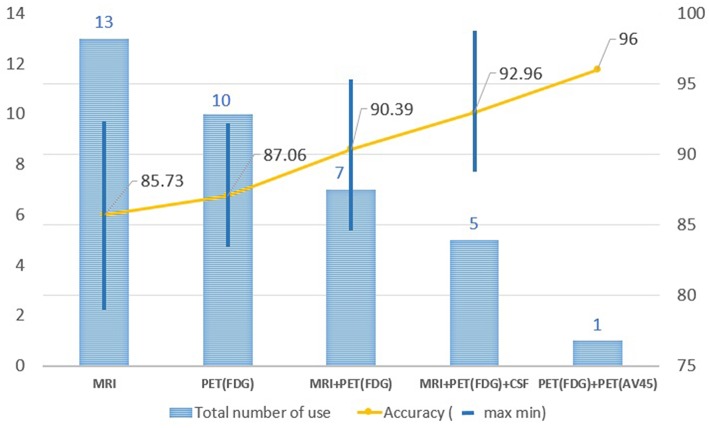
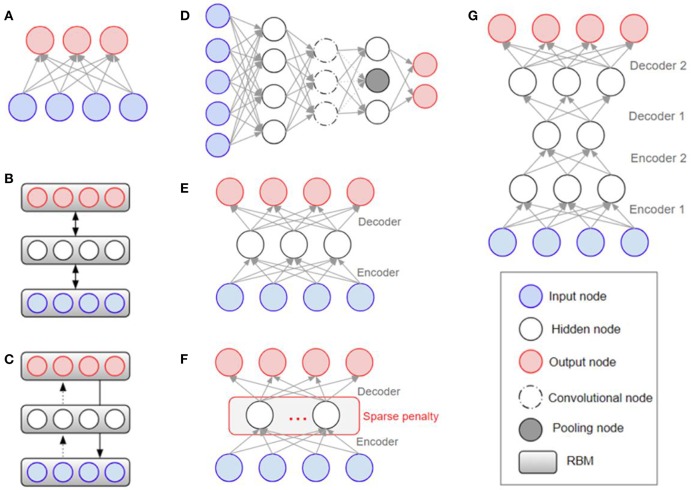
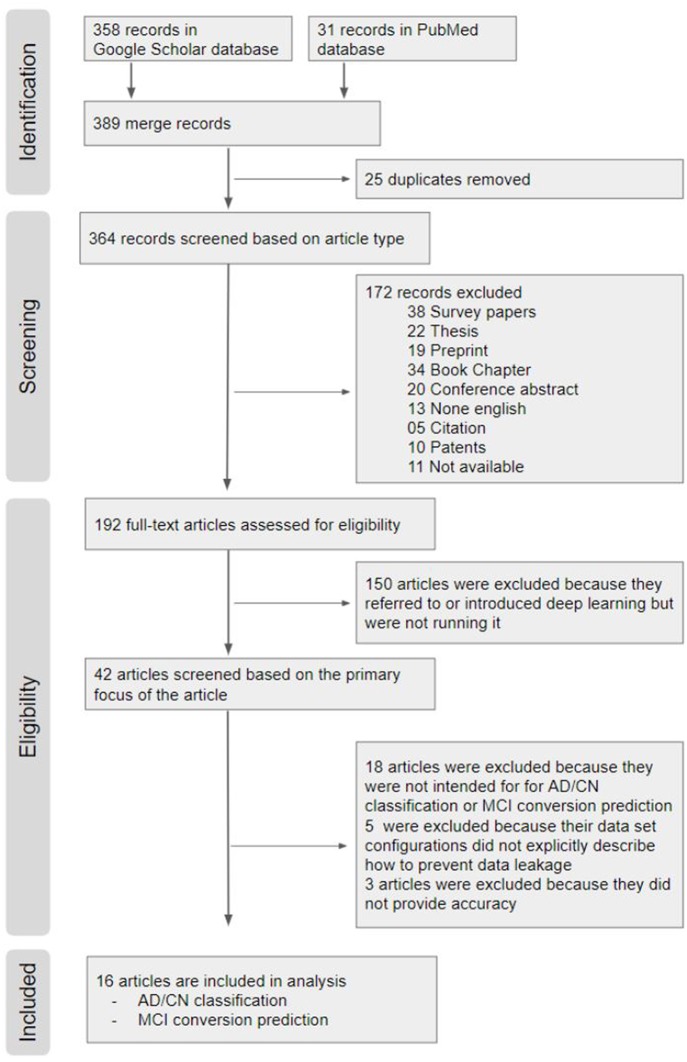
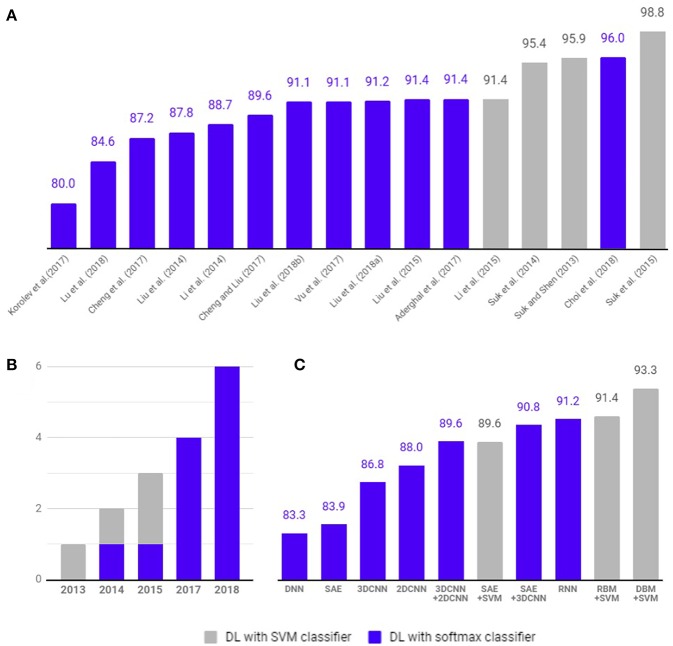
Deep learning, a state-of-the-art machine learning approach, has shown outstanding performance over traditional machine learning in identifying intricate structures in complex high-dimensional data, especially in the domain of computer vision. The application of deep learning to early detection and automated classification of Alzheimer's disease (AD) has recently gained considerable attention, as rapid progress in neuroimaging techniques has generated large-scale multimodal neuroimaging data. A systematic review of publications using deep learning approaches and neuroimaging data for diagnostic classification of AD was performed. A PubMed and Google Scholar search was used to identify deep learning papers on AD published between January 2013 and July 2018. These papers were reviewed, evaluated, and classified by algorithm and neuroimaging type, and the findings were summarized. Of 16 studies meeting full inclusion criteria, 4 used a combination of deep learning and traditional machine learning approaches, and 12 used only deep learning approaches. The combination of traditional machine learning for classification and stacked auto-encoder (SAE) for feature selection produced accuracies of up to 98.8% for AD classification and 83.7% for prediction of conversion from mild cognitive impairment (MCI), a prodromal stage of AD, to AD. Deep learning approaches, such as convolutional neural network (CNN) or recurrent neural network (RNN), that use neuroimaging data without pre-processing for feature selection have yielded accuracies of up to 96.0% for AD classification and 84.2% for MCI conversion prediction. The best classification performance was obtained when multimodal neuroimaging and fluid biomarkers were combined. Deep learning approaches continue to improve in performance and appear to hold promise for diagnostic classification of AD using multimodal neuroimaging data. AD research that uses deep learning is still evolving, improving performance by incorporating additional hybrid data types, such as-omics data, increasing transparency with explainable approaches that add knowledge of specific disease-related features and mechanisms.
深度学习作为一种先进的机器学习方法,在识别复杂高维数据中的精细结构方面,相较于传统机器学习展现出了卓越的性能,尤其是在计算机视觉领域。随着神经成像技术的快速发展产生了大规模多模态神经成像数据,深度学习在阿尔茨海默病(AD)早期检测和自动分类中的应用最近受到了广泛关注。我们对使用深度学习方法和神经成像数据进行AD诊断分类的出版物进行了系统综述。通过PubMed和谷歌学术搜索,识别出2013年1月至2018年7月间发表的关于AD的深度学习论文。这些论文按照算法和神经成像类型进行了审查、评估和分类,并总结了研究结果。在16项符合完全纳入标准的研究中,4项使用了深度学习与传统机器学习方法相结合的方式,12项仅使用了深度学习方法。将传统机器学习用于分类,堆叠自编码器(SAE)用于特征选择,AD分类准确率高达98.8%,预测从轻度认知障碍(MCI,AD的前驱阶段)转变为AD的准确率为83.7%。深度学习方法,如卷积神经网络(CNN)或循环神经网络(RNN),在不进行特征选择预处理的情况下使用神经成像数据,AD分类准确率高达96.0%,MCI转变预测准确率为84.2%。当多模态神经成像和血液生物标志物相结合时,获得了最佳分类性能。深度学习方法的性能持续提升,对于使用多模态神经成像数据进行AD诊断分类似乎很有前景。使用深度学习的AD研究仍在不断发展,通过纳入额外的混合数据类型(如组学数据)来提高性能,通过可解释的方法增加透明度,这些方法补充了特定疾病相关特征和机制的知识。