• 文献检索
  • 文档翻译
  • 深度研究
  • 学术资讯
  • Suppr Zotero 插件Zotero 插件
  • 邀请有礼
  • 套餐&价格
  • 历史记录
应用&插件
Suppr Zotero 插件Zotero 插件浏览器插件Mac 客户端Windows 客户端微信小程序
定价
高级版会员购买积分包购买API积分包
服务
文献检索文档翻译深度研究API 文档MCP 服务
关于我们
关于 Suppr公司介绍联系我们用户协议隐私条款
关注我们

Suppr 超能文献

核心技术专利:CN118964589B侵权必究
粤ICP备2023148730 号-1Suppr @ 2026

文献检索

告别复杂PubMed语法,用中文像聊天一样搜索,搜遍4000万医学文献。AI智能推荐,让科研检索更轻松。

立即免费搜索

文件翻译

保留排版,准确专业,支持PDF/Word/PPT等文件格式,支持 12+语言互译。

免费翻译文档

深度研究

AI帮你快速写综述,25分钟生成高质量综述,智能提取关键信息,辅助科研写作。

立即免费体验

用于分诊和诊断目的的人工智能与人类医生的比较

A Comparison of Artificial Intelligence and Human Doctors for the Purpose of Triage and Diagnosis.

作者信息

Baker Adam, Perov Yura, Middleton Katherine, Baxter Janie, Mullarkey Daniel, Sangar Davinder, Butt Mobasher, DoRosario Arnold, Johri Saurabh

机构信息

Babylon Health, London, United Kingdom.

Northeast Medical Group, Yale New Haven Health, New Haven, CT, United States.

出版信息

Front Artif Intell. 2020 Nov 30;3:543405. doi: 10.3389/frai.2020.543405. eCollection 2020.

DOI:10.3389/frai.2020.543405
PMID:33733203
原文链接:https://pmc.ncbi.nlm.nih.gov/articles/PMC7861270/
Abstract

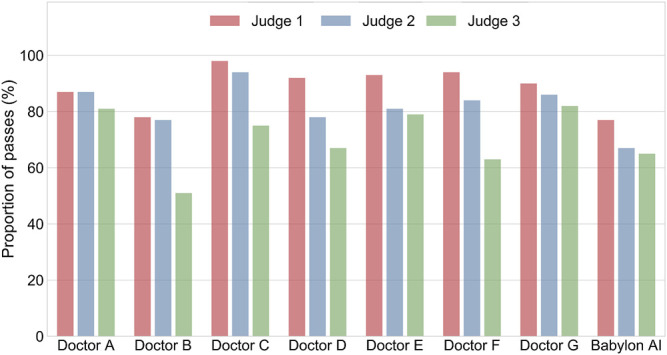
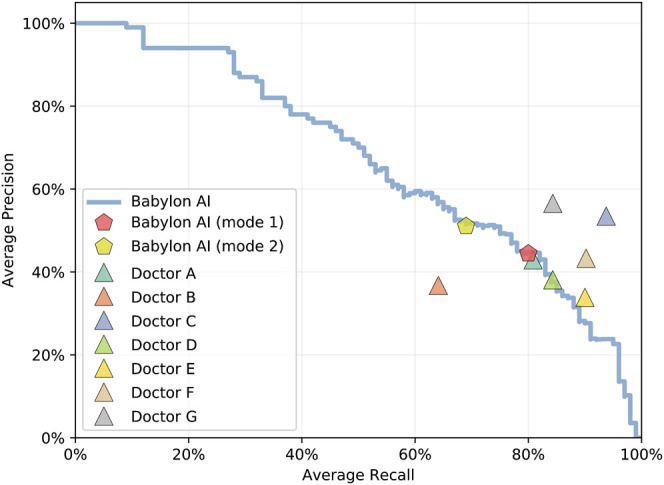
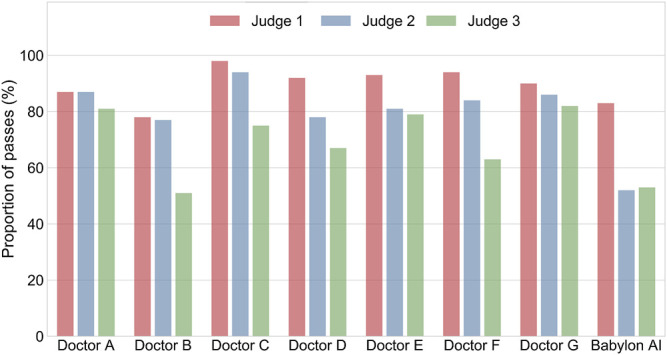
AI virtual assistants have significant potential to alleviate the pressure on overly burdened healthcare systems by enabling patients to self-assess their symptoms and to seek further care when appropriate. For these systems to make a meaningful contribution to healthcare globally, they must be trusted by patients and healthcare professionals alike, and service the needs of patients in diverse regions and segments of the population. We developed an AI virtual assistant which provides patients with triage and diagnostic information. Crucially, the system is based on a generative model, which allows for relatively straightforward re-parameterization to reflect local disease and risk factor burden in diverse regions and population segments. This is an appealing property, particularly when considering the potential of AI systems to improve the provision of healthcare on a global scale in many regions and for both developing and developed countries. We performed a prospective validation study of the accuracy and safety of the AI system and human doctors. Importantly, we assessed the accuracy and safety of both the AI and human doctors independently against identical clinical cases and, unlike previous studies, also accounted for the information gathering process of both agents. Overall, we found that the AI system is able to provide patients with triage and diagnostic information with a level of clinical accuracy and safety comparable to that of human doctors. Through this approach and study, we hope to start building trust in AI-powered systems by directly comparing their performance to human doctors, who do not always agree with each other on the cause of patients' symptoms or the most appropriate triage recommendation.

摘要

人工智能虚拟助手有巨大潜力减轻负担过重的医疗系统的压力,通过让患者能够自我评估症状并在适当的时候寻求进一步治疗。为使这些系统能对全球医疗保健做出有意义的贡献,它们必须得到患者和医疗专业人员的信任,并满足不同地区和人群的患者需求。我们开发了一种人工智能虚拟助手,它能为患者提供分诊和诊断信息。关键的是,该系统基于生成模型,这使得相对直接的重新参数化成为可能,以反映不同地区和人群中的当地疾病和风险因素负担。这是一个有吸引力的特性,尤其是考虑到人工智能系统在全球许多地区,无论是发展中国家还是发达国家,改善医疗保健服务的潜力时。我们对该人工智能系统和人类医生的准确性和安全性进行了前瞻性验证研究。重要的是,我们针对相同的临床病例独立评估了人工智能和人类医生的准确性和安全性,并且与以往研究不同的是,我们还考虑了两者的信息收集过程。总体而言,我们发现该人工智能系统能够为患者提供分诊和诊断信息,其临床准确性和安全性与人类医生相当。通过这种方法和研究,我们希望通过将人工智能驱动系统的性能与人类医生直接比较来开始建立对它们的信任,因为人类医生在患者症状的病因或最合适的分诊建议上并不总是意见一致。
https://cdn.ncbi.nlm.nih.gov/pmc/blobs/a5d1/7861270/89aa33936967/frai-03-543405-g004.jpg
https://cdn.ncbi.nlm.nih.gov/pmc/blobs/a5d1/7861270/fb91de689896/frai-03-543405-g001.jpg
https://cdn.ncbi.nlm.nih.gov/pmc/blobs/a5d1/7861270/213e735f8a66/frai-03-543405-g002.jpg
https://cdn.ncbi.nlm.nih.gov/pmc/blobs/a5d1/7861270/fe4e1daf052c/frai-03-543405-g003.jpg
https://cdn.ncbi.nlm.nih.gov/pmc/blobs/a5d1/7861270/89aa33936967/frai-03-543405-g004.jpg
https://cdn.ncbi.nlm.nih.gov/pmc/blobs/a5d1/7861270/fb91de689896/frai-03-543405-g001.jpg
https://cdn.ncbi.nlm.nih.gov/pmc/blobs/a5d1/7861270/213e735f8a66/frai-03-543405-g002.jpg
https://cdn.ncbi.nlm.nih.gov/pmc/blobs/a5d1/7861270/fe4e1daf052c/frai-03-543405-g003.jpg
https://cdn.ncbi.nlm.nih.gov/pmc/blobs/a5d1/7861270/89aa33936967/frai-03-543405-g004.jpg

相似文献

1
A Comparison of Artificial Intelligence and Human Doctors for the Purpose of Triage and Diagnosis.用于分诊和诊断目的的人工智能与人类医生的比较
Front Artif Intell. 2020 Nov 30;3:543405. doi: 10.3389/frai.2020.543405. eCollection 2020.
2
Artificial intelligence in healthcare: Complementing, not replacing, doctors and healthcare providers.医疗保健领域的人工智能:辅助医生和医疗服务提供者,而非取而代之。
Digit Health. 2023 Jul 2;9:20552076231186520. doi: 10.1177/20552076231186520. eCollection 2023 Jan-Dec.
3
Trust in artificial intelligence for medical diagnoses.对人工智能在医学诊断中的信任。
Prog Brain Res. 2020;253:263-282. doi: 10.1016/bs.pbr.2020.06.006. Epub 2020 Jul 2.
4
Longitudinal Changes in Diagnostic Accuracy of a Differential Diagnosis List Developed by an AI-Based Symptom Checker: Retrospective Observational Study.基于人工智能的症状检查器生成的鉴别诊断列表诊断准确性的纵向变化:回顾性观察研究
JMIR Form Res. 2024 May 17;8:e53985. doi: 10.2196/53985.
5
Artificial Intelligence-Based Triage for Patients with Acute Abdominal Pain in Emergency Department; a Diagnostic Accuracy Study.基于人工智能的急诊科急性腹痛患者分诊:一项诊断准确性研究。
Adv J Emerg Med. 2017 Oct 21;1(1):e5. doi: 10.22114/AJEM.v1i1.11. eCollection 2017 Fall.
6
Artificial Intelligence-Based Application Provides Accurate Medical Triage Advice When Compared to Consensus Decisions of Healthcare Providers.与医疗保健提供者的共识决策相比,基于人工智能的应用程序能提供准确的医疗分诊建议。
Cureus. 2021 Aug 6;13(8):e16956. doi: 10.7759/cureus.16956. eCollection 2021 Aug.
7
Patient Perspectives on the Usefulness of an Artificial Intelligence-Assisted Symptom Checker: Cross-Sectional Survey Study.患者对人工智能辅助症状检查器有用性的看法:横断面调查研究
J Med Internet Res. 2020 Jan 30;22(1):e14679. doi: 10.2196/14679.
8
The first use of artificial intelligence (AI) in the ER: triage not diagnosis.急诊中人工智能(AI)的首次应用:分诊而非诊断。
Emerg Radiol. 2020 Aug;27(4):361-366. doi: 10.1007/s10140-020-01773-6. Epub 2020 Jul 8.
9
Public Perception of Artificial Intelligence in Medical Care: Content Analysis of Social Media.公众对医疗人工智能的看法:社交媒体的内容分析。
J Med Internet Res. 2020 Jul 13;22(7):e16649. doi: 10.2196/16649.
10
Artificial intelligence to diagnose ischemic stroke and identify large vessel occlusions: a systematic review.人工智能诊断缺血性卒中和识别大血管闭塞:系统评价。
J Neurointerv Surg. 2020 Feb;12(2):156-164. doi: 10.1136/neurintsurg-2019-015135. Epub 2019 Oct 8.

引用本文的文献

1
Knowledge, awareness and attitude of healthcare professionals toward the use of ChatGpt: A cross-sectional study.医疗保健专业人员对ChatGpt使用的知识、认知和态度:一项横断面研究。
J Educ Health Promot. 2025 Jul 31;14:304. doi: 10.4103/jehp.jehp_1699_24. eCollection 2025.
2
Diagnostic Prediction Models for Primary Care, Based on AI and Electronic Health Records: Systematic Review.基于人工智能和电子健康记录的基层医疗诊断预测模型:系统评价
JMIR Med Inform. 2025 Aug 22;13:e62862. doi: 10.2196/62862.
3
A bibliometric analysis of clinical studies on artificial intelligence in emergency medicine.

本文引用的文献

1
What is the clinical value of mHealth for patients?移动健康对患者的临床价值是什么?
NPJ Digit Med. 2020 Jan 13;3:4. doi: 10.1038/s41746-019-0206-x. eCollection 2020.
2
Symptom checkers versus doctors: A prospective, head-to-head comparison for cough.症状检查工具与医生的对比:针对咳嗽的前瞻性直接比较
Clin Respir J. 2020 Apr;14(4):413-415. doi: 10.1111/crj.13135. Epub 2020 Jan 4.
3
A fairer way forward for AI in health care.医疗保健领域人工智能更公平的发展之路。
急诊医学中人工智能临床研究的文献计量分析
Medicine (Baltimore). 2025 Jul 11;104(28):e43282. doi: 10.1097/MD.0000000000043282.
4
Using Machine Learning Technique in Managing Emergency Triage Flow.在管理急诊分诊流程中运用机器学习技术
Acta Inform Med. 2025;33(2):152-157. doi: 10.5455/aim.2025.33.152-157.
5
Navigating the Transformative Impact of Artificial Intelligence in Health Services Research.探索人工智能在卫生服务研究中的变革性影响。
Health Sci Rep. 2025 Jun 4;8(6):e70793. doi: 10.1002/hsr2.70793. eCollection 2025 Jun.
6
Influences on trust in the use of AI-based triage-an interview study with primary healthcare professionals and patients in Sweden.对基于人工智能的分诊使用中信任度的影响——一项对瑞典初级医疗保健专业人员和患者的访谈研究
Front Digit Health. 2025 May 20;7:1565080. doi: 10.3389/fdgth.2025.1565080. eCollection 2025.
7
Opportunities for Artificial Intelligence in Operational Medicine: Lessons from the United States Military.作战医学中人工智能的机遇:来自美国军方的经验教训。
Bioengineering (Basel). 2025 May 14;12(5):519. doi: 10.3390/bioengineering12050519.
8
From Promise to Practice: Harnessing AI's Power to Transform Medicine.从承诺到实践:利用人工智能的力量变革医学
J Clin Med. 2025 Feb 13;14(4):1225. doi: 10.3390/jcm14041225.
9
Mapping and Summarizing the Research on AI Systems for Automating Medical History Taking and Triage: Scoping Review.绘制并总结用于自动采集病史和分诊的人工智能系统的研究:范围综述
J Med Internet Res. 2025 Feb 6;27:e53741. doi: 10.2196/53741.
10
Navigation as a system approach: A qualitative descriptive study to inform a statewide cancer navigation approach in Australia.作为一种系统方法的导航:一项定性描述性研究,旨在为澳大利亚全州范围的癌症导航方法提供信息。
Support Care Cancer. 2025 Feb 6;33(3):155. doi: 10.1007/s00520-025-09201-6.
Nature. 2019 Sep;573(7775):S103-S105. doi: 10.1038/d41586-019-02872-2.
4
Potential of Mobile Health Technology to Reduce Health Disparities in Underserved Communities.移动医疗技术在减少服务不足社区健康差距方面的潜力。
West J Emerg Med. 2019 Aug 6;20(5):799-802. doi: 10.5811/westjem.2019.6.41911.
5
GP at hand: a digital revolution for health care provision?随时可用的全科医生:医疗服务的数字革命?
Lancet. 2019 Aug 10;394(10197):457-460. doi: 10.1016/S0140-6736(19)31802-1. Epub 2019 Aug 8.
6
Digital and online symptom checkers and health assessment/triage services for urgent health problems: systematic review.用于紧急健康问题的数字和在线症状检查器以及健康评估/分诊服务:系统评价
BMJ Open. 2019 Aug 1;9(8):e027743. doi: 10.1136/bmjopen-2018-027743.
7
WHO and ITU establish benchmarking process for artificial intelligence in health.世界卫生组织和国际电信联盟为卫生领域的人工智能建立基准流程。
Lancet. 2019 Jul 6;394(10192):9-11. doi: 10.1016/S0140-6736(19)30762-7. Epub 2019 Mar 29.
8
Safety of patient-facing digital symptom checkers.面向患者的数字症状检查器的安全性。
Lancet. 2018 Nov 24;392(10161):2263-2264. doi: 10.1016/S0140-6736(18)32819-8. Epub 2018 Nov 6.
9
The Application of Medical Artificial Intelligence Technology in Rural Areas of Developing Countries.医学人工智能技术在发展中国家农村地区的应用
Health Equity. 2018 Aug 1;2(1):174-181. doi: 10.1089/heq.2018.0037. eCollection 2018.
10
Artificial intelligence (AI) and global health: how can AI contribute to health in resource-poor settings?人工智能与全球健康:人工智能如何助力资源匮乏地区的健康事业?
BMJ Glob Health. 2018 Aug 29;3(4):e000798. doi: 10.1136/bmjgh-2018-000798. eCollection 2018.