Department of Economics and Statistics, University of Napoli, Naples, Italy.
Faculty of Philosophy, Philosophy of Science and the Study of Religion, LMU Munich, Munich, Germany.
Med Health Care Philos. 2021 Sep;24(3):329-340. doi: 10.1007/s11019-021-10007-6. Epub 2021 Mar 17.
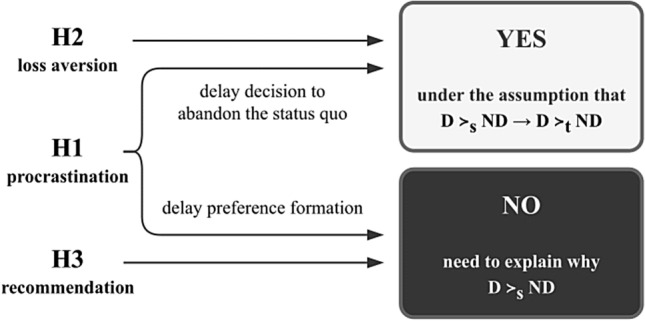
An effective method to increase the number of potential cadaveric organ donors is to make people donors by default with the option to opt out. This non-coercive public policy tool to influence people's choices is often justified on the basis of the as-judged-by-themselves principle: people are nudged into choosing what they themselves truly want. We review three often hypothesized reasons for why defaults work and argue that the as-judged-by-themselves principle may hold only in two of these cases. We specify further conditions for when the principle can hold in these cases and show that whether those conditions are met is often unclear. We recommend ways to expand nationwide surveys to identify the actual reasons for why defaults work and discuss mandated choice policy as a viable solution to many arising conundrums.
增加潜在尸体器官捐赠者数量的有效方法是默认将人们设定为捐赠者,并有选择退出的权利。这种非强制性的公共政策工具,用于影响人们的选择,通常基于“自行判断”原则:人们被引导做出自己真正想要的选择。我们回顾了默认选项起作用的三个常见假设原因,并认为“自行判断”原则可能仅适用于其中两种情况。我们进一步明确了在这些情况下原则适用的条件,并指出这些条件是否满足通常并不清楚。我们建议通过扩大全国性调查来确定默认选项起作用的实际原因,并讨论强制性选择政策作为解决许多出现的难题的可行解决方案。