Raithel Clara U, Gottfried Jay A
Department of Neurology.
Behav Neurosci. 2021 Apr;135(2):218-225. doi: 10.1037/bne0000453. Epub 2021 Mar 18.
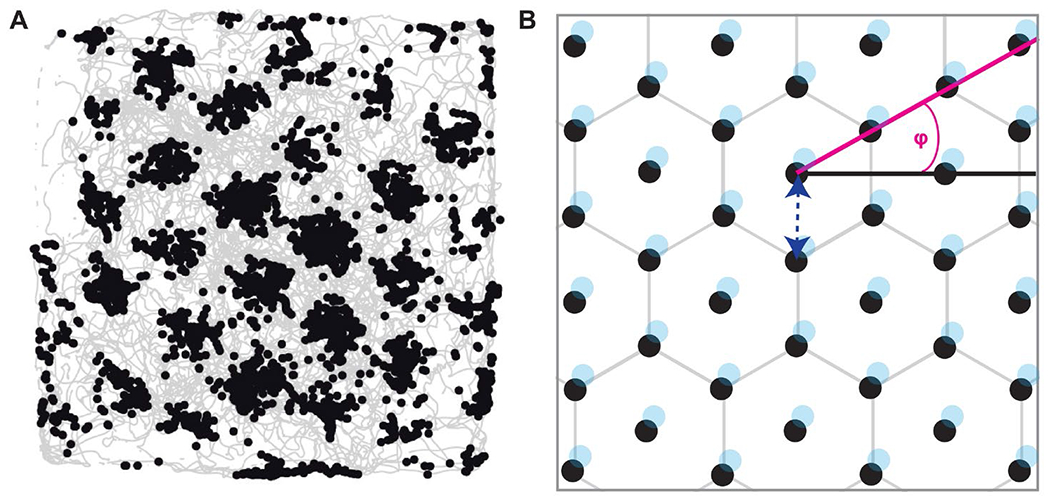
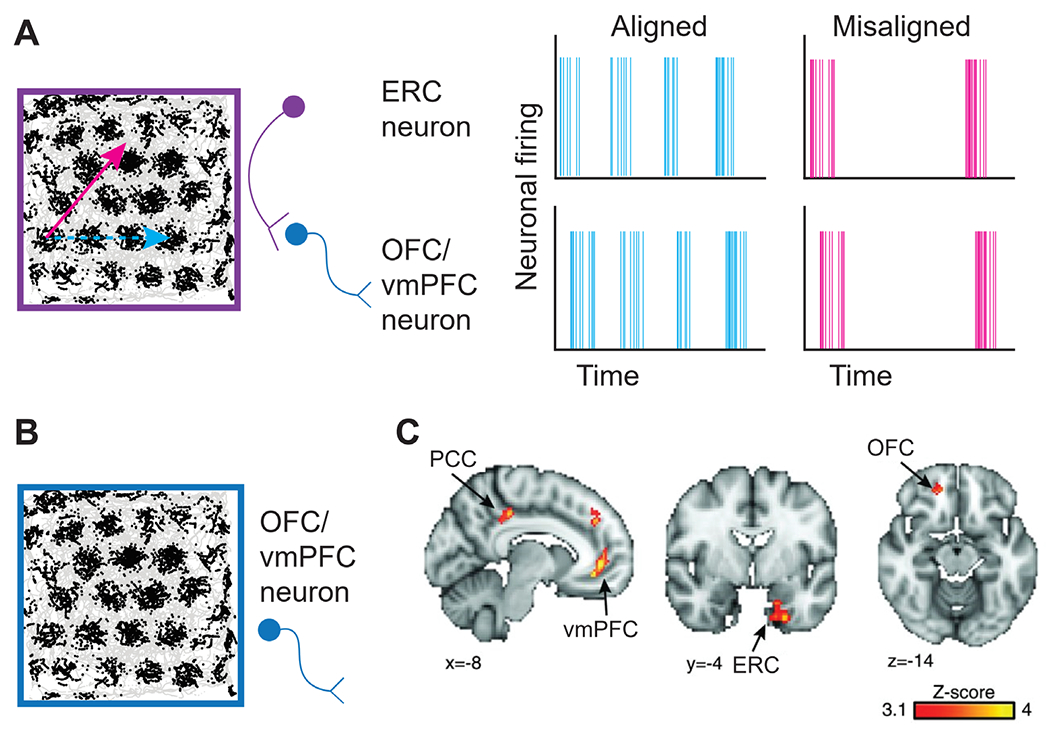
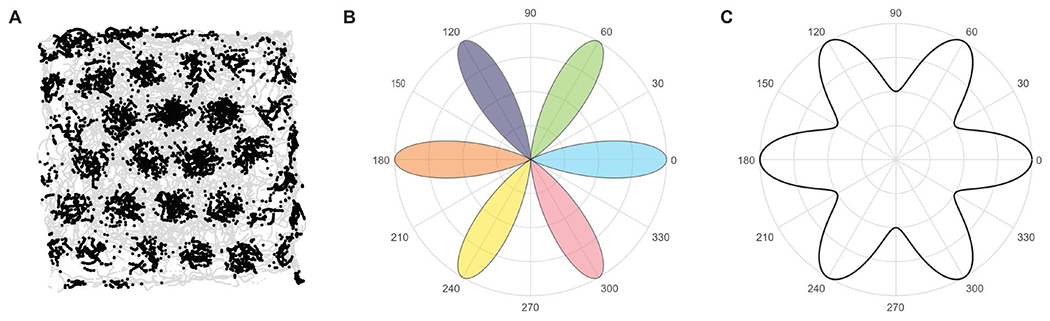
In 2005, the Moser group identified a new type of cell in the entorhinal cortex (ERC): the grid cell (Hafting, 2005, pp. 801-806). A landmark series of studies from these investigators showed that grid cells support spatial navigation by encoding position, direction as well as distance information, and they subsequently found grid cells in pre- and para-subiculum areas adjacent to the ERC (Boccara, 2010, pp. 987-994). Fast forward to 2010, when some clever investigators developed fMRI analysis methods to document grid-like responses in the human ERC (Doeller, , 463, 2010, pp. 657-661). What was not at all expected was the co-identification of grid-like fMRI responses outside of the ERC, in particular, the orbitofrontal cortex (OFC) and the ventromedial prefrontal cortex (vmPFC). Here we provide a compact overview of the burgeoning literature on grid cells in both rodent and human species, while considering the intriguing question: what are grid-like responses doing in the OFC and vmPFC? (PsycInfo Database Record (c) 2021 APA, all rights reserved).
2005年,莫泽团队在内嗅皮质(ERC)中发现了一种新型细胞:网格细胞(哈夫廷,2005年,第801 - 806页)。这些研究人员进行的一系列具有里程碑意义的研究表明,网格细胞通过编码位置、方向以及距离信息来支持空间导航,随后他们在与ERC相邻的前下托和旁下托区域也发现了网格细胞(博卡拉,2010年,第987 - 994页)。快进到2010年,一些聪明的研究人员开发了功能磁共振成像(fMRI)分析方法来记录人类ERC中的网格状反应(多勒尔,2010年,第463卷,第657 - 661页)。完全出乎意料的是,在ERC之外,特别是眶额皮质(OFC)和腹内侧前额叶皮质(vmPFC)也共同发现了类似网格的fMRI反应。在此,我们简要概述一下关于啮齿动物和人类物种中网格细胞的新兴文献,同时思考一个有趣的问题:OFC和vmPFC中的类似网格的反应有什么作用?(《心理学文摘数据库记录》(c)2021美国心理学会,保留所有权利)