Department of Nephrology, Japanese Red Cross Medical Center, 4-1-22 Hiroo, Shibuya, Tokyo, 150-8935, Japan.
Department of Internal Medicine and Rehabilitation Science, Tohoku University Graduate School of Medicine, 1-1 Seiryomachi, Aoba, Sendai, Miyagi, 980-8574, Japan.
BMC Nephrol. 2021 Mar 18;22(1):98. doi: 10.1186/s12882-021-02289-y.
The prevalence of osteopenia and osteoporosis is higher in patients with chronic kidney disease than that in the general population. Although physical exercise prevents bone loss in hemodialysis (HD) patients, previous studies have not focused on peritoneal dialysis (PD) patients. Therefore, we aimed to evaluate the effects of home-based exercise on bone mineral density (BMD) in patients with PD.
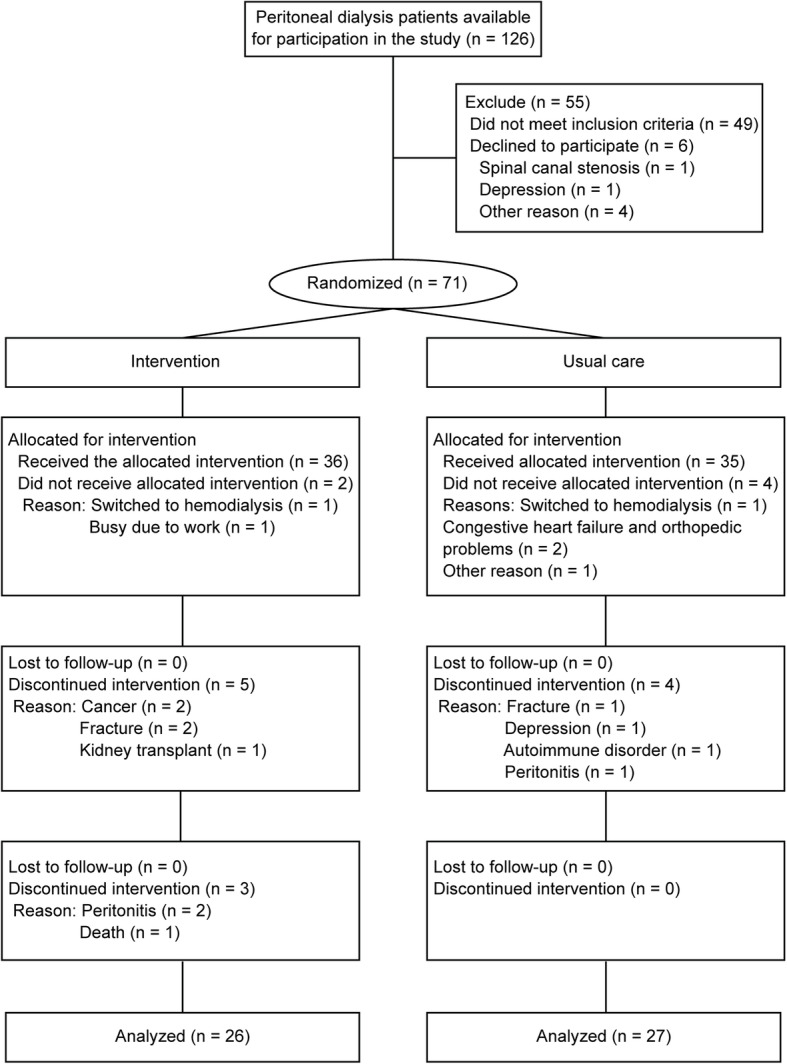
Stable outpatients undergoing PD were randomly assigned to the intervention group (n = 26; male, 20; median age, 66 years) or usual-care group (n = 27; male, 21; median age, 64 years). Patients in the intervention group performed home-based exercises (resistance exercise, stretching, and aerobic exercise such as walking) for 6 months, whereas those in the usual-care group performed stretching and their usual physical activity. Based on dual X-ray absorptiometry, the primary outcomes were the BMD data of the lumbar spine and proximal femoral neck. Secondary outcomes included physical function and physical activity. Pre- and post-intervention values were compared.
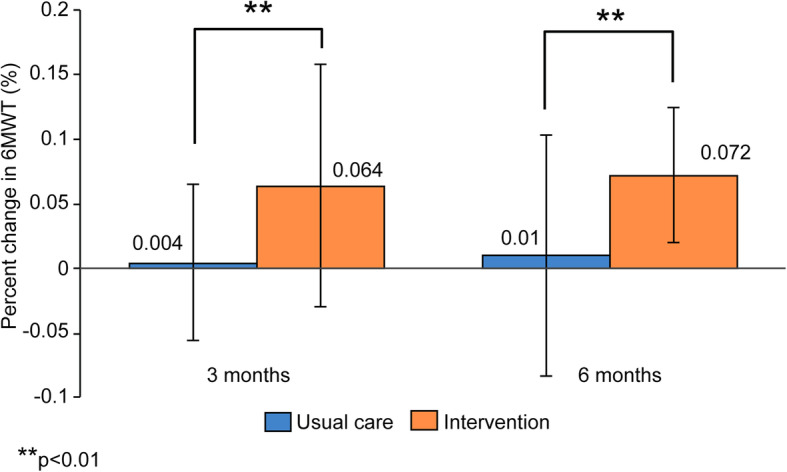
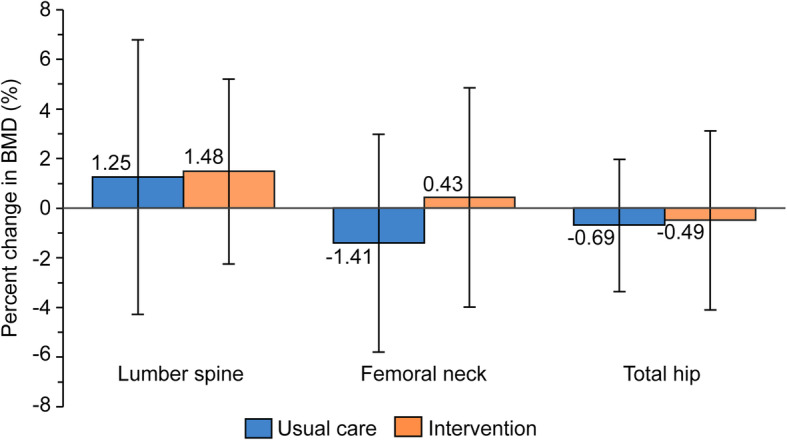
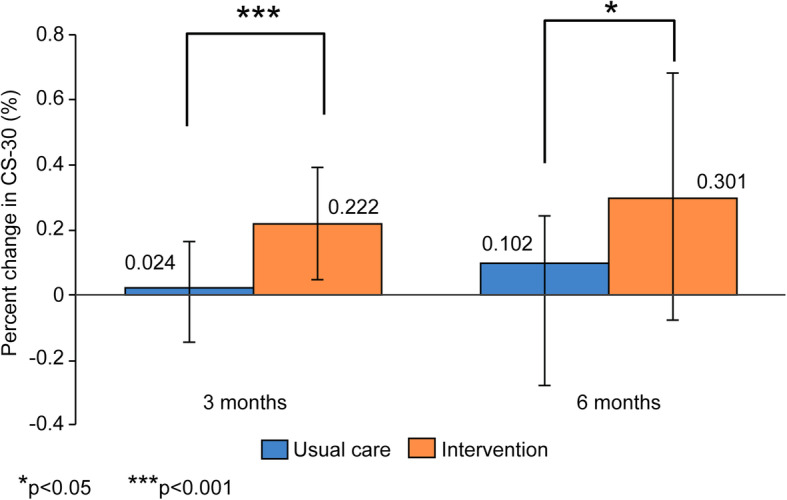
There was no significant within-group change in the BMD of the lumbar spine, femoral neck, and hip after 6 months of the exercise program. The intervention group had significantly improved 30-s chair-stand test, 6-min walk test, and physical activity results.
Home-based exercises in patients with PD did not improve BMD at any of the sites evaluated. Improvement in physical function and physical activity may reduce the risk of falls in patients with PD.
UMIN Clinical Trials Registry, UMIN000041678 . Registered September 4, 2020; retrospectively registered.
与普通人群相比,慢性肾脏病患者的骨量减少和骨质疏松症的患病率更高。尽管体育锻炼可预防血液透析(HD)患者的骨质流失,但以前的研究并未关注腹膜透析(PD)患者。因此,我们旨在评估家庭运动对 PD 患者骨矿物质密度(BMD)的影响。
稳定的 PD 门诊患者被随机分配到干预组(n = 26;男性,20;中位年龄,66 岁)或常规护理组(n = 27;男性,21;中位年龄,64 岁)。干预组患者进行家庭运动(阻力运动、伸展运动和有氧运动,如步行)6 个月,而常规护理组患者仅进行伸展运动和常规体力活动。根据双能 X 线吸收法,主要结局是腰椎和股骨近端颈的 BMD 数据。次要结局包括身体功能和身体活动。比较干预前后的值。
运动方案 6 个月后,腰椎、股骨颈和髋部的 BMD 无显著的组内变化。干预组 30 秒坐立试验、6 分钟步行试验和身体活动结果显著改善。
PD 患者的家庭运动并未改善评估的任何部位的 BMD。身体功能和身体活动的改善可能会降低 PD 患者跌倒的风险。
UMIN 临床试验注册,UMIN000041678。2020 年 9 月 4 日注册;回顾性注册。