Department of Chemical and Biological Engineering, University of Idaho, 875 Perimeter Dr. MC1122, Moscow, ID, 83844, USA.
Department of Mechanical Engineering, Conquer Chiari Research Center, University of Akron, Akron, OH, 44325, USA.
Fluids Barriers CNS. 2021 Mar 18;18(1):12. doi: 10.1186/s12987-021-00246-3.
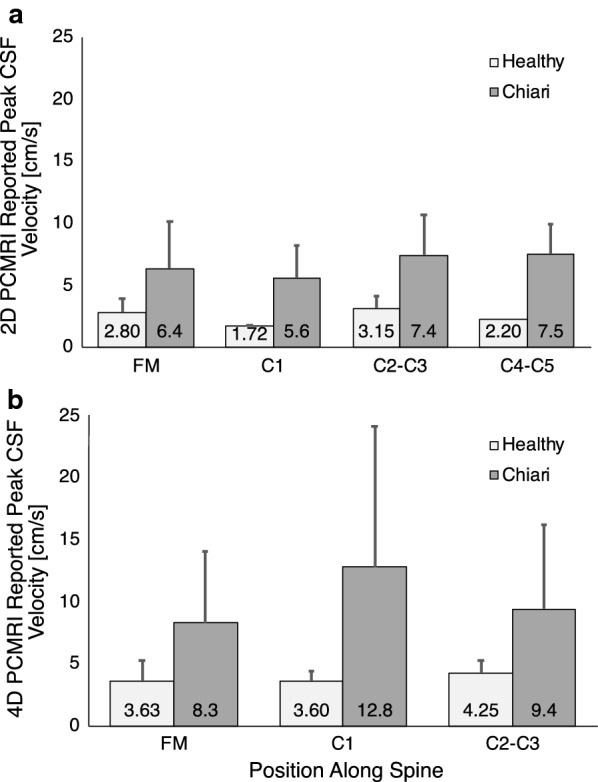
Phase contrast magnetic resonance imaging, PC MRI, is a valuable tool allowing for non-invasive quantification of CSF dynamics, but has lacked adoption in clinical practice for Chiari malformation diagnostics. To improve these diagnostic practices, a better understanding of PC MRI based measurement agreement, repeatability, and reproducibility of CSF dynamics is needed.
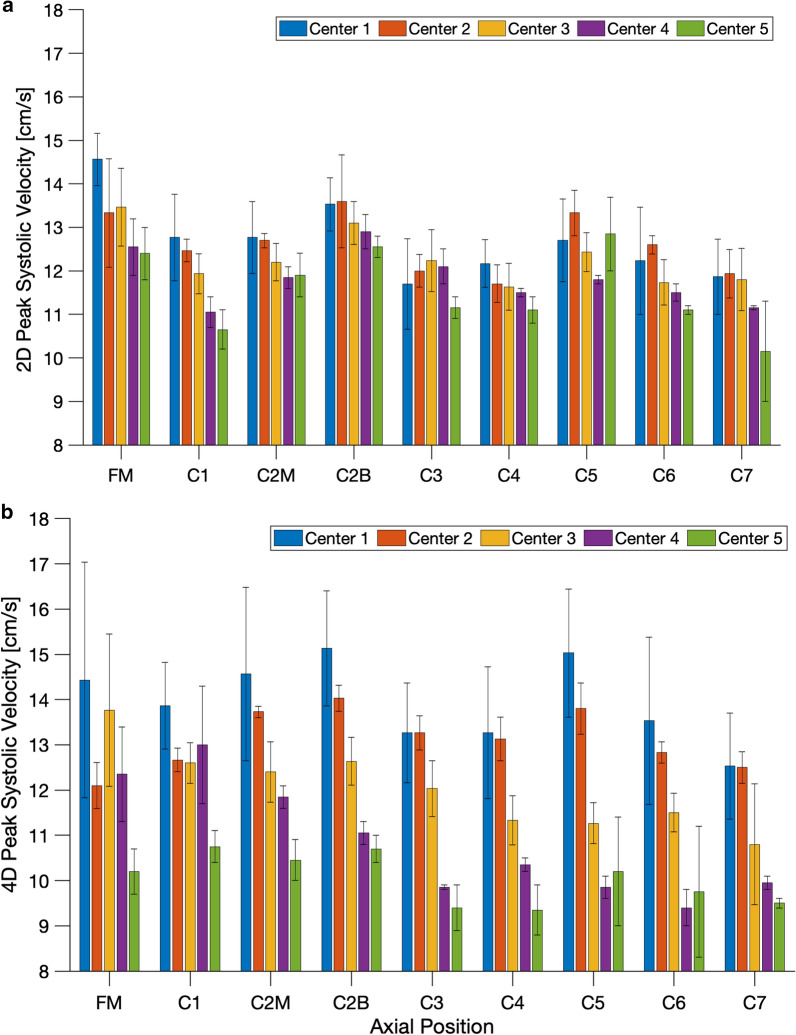
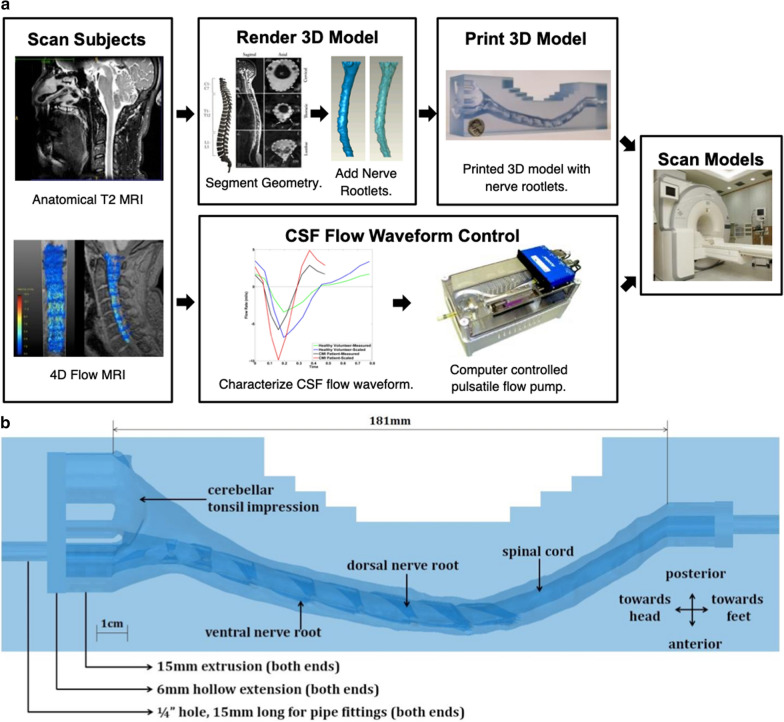
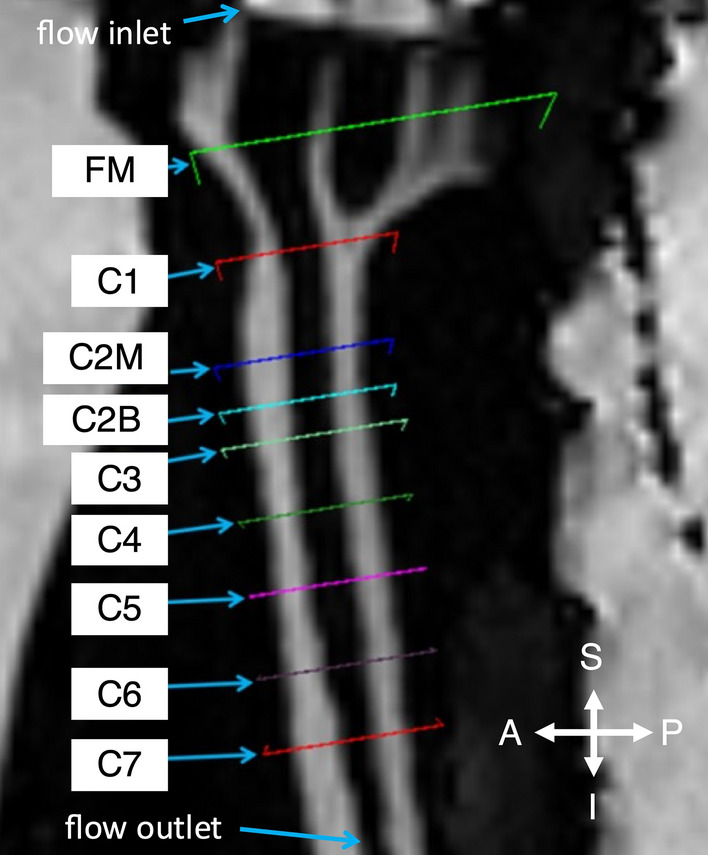
An anatomically realistic in vitro subject specific model of a Chiari malformation patient was scanned three times at five different scanning centers using 2D PC MRI and 4D Flow techniques to quantify intra-scanner repeatability, inter-scanner reproducibility, and agreement between imaging modalities. Peak systolic CSF velocities were measured at nine axial planes using 2D PC MRI, which were then compared to 4D Flow peak systolic velocity measurements extracted at those exact axial positions along the model.
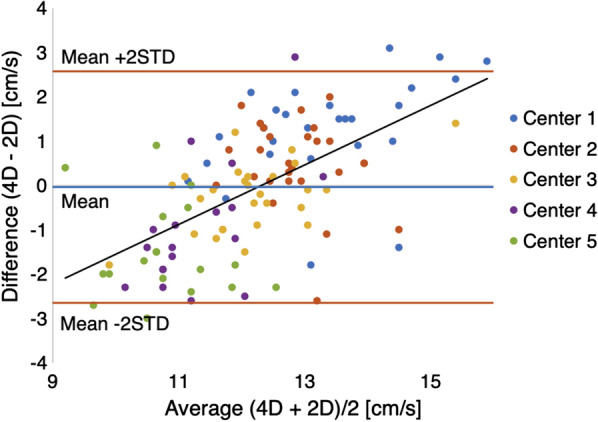
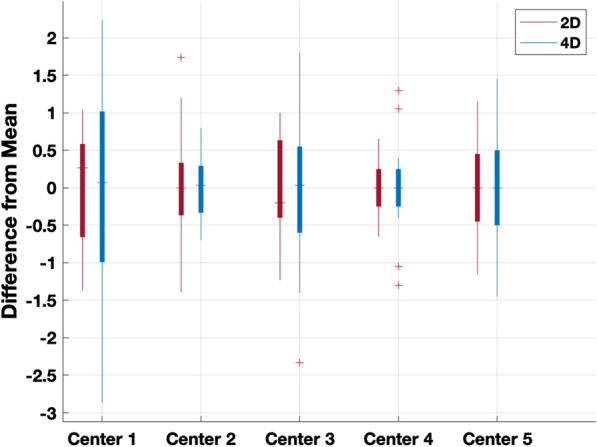
Comparison of measurement results showed good overall agreement of CSF velocity detection between 2D PC MRI and 4D Flow (p = 0.86), fair intra-scanner repeatability (confidence intervals ± 1.5 cm/s), and poor inter-scanner reproducibility. On average, 4D Flow measurements had a larger variability than 2D PC MRI measurements (standard deviations 1.83 and 1.04 cm/s, respectively).
Agreement, repeatability, and reproducibility of 2D PC MRI and 4D Flow detection of peak CSF velocities was quantified using a patient-specific in vitro model of Chiari malformation. In combination, the greatest factor leading to measurement inconsistency was determined to be a lack of reproducibility between different MRI centers. Overall, these findings may help lead to better understanding for application of 2D PC MRI and 4D Flow techniques as diagnostic tools for CSF dynamics quantification in Chiari malformation and related diseases.
相衬磁共振成像(PC MRI)是一种有价值的工具,可实现对 CSF 动力学的非侵入性定量,但在 Chiari 畸形诊断的临床实践中尚未得到广泛应用。为了改善这些诊断实践,需要更好地了解基于 PC MRI 的 CSF 动力学测量的一致性、可重复性和再现性。
使用 2D PC MRI 和 4D Flow 技术,对 Chiari 畸形患者的解剖学上逼真的特定于个体的体外模型进行三次扫描,扫描在五个不同的扫描中心进行,以量化内扫描重复性、间扫描再现性和成像方式之间的一致性。使用 2D PC MRI 在九个轴向平面测量峰值收缩期 CSF 速度,并将其与模型上沿这些确切轴向位置提取的 4D Flow 峰值收缩期速度测量值进行比较。
测量结果的比较表明,2D PC MRI 和 4D Flow 之间 CSF 速度检测的总体一致性良好(p=0.86),内扫描重复性尚可(置信区间为±1.5cm/s),而间扫描再现性较差。平均而言,4D Flow 测量值的变异性大于 2D PC MRI 测量值(标准偏差分别为 1.83 和 1.04cm/s)。
使用 Chiari 畸形患者特定的体外模型,对 2D PC MRI 和 4D Flow 检测峰值 CSF 速度的一致性、可重复性和再现性进行了量化。综合来看,导致测量不一致的最大因素是不同 MRI 中心之间缺乏再现性。总的来说,这些发现可能有助于更好地理解将 2D PC MRI 和 4D Flow 技术作为 Chiari 畸形和相关疾病 CSF 动力学定量的诊断工具的应用。