Biomedical Materials Science, School of Dentistry, University of Mississippi Medical Center, 2500 North State St. D528, Jackson, MS, 39216, USA.
Information Technology Laboratory, US Army Engineer Research and Development Center, 3909 Halls Ferry Rd, Vicksburg, MS, 39180, USA.
Sci Rep. 2021 Mar 18;11(1):6343. doi: 10.1038/s41598-021-85601-y.
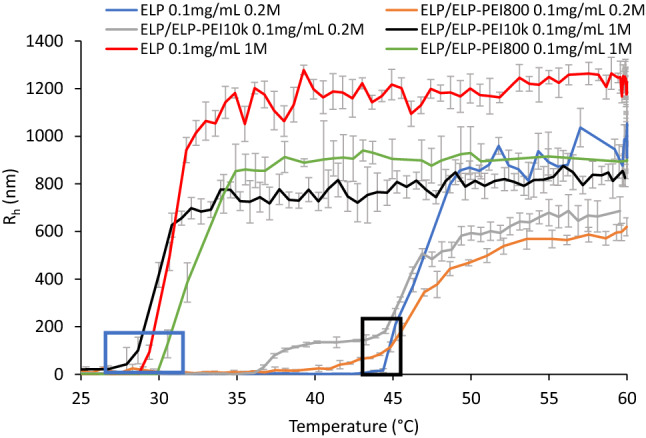
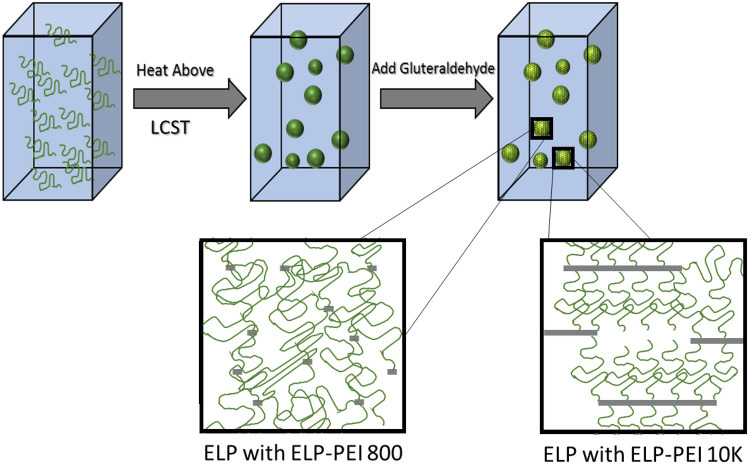
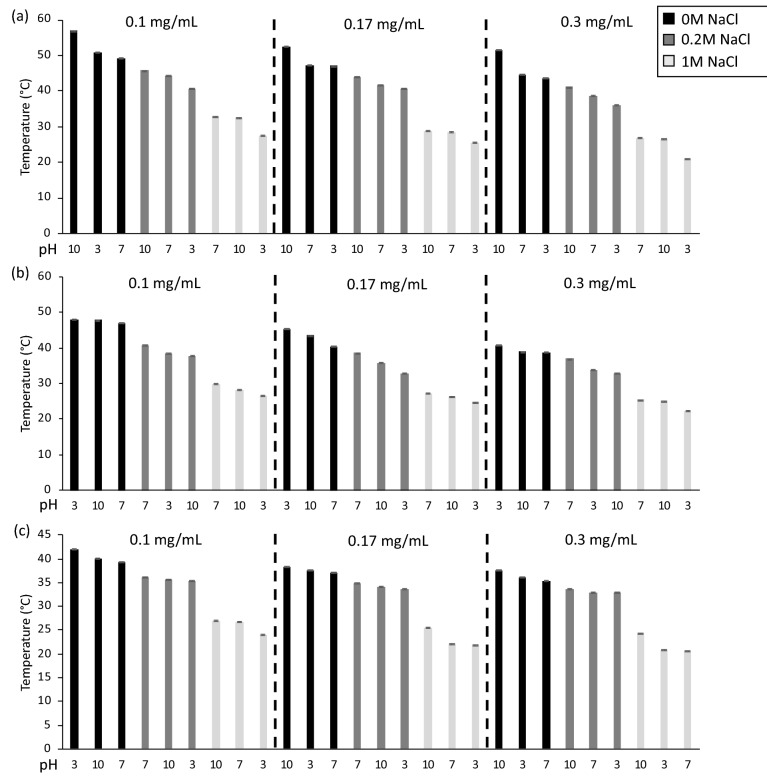
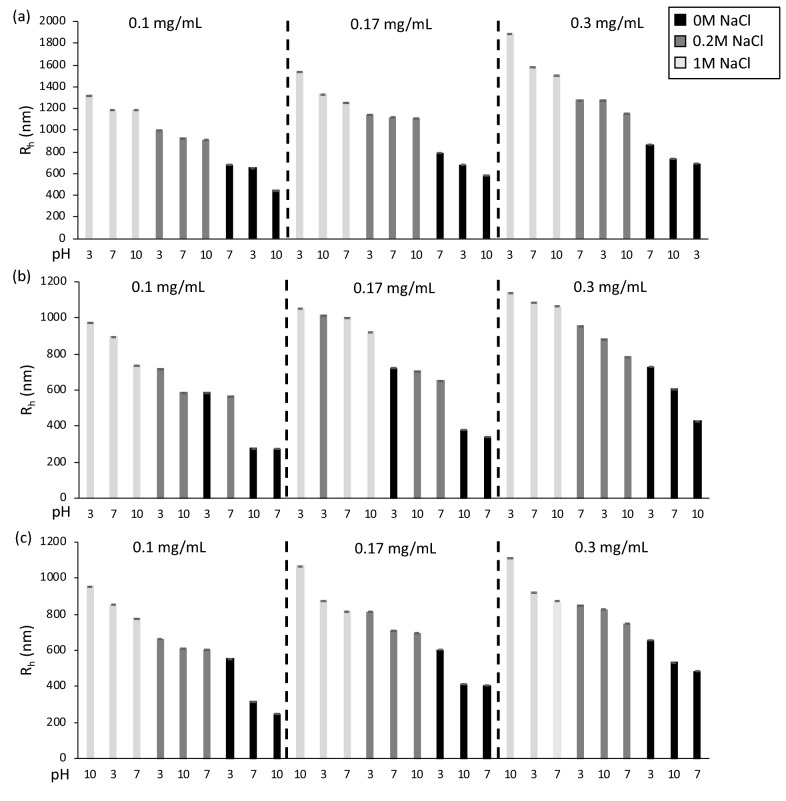
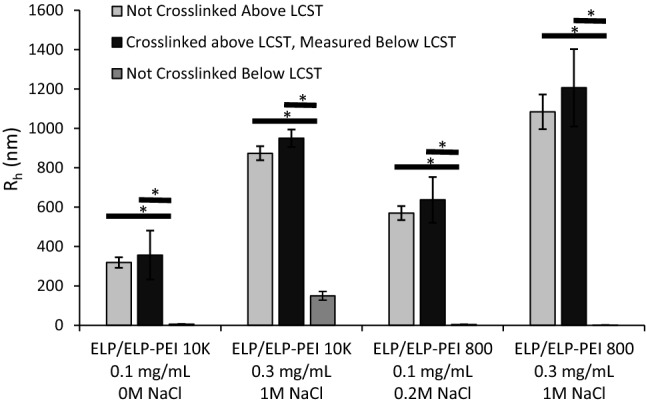
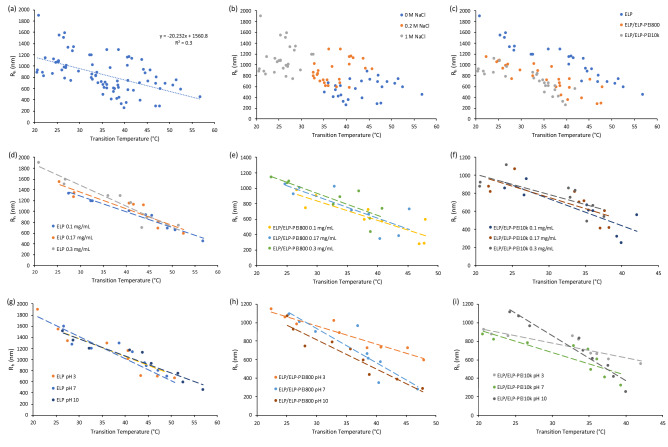
This paper evaluates the aggregation behavior of a potential drug and gene delivery system that combines branched polyethyleneimine (PEI), a positively-charged polyelectrolyte, and elastin-like polypeptide (ELP), a recombinant polymer that exhibits lower critical solution temperature (LCST). The LCST behavior of ELP has been extensively studied, but there are no quantitative ways to control the size of aggregates formed after the phase transition. The aggregate size cannot be maintained when the temperature is lowered below the LCST, unless the system exhibits hysteresis and forms irreversible aggregates. This study shows that conjugation of ELP with PEI preserves the aggregation behavior that occurs above the LCST and achieves precise aggregate radii when the solution conditions of pH (3, 7, 10), polymer concentration (0.1, 0.15, 0.3 mg/mL), and salt concentration (none, 0.2, 1 M) are carefully controlled. K-means cluster analyses showed that salt concentration was the most critical factor controlling the hydrodynamic radius and LCST. Conjugating ELP to PEI allowed crosslinking the aggregates and achieved stable particles that maintained their size below LCST, even after removal of the harsh (high salt or pH) conditions used to create them. Taken together, the ability to control aggregate sizes and use of crosslinking to maintain stability holds excellent potential for use in biological delivery systems.
本文评估了一种潜在的药物和基因传递系统的聚集行为,该系统结合了支化聚乙烯亚胺(PEI),一种带正电荷的聚电解质,和弹性蛋白样多肽(ELP),一种表现出较低临界溶液温度(LCST)的重组聚合物。ELP 的 LCST 行为已经得到了广泛的研究,但没有定量的方法来控制相变后形成的聚集体的大小。除非系统表现出滞后现象并形成不可逆的聚集体,否则当温度降低到 LCST 以下时,聚集体的大小将无法保持。本研究表明,ELP 与 PEI 的缀合保留了在 LCST 以上发生的聚集行为,并在仔细控制 pH(3、7、10)、聚合物浓度(0.1、0.15、0.3mg/mL)和盐浓度(无、0.2、1M)等溶液条件时实现了精确的聚集体半径。K-均值聚类分析表明,盐浓度是控制水动力半径和 LCST 的最关键因素。将 ELP 与 PEI 缀合可以交联聚集体,并实现稳定的颗粒,即使在去除用于形成聚集体的苛刻(高盐或 pH)条件下,其尺寸也能保持在 LCST 以下。总之,控制聚集体大小的能力和使用交联来维持稳定性在生物传递系统中具有极好的应用潜力。