Wang Jintao, Kong Lingwen, Gafur Alidha, Peng Xiaobo, Kristi Natalia, Xu Jing, Ma Xingshuang, Wang Nan, Humphry Rose, Durkan Colm, Zhang Haijun, Ye Zhiyi, Wang Guixue
Key Laboratory of Biorheological Science and Technology (Chongqing University), Ministry of Education, State and Local Joint Engineering Laboratory for Vascular Implants, Bioengineering College of Chongqing University, Chongqing 400030, China.
Department of Cardiothoracic Surgery, Central Hospital of Chongqing University, Chongqing Emergency Medical Center, Chongqing 400014, China.
Regen Biomater. 2021 Mar 13;8(2):rbaa058. doi: 10.1093/rb/rbaa058. eCollection 2021 Mar.
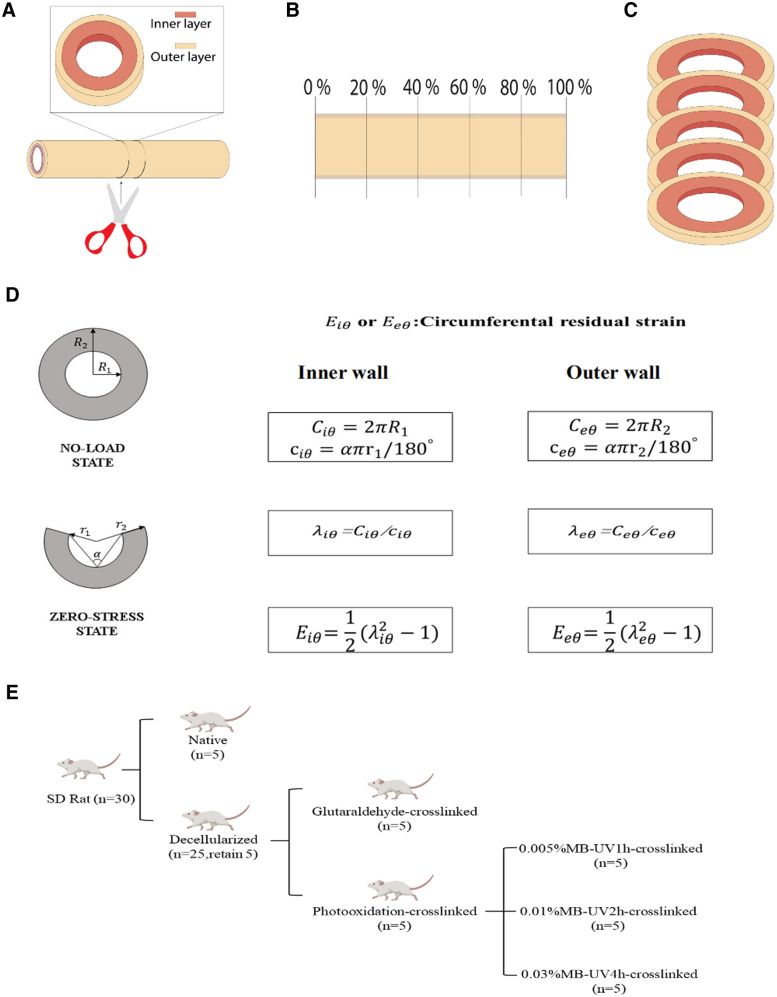
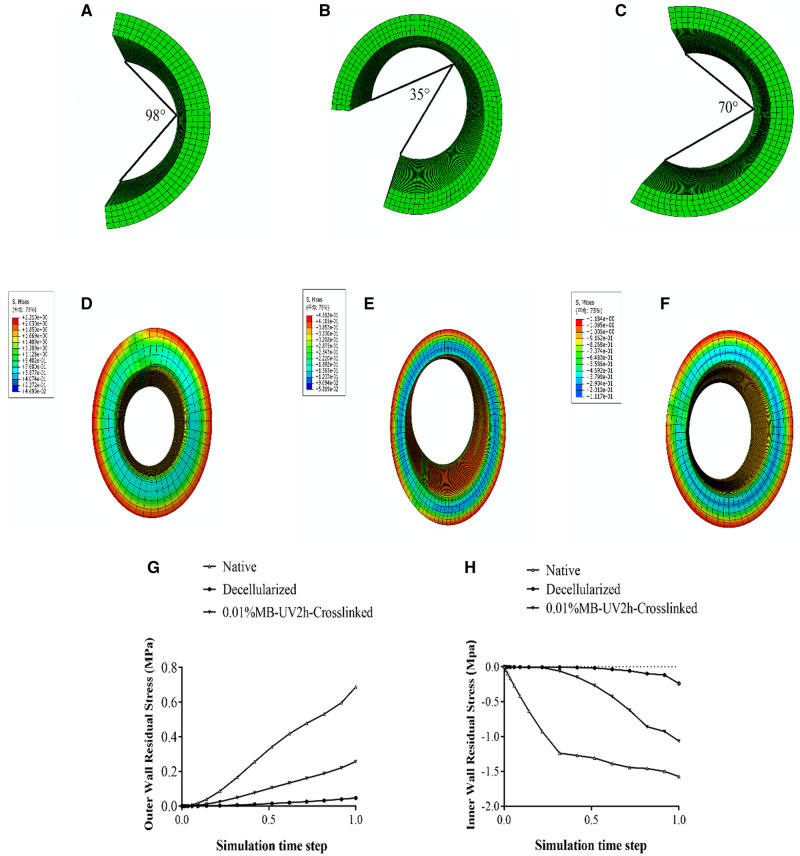
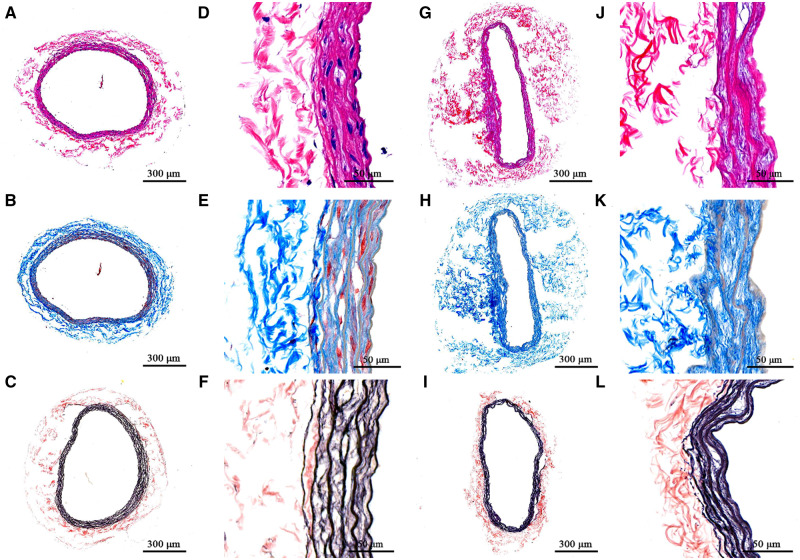
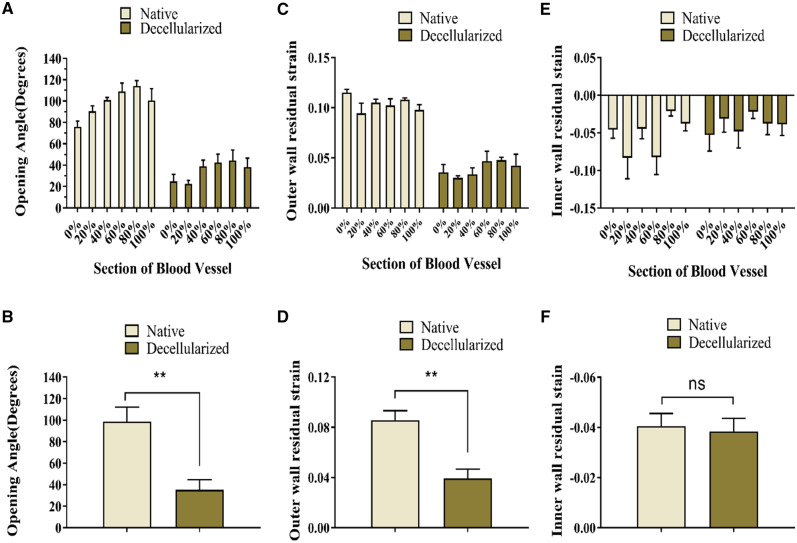
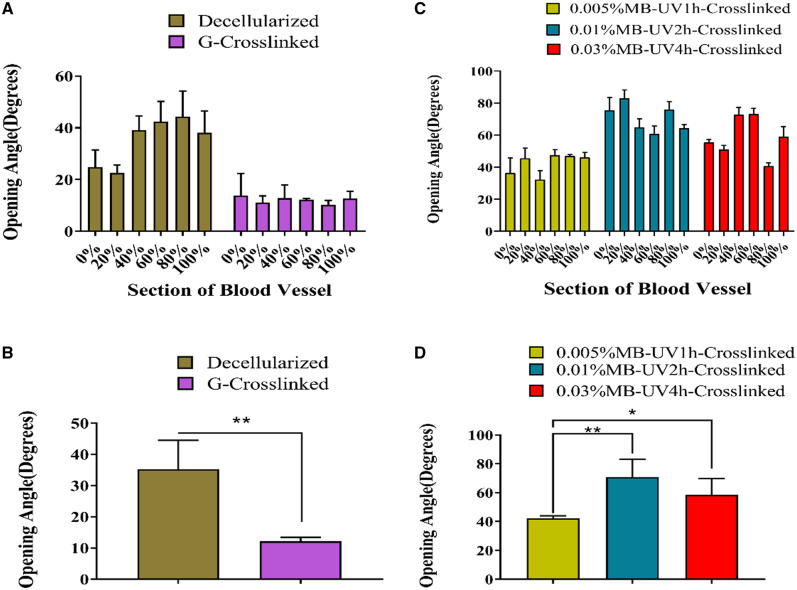
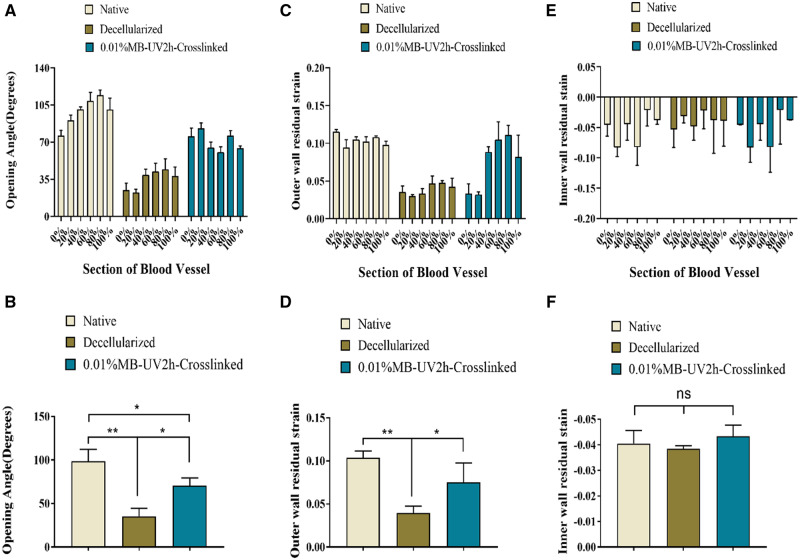
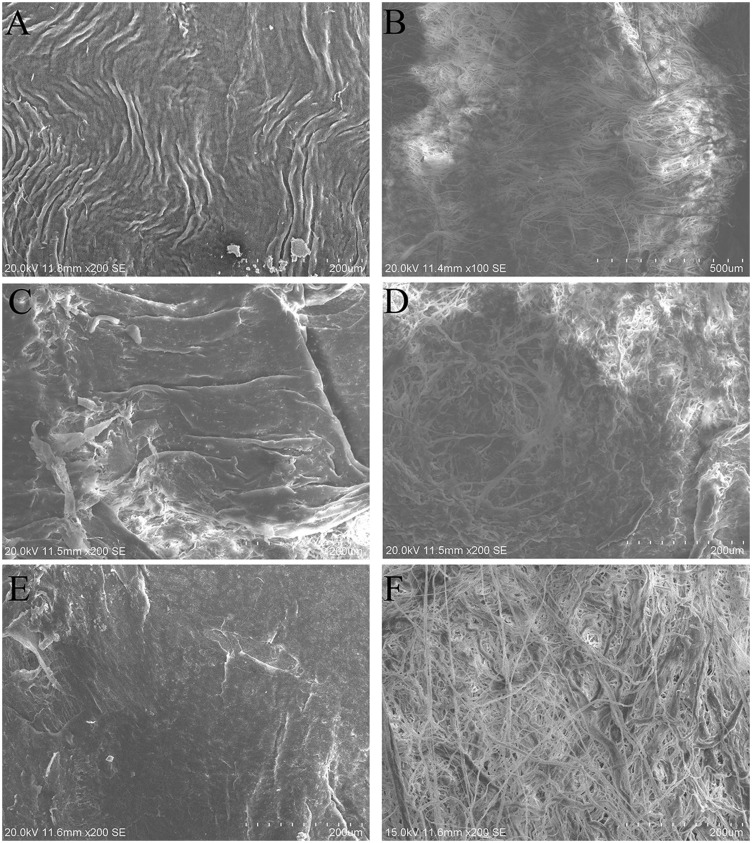
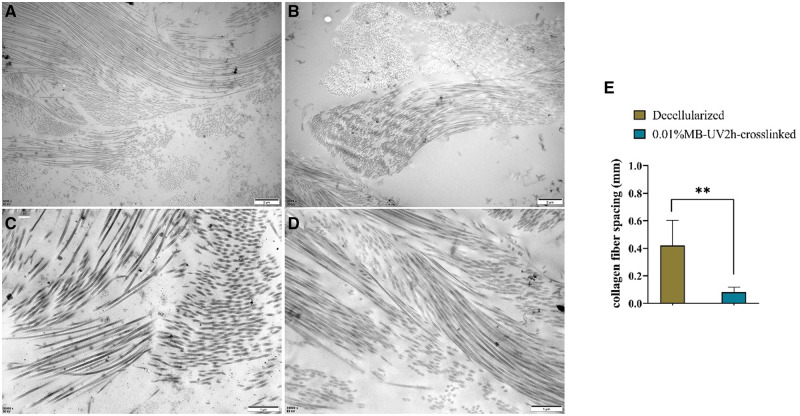
Decellularization method based on trypsin-digestion is widely used to construct small diameter vascular grafts. However, this method will reduce the opening angle of the blood vessel and result in the reduction of residual stress. Residual stress reduced has an adverse effect on the compliance and permeability of small diameter vascular grafts. To improve the situation, acellular blood vessels were treated with glutaraldehyde and photooxidation crosslinking respectively, and the changes of opening angle, circumferential residual strain of native blood vessels, decellularized arteries and crosslinked blood vessels were measured by means of histological examination, scanning electron microscopy (SEM) and transmission electron microscopy (TEM) in this study. The opening angle of decellularized arteries significantly restored after photooxidation crosslinking ( = 0.0216), while that of glutaraldehyde crosslinking blood vessels reduced. The elastic fibers inside the blood vessels became densely rearranged after photooxidation crosslinking. The results of finite element simulation showed that the residual stress increased with the increase of opening angle. In this study, we found at the first time that photooxidation crosslinking method could significantly increase the residual stress of decellularized vessels, which provides biomechanical support for the development of new biomaterials of vascular grafts.
基于胰蛋白酶消化的去细胞化方法被广泛用于构建小口径血管移植物。然而,这种方法会减小血管的开口角度并导致残余应力降低。残余应力降低对小口径血管移植物的顺应性和通透性有不利影响。为改善这种情况,分别用戊二醛和光氧化交联处理脱细胞血管,本研究通过组织学检查、扫描电子显微镜(SEM)和透射电子显微镜(TEM)测量天然血管、脱细胞动脉和交联血管的开口角度、周向残余应变的变化。光氧化交联后脱细胞动脉的开口角度显著恢复(=0.0216),而戊二醛交联血管的开口角度减小。光氧化交联后血管内的弹性纤维变得密集重排。有限元模拟结果表明残余应力随开口角度的增加而增加。在本研究中,我们首次发现光氧化交联方法可显著增加脱细胞血管的残余应力,这为血管移植物新型生物材料的开发提供了生物力学支持。