Osborne K Juston, Walther Sebastian, Shankman Stewart A, Mittal Vijay A
Northwestern University, Department of Psychology, Evanston, IL, USA.
University of Bern, University Hospital of Psychiatry, Translational Research Center, Bern, Switzerland.
Biomark Neuropsychiatry. 2020 Jun;2. doi: 10.1016/j.bionps.2020.100016. Epub 2020 May 12.
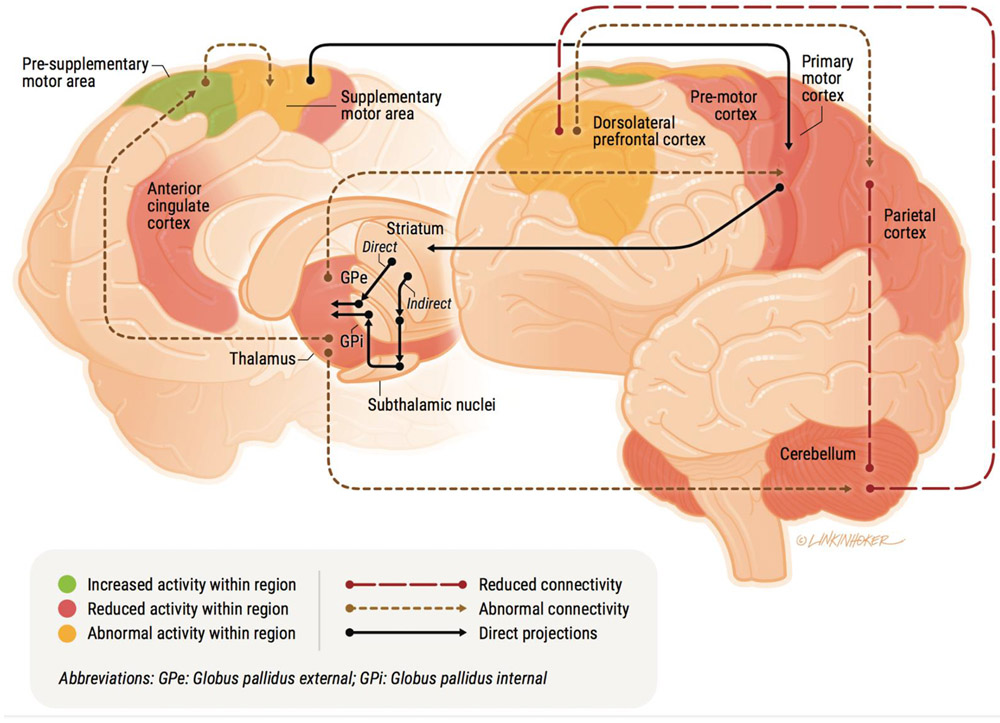
Motor abnormalities (e.g., dyskinesia, psychomotor slowing, neurological soft signs) are core features of schizophrenia that occur independent of drug treatment and are associated with the genetic vulnerability and pathophysiology for the illness. Among this list, psychomotor slowing in particular is one of the most consistently observed and robust findings in the field. Critically, psychomotor slowing may serve as a uniquely promising endophenotype and/or biomarker for schizophrenia considering it is frequently observed in those with genetic vulnerability for the illness, predicts transition in subjects at high-risk for the disorder, and is associated with symptoms and recovery in patients. The purpose of the present review is to provide an overview of the history of psychomotor slowing in psychosis, discuss its possible neural underpinnings, and review the current literature supporting slowing as a putative endophenotype and/or biomarker for the illness. This review summarizes substantial evidence from a diverse array of methodologies and research designs that supports the notion that psychomotor slowing not only reflects genetic vulnerability, but is also sensitive to disease processes and the pathophysiology of the illness. Furthermore, there are unique deficits across the cognitive (prefix "psycho") and motor execution (root word "motor") aspects of slowing, with cognitive processes such as planning and response selection being particularly affected. These findings suggest that psychomotor slowing may serve as a promising endophenotype and biomarker for schizophrenia that may prove useful for identifying individuals at greatest risk and tracking the course of the illness and recovery.
运动异常(如运动障碍、精神运动迟缓、神经软体征)是精神分裂症的核心特征,其出现与药物治疗无关,且与该疾病的遗传易感性和病理生理学相关。在这些特征中,精神运动迟缓尤其是该领域中最常被观察到且有力的发现之一。至关重要的是,考虑到精神运动迟缓在那些具有该疾病遗传易感性的个体中经常出现、可预测处于该疾病高风险的个体的病情转变,并且与患者的症状及康复相关,它可能是精神分裂症一种极具前景的内表型和/或生物标志物。本综述的目的是概述精神病中精神运动迟缓的历史,讨论其可能的神经基础,并综述支持将精神运动迟缓作为该疾病假定内表型和/或生物标志物的当前文献。这篇综述总结了来自各种方法和研究设计的大量证据,这些证据支持精神运动迟缓不仅反映遗传易感性,而且对疾病过程和该疾病的病理生理学敏感这一观点。此外,在精神运动迟缓的认知(前缀“psycho”)和运动执行(词根“motor”)方面存在独特的缺陷,诸如计划和反应选择等认知过程受到的影响尤为明显。这些发现表明,精神运动迟缓可能是精神分裂症一种有前景的内表型和生物标志物,可能有助于识别风险最高的个体并追踪疾病进程及康复情况。