Brief Funct Genomics. 2022 Jan 25;21(1):35-42. doi: 10.1093/bfgp/elab010.
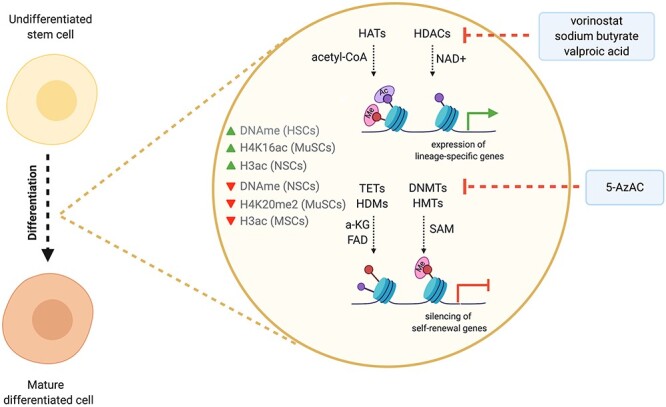
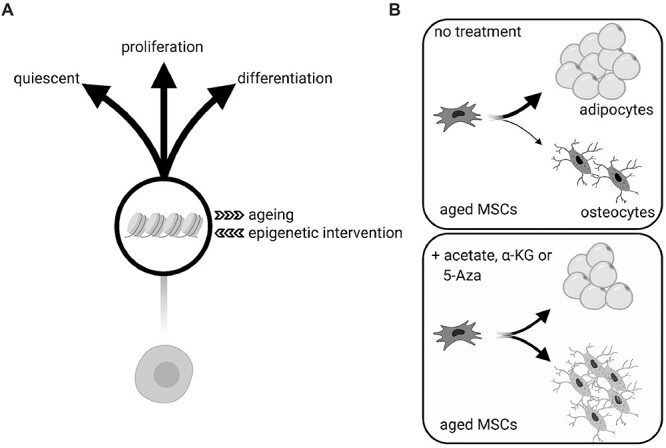
Ageing is accompanied by loss of tissue integrity and organismal homeostasis partly due to decline in stem cell function. The age-associated decrease in stem cell abundance and activity is often referred to as stem cell exhaustion and is considered one major hallmark of ageing. Importantly, stem cell proliferation and differentiation potential are tightly coupled to the cellular epigenetic state. Thus, research during the last years has started to investigate how the epigenome regulates stem cell function upon ageing. Here, we summarize the role of epigenetic regulation in stem cell fate decisions and we review the impact of age-related changes of the epigenome on stem cell activity. Finally, we discuss how targeted interventions on the epigenetic landscape might delay ageing and extend health-span.
衰老是伴随着组织完整性和机体稳态的丧失的,部分原因是干细胞功能的下降。与年龄相关的干细胞数量和活性的减少通常被称为干细胞衰竭,被认为是衰老的一个主要标志。重要的是,干细胞的增殖和分化潜能与细胞的表观遗传状态密切相关。因此,近年来的研究开始探讨表观基因组如何调节衰老过程中的干细胞功能。在这里,我们总结了表观遗传调控在干细胞命运决定中的作用,并回顾了与年龄相关的表观基因组变化对干细胞活性的影响。最后,我们讨论了如何通过靶向干预表观遗传景观来延缓衰老和延长健康寿命。