Koch Institute for Integrative Cancer Research, Massachusetts Institute of Technology, Cambridge, MA, 02139, USA.
Department of Chemical Engineering, Massachusetts Institute of Technology, Cambridge, MA, 02139, USA.
Adv Healthc Mater. 2021 May;10(9):e2001941. doi: 10.1002/adhm.202001941. Epub 2021 Mar 18.
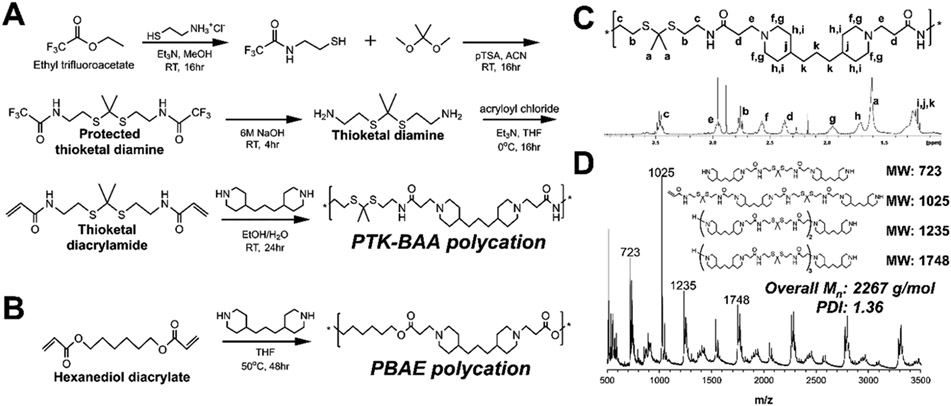
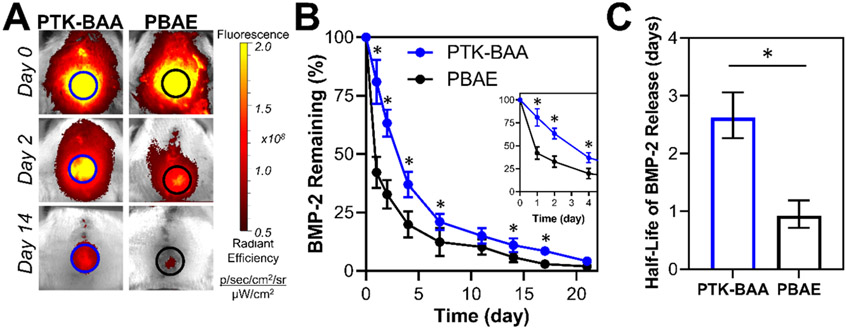
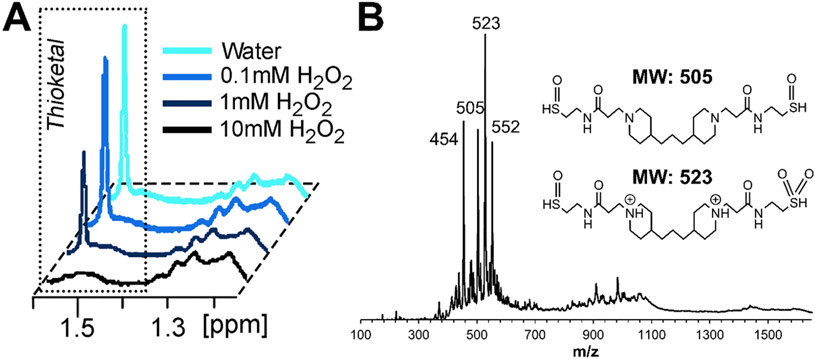
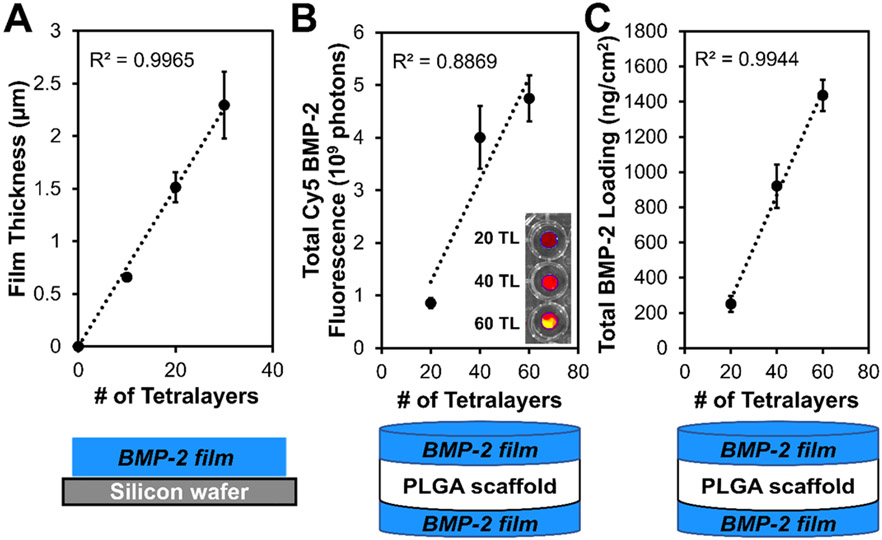
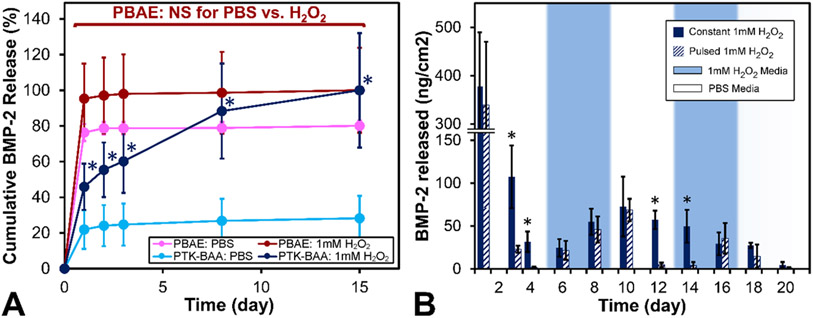
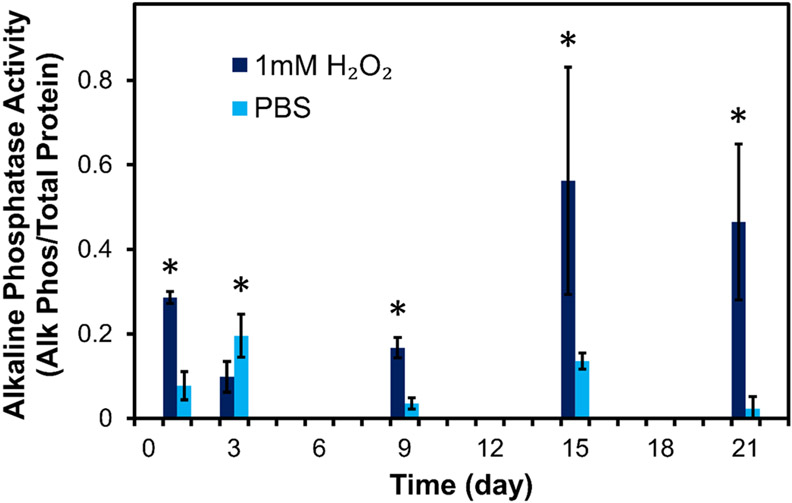
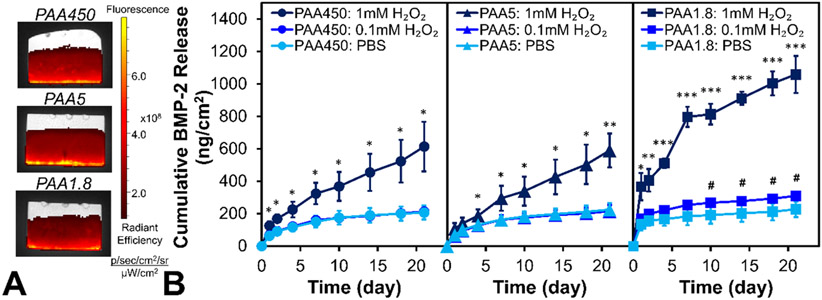
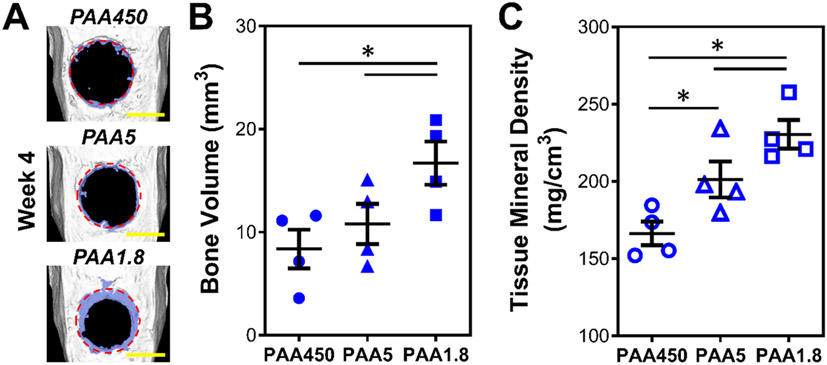
Polyelectrolyte multilayer (PEM) coatings, constructed on the surfaces of tissue engineering scaffolds using layer-by-layer assembly (LbL), promote sustained release of therapeutic molecules and have enabled regeneration of large-scale, pre-clinical bone defects. However, these systems primarily rely on non-specific hydrolysis of PEM components to foster drug release, and their pre-determined drug delivery schedules potentially limit future translation into innately heterogeneous patient populations. To trigger therapeutic delivery directly in response to local environmental stimuli, an LbL-compatible polycation solely degraded by cell-generated reactive oxygen species (ROS) was synthesized. These thioketal-based polymers were selectively cleaved by physiologic doses of ROS, stably incorporated into PEM films alongside growth factors, and facilitated tunable release of therapeutic bone morphogenetic protein-2 (BMP-2) upon oxidation. These coatings' sensitivity to oxidation was also dependent on the polyanions used in film construction, providing a simple method for enhancing ROS-mediated protein delivery in vitro. Correspondingly, when implanted in critically-sized rat calvarial defects, the most sensitive ROS-responsive coatings generated a 50% increase in bone regeneration compared with less sensitive formulations and demonstrated a nearly threefold extension in BMP-2 delivery half-life over conventional hydrolytically-sensitive coatings. These combined results highlight the potential of environmentally-responsive PEM coatings as tunable drug delivery systems for regenerative medicine.
聚电解质多层(PEM)涂层,使用层层组装(LbL)构建在组织工程支架的表面上,促进治疗分子的持续释放,并使大规模的临床前骨缺损再生成为可能。然而,这些系统主要依赖于 PEM 成分的非特异性水解来促进药物释放,并且它们预定的药物输送时间表可能限制了未来向固有异质的患者群体的转化。为了直接响应局部环境刺激触发治疗性药物输送,合成了仅由细胞产生的活性氧(ROS)降解的 LbL 相容聚阳离子。这些硫代缩醛基聚合物可被生理剂量的 ROS 选择性切割,与生长因子一起稳定地掺入 PEM 薄膜中,并在氧化时促进治疗性骨形态发生蛋白-2(BMP-2)的可调释放。这些涂层对氧化的敏感性还取决于薄膜构建中使用的聚阴离子,为体外增强 ROS 介导的蛋白质输送提供了一种简单的方法。相应地,当植入大鼠临界大小的颅骨缺损中时,与敏感性较低的配方相比,最敏感的 ROS 响应涂层可使骨再生增加 50%,并且与传统的水解敏感涂层相比,BMP-2 输送半衰期延长了近三倍。这些综合结果突出了环境响应性 PEM 涂层作为用于再生医学的可调药物输送系统的潜力。