Biondi Andrea, Laiou Petroula, Bruno Elisa, Viana Pedro F, Schreuder Martijn, Hart William, Nurse Ewan, Pal Deb K, Richardson Mark P
Institute of Psychiatry, Psychology & Neuroscience, King's College London, London, United Kingdom.
Faculty of Medicine, University of Lisbon, Hospital de Santa Maria, Lisbon, Portugal.
JMIR Res Protoc. 2021 Mar 19;10(3):e25309. doi: 10.2196/25309.
Epileptic seizures are spontaneous events that severely affect the lives of patients due to their recurrence and unpredictability. The integration of new wearable and mobile technologies to collect electroencephalographic (EEG) and extracerebral signals in a portable system might be the solution to prospectively identify times of seizure occurrence or propensity. The performances of several seizure detection devices have been assessed by validated studies, and patient perspectives on wearables have been explored to better match their needs. Despite this, there is a major gap in the literature on long-term, real-life acceptability and performance of mobile technology essential to managing chronic disorders such as epilepsy.
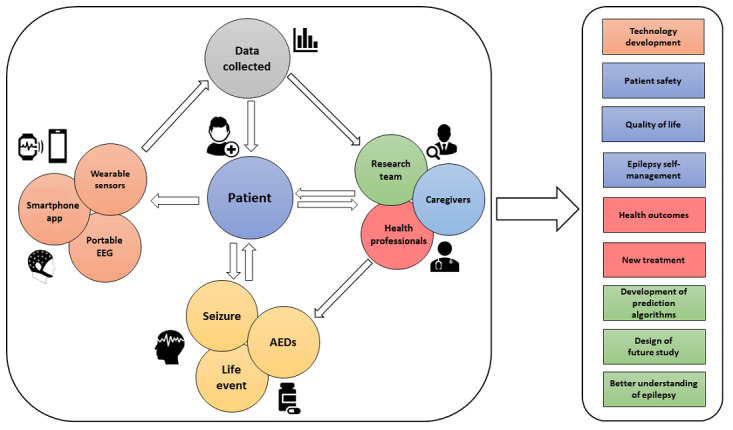
EEG@HOME is an observational, nonrandomized, noninterventional study that aims to develop a new feasible procedure that allows people with epilepsy to independently, continuously, and safely acquire noninvasive variables at home. The data collected will be analyzed to develop a general model to predict periods of increased seizure risk.
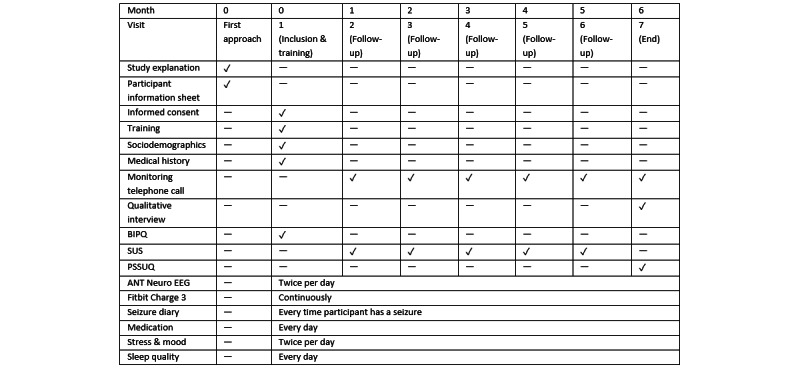
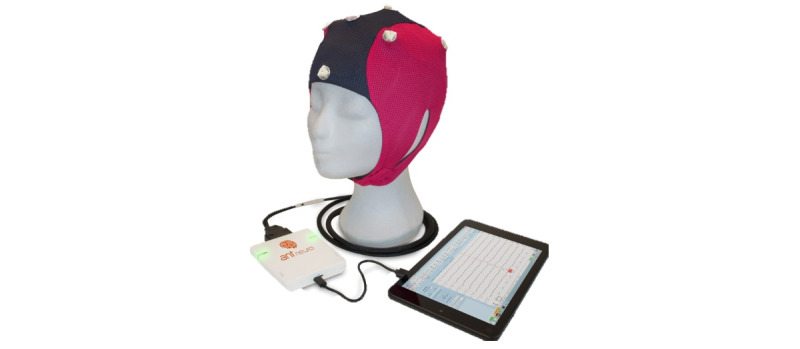
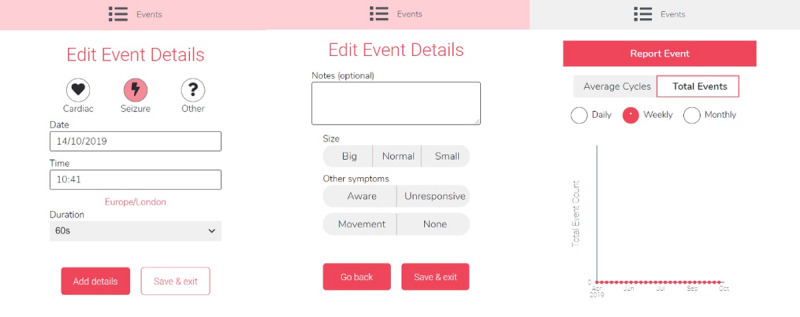
A total of 12 adults with a diagnosis of pharmaco-resistant epilepsy and at least 20 seizures per year will be recruited at King's College Hospital, London. Participants will be asked to self-apply an easy and portable EEG recording system (ANT Neuro) to record scalp EEG at home twice daily. From each serial EEG recording, brain network ictogenicity (BNI), a new biomarker of the propensity of the brain to develop seizures, will be extracted. A noninvasive wrist-worn device (Fitbit Charge 3; Fitbit Inc) will be used to collect non-EEG biosignals (heart rate, sleep quality index, and steps), and a smartphone app (Seer app; Seer Medical) will be used to collect data related to seizure occurrence, medication taken, sleep quality, stress, and mood. All data will be collected continuously for 6 months. Standardized questionnaires (the Post-Study System Usability Questionnaire and System Usability Scale) will be completed to assess the acceptability and feasibility of the procedure. BNI, continuous wrist-worn sensor biosignals, and electronic survey data will be correlated with seizure occurrence as reported in the diary to investigate their potential values as biomarkers of seizure risk.
The EEG@HOME project received funding from Epilepsy Research UK in 2018 and was approved by the Bromley Research Ethics Committee in March 2020. The first participants were enrolled in October 2020, and we expect to publish the first results by the end of 2022.
With the EEG@HOME study, we aim to take advantage of new advances in remote monitoring technology, including self-applied EEG, to investigate the feasibility of long-term disease self-monitoring. Further, we hope our study will bring new insights into noninvasively collected personalized risk factors of seizure occurrence and seizure propensity that may help to mitigate one of the most difficult aspects of refractory epilepsy: the unpredictability of seizure occurrence.
INTERNATIONAL REGISTERED REPORT IDENTIFIER (IRRID): PRR1-10.2196/25309.
癫痫发作是一种自发事件,因其复发和不可预测性而严重影响患者的生活。将新的可穿戴和移动技术集成到便携式系统中以收集脑电图(EEG)和脑外信号,可能是前瞻性识别癫痫发作时间或发作倾向的解决方案。多项癫痫检测设备的性能已通过验证性研究进行评估,并且已探索了患者对可穿戴设备的看法,以更好地满足他们的需求。尽管如此,关于移动技术在管理癫痫等慢性疾病方面的长期、实际可接受性和性能的文献仍存在重大空白。
EEG@HOME是一项观察性、非随机、非干预性研究,旨在开发一种新的可行程序,使癫痫患者能够在家中独立、持续且安全地获取非侵入性变量。收集到的数据将进行分析,以建立一个通用模型来预测癫痫发作风险增加的时期。
将在伦敦国王学院医院招募12名诊断为药物难治性癫痫且每年至少发作20次的成年人。参与者将被要求自行应用一种简单便携的脑电图记录系统(ANT Neuro),在家中每天记录两次头皮脑电图。从每次连续脑电图记录中,提取脑网络致痫性(BNI),这是一种新的大脑发生癫痫倾向的生物标志物。将使用一种非侵入性腕戴设备(Fitbit Charge 3;Fitbit公司)收集非脑电图生物信号(心率、睡眠质量指数和步数),并使用一款智能手机应用程序(Seer应用程序;Seer Medical)收集与癫痫发作发生、所服用药物、睡眠质量、压力和情绪相关的数据。所有数据将连续收集6个月。将完成标准化问卷(研究后系统可用性问卷和系统可用性量表)以评估该程序的可接受性和可行性。将BNI、连续腕戴传感器生物信号和电子调查数据与日记中报告的癫痫发作情况相关联,以研究它们作为癫痫发作风险生物标志物的潜在价值。
EEG@HOME项目于2018年获得英国癫痫研究协会的资助,并于2020年3月获得布罗姆利研究伦理委员会的批准。首批参与者于2020年10月入组,我们预计在2022年底公布首批结果。
通过EEG@HOME研究,我们旨在利用远程监测技术的新进展,包括自行应用脑电图,来研究长期疾病自我监测的可行性。此外,我们希望我们的研究将为非侵入性收集的癫痫发作发生和癫痫发作倾向的个性化风险因素带来新的见解,这可能有助于缓解难治性癫痫最困难的方面之一:癫痫发作的不可预测性。
国际注册报告识别码(IRRID):PRR1-10.2196/25309。