Department of Neurology, Mayo Clinic, Rochester, Minnesota, United States of America.
Department of Anesthesiology & Perioperative Medicine, Xijing Hospital, Fourth Military Medical University, Xi'an, China.
PLoS Biol. 2021 Mar 19;19(3):e3001154. doi: 10.1371/journal.pbio.3001154. eCollection 2021 Mar.
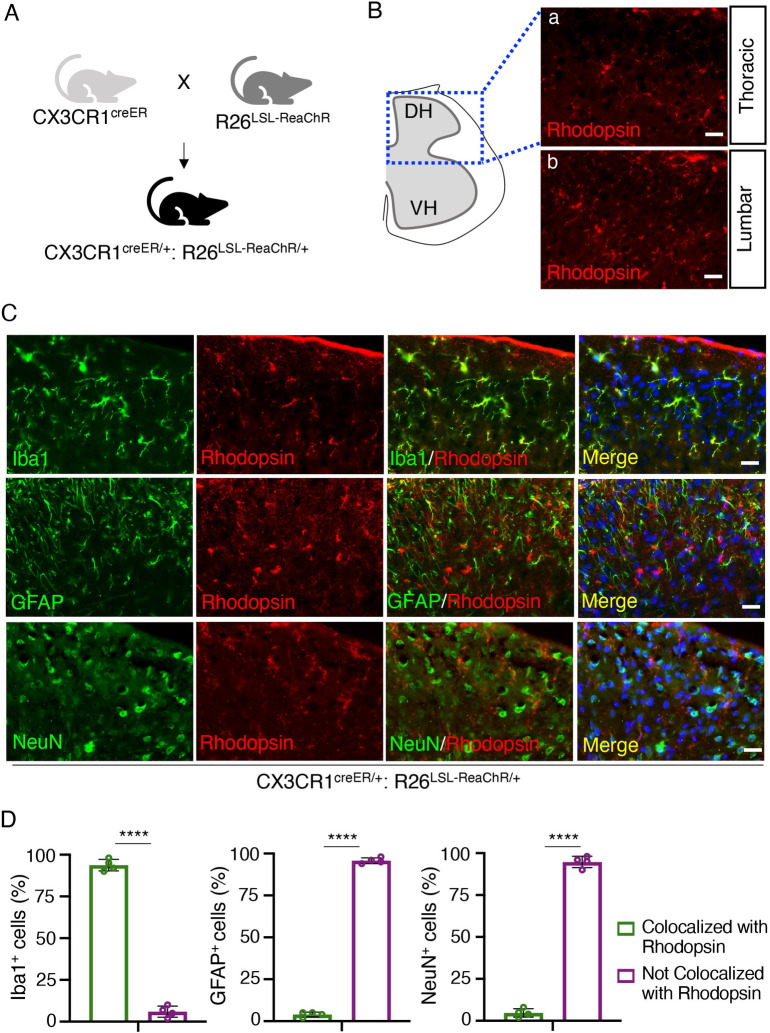
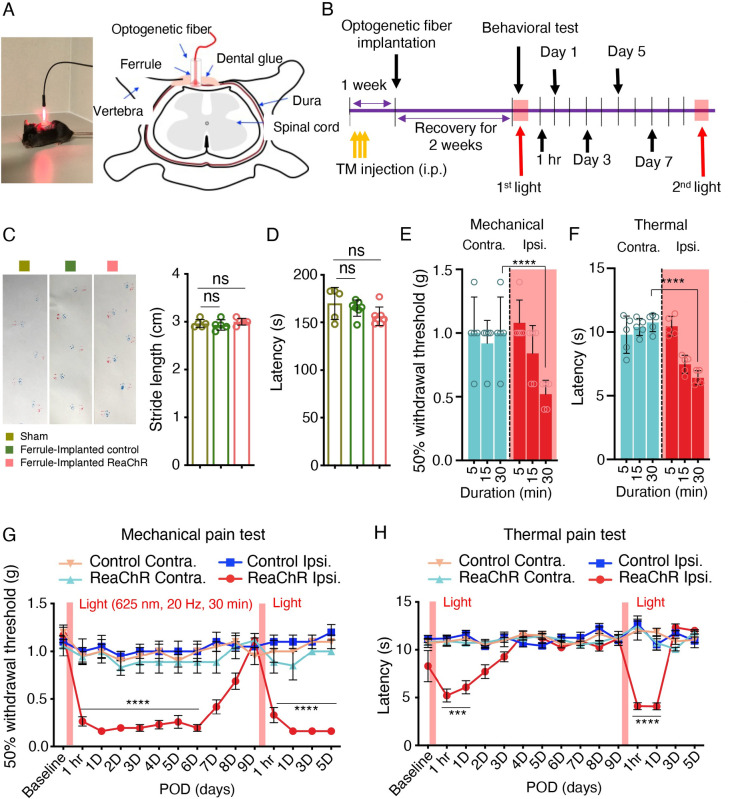
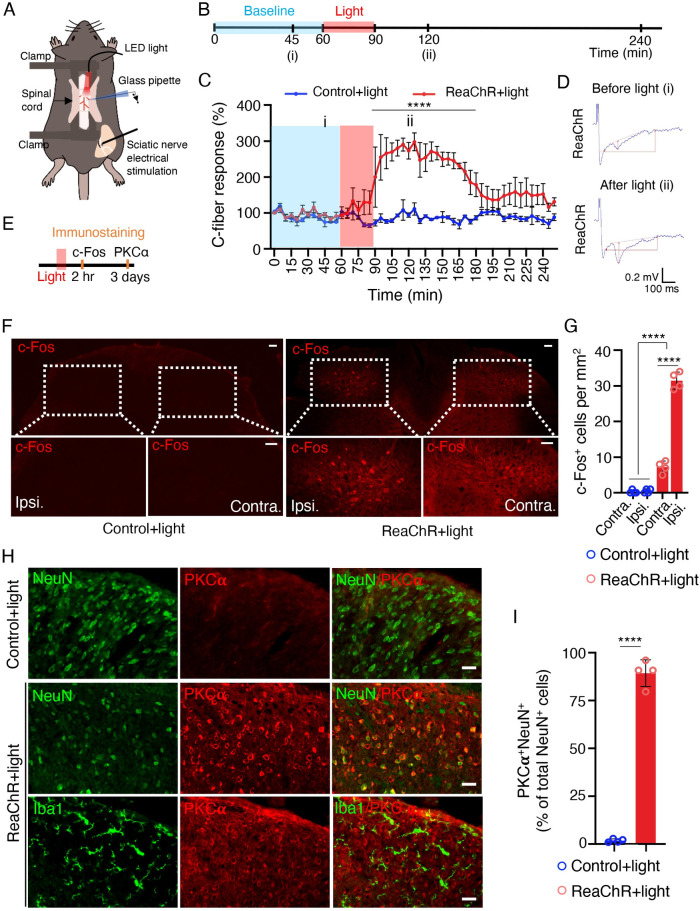
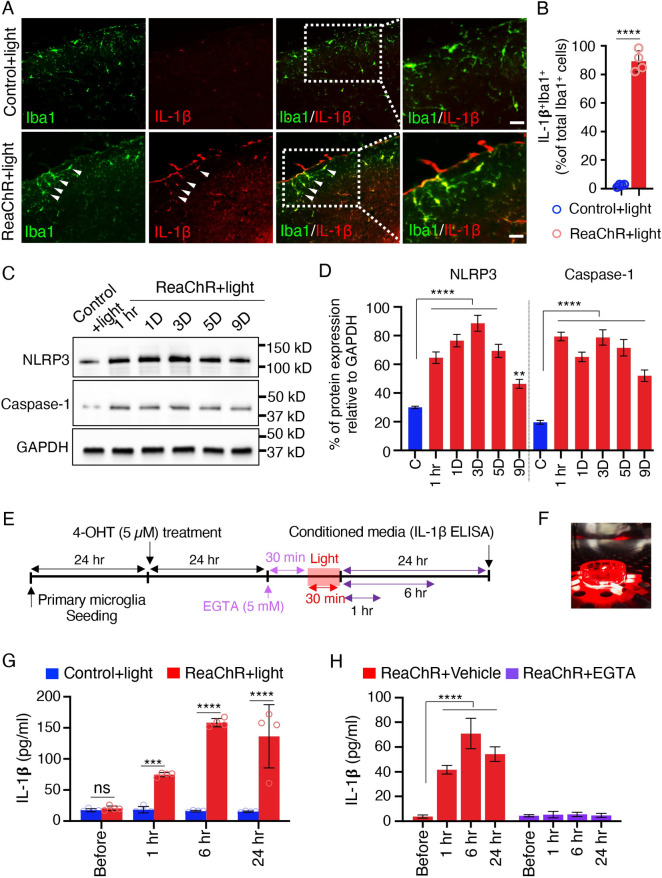
Spinal microglia are highly responsive to peripheral nerve injury and are known to be a key player in pain. However, there has not been direct evidence showing that selective microglial activation in vivo is sufficient to induce chronic pain. Here, we used optogenetic approaches in microglia to address this question employing CX3CR1creER/+: R26LSL-ReaChR/+ transgenic mice, in which red-activated channelrhodopsin (ReaChR) is inducibly and specifically expressed in microglia. We found that activation of ReaChR by red light in spinal microglia evoked reliable inward currents and membrane depolarization. In vivo optogenetic activation of microglial ReaChR in the spinal cord triggered chronic pain hypersensitivity in both male and female mice. In addition, activation of microglial ReaChR up-regulated neuronal c-Fos expression and enhanced C-fiber responses. Mechanistically, ReaChR activation led to a reactive microglial phenotype with increased interleukin (IL)-1β production, which is likely mediated by inflammasome activation and calcium elevation. IL-1 receptor antagonist (IL-1ra) was able to reverse the pain hypersensitivity and neuronal hyperactivity induced by microglial ReaChR activation. Therefore, our work demonstrates that optogenetic activation of spinal microglia is sufficient to trigger chronic pain phenotypes by increasing neuronal activity via IL-1 signaling.
脊髓小胶质细胞对外周神经损伤高度敏感,是疼痛的关键参与者。然而,目前还没有直接证据表明体内选择性小胶质细胞激活足以引起慢性疼痛。在这里,我们使用小胶质细胞的光遗传学方法来解决这个问题,使用了 CX3CR1creER/+:R26LSL-ReaChR/+转基因小鼠,其中红色激活的通道视紫红质(ReaChR)可在小胶质细胞中诱导性和特异性表达。我们发现,红色光激活脊髓小胶质细胞中的 ReaChR 会引起可靠的内向电流和膜去极化。在体内,脊髓中小胶质细胞 ReaChR 的光遗传学激活会引发雄性和雌性小鼠的慢性痛觉过敏。此外,小胶质细胞 ReaChR 的激活会增加神经元 c-Fos 的表达并增强 C 纤维的反应。从机制上讲,ReaChR 的激活导致小胶质细胞表现出反应性表型,增加白细胞介素 (IL)-1β 的产生,这可能是通过炎症小体激活和钙升高介导的。白细胞介素 1 受体拮抗剂 (IL-1ra) 能够逆转小胶质细胞 ReaChR 激活引起的痛觉过敏和神经元过度活跃。因此,我们的工作表明,通过增加 IL-1 信号传导的神经元活性,脊髓小胶质细胞的光遗传学激活足以引发慢性疼痛表型。