Department of Oral and Maxillofacial Diseases, University of Helsinki, Helsinki, Finland.
Translational Immunology Research Program (TRIMM), University of Helsinki, Helsinki, Finland.
Cancer Sci. 2021 Jun;112(6):2223-2232. doi: 10.1111/cas.14894. Epub 2021 Apr 7.
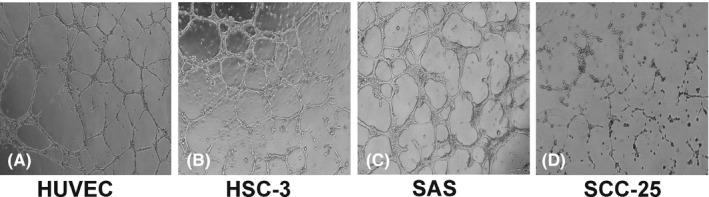
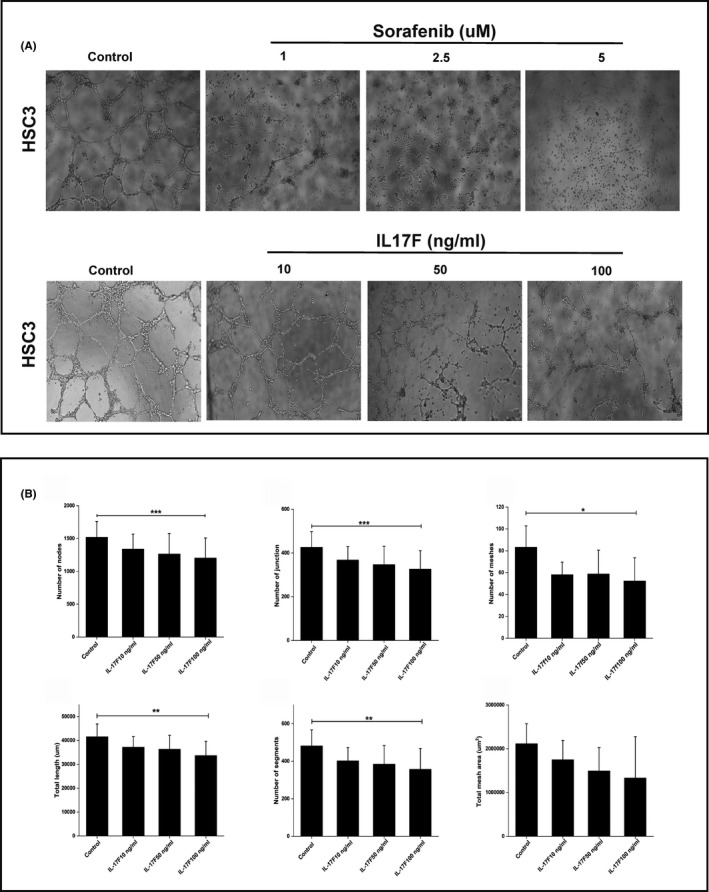
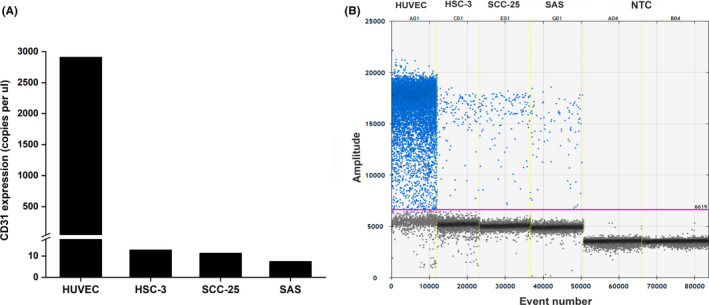
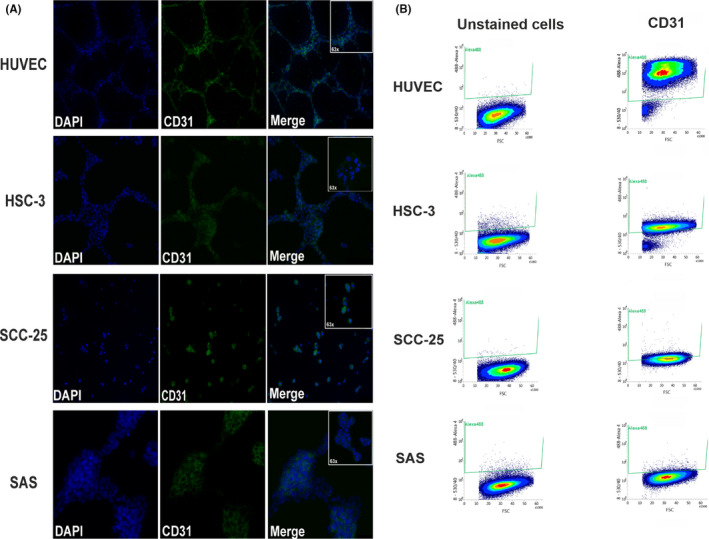
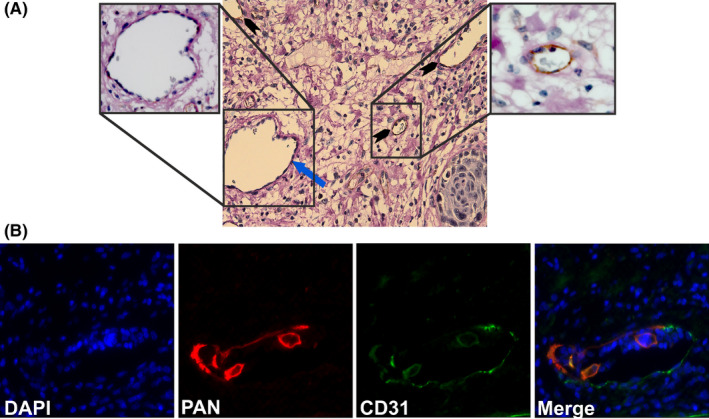
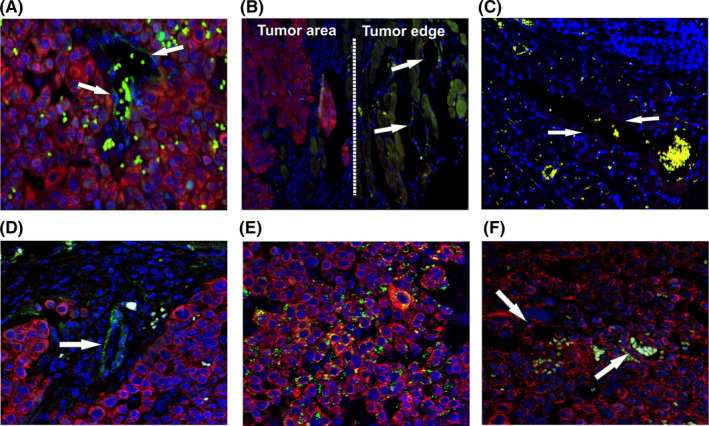
Oral tongue squamous cell carcinoma (OTSCC) is one of the most common cancers worldwide and is characterized by early metastasis and poor prognosis. Recently, we reported that extracellular interleukin-17F (IL-17F) correlates with better disease-specific survival in OTSCC patients and has promising anticancer effects in vitro. Vasculogenic mimicry (VM) is the formation of an alternative vasculogenic system by aggressive tumor cells, which is implicated in treatment failure and poor survival of cancer patients. We sought to confirm the formation of VM in OTSCC and to investigate the effect of IL-17F on VM formation. Here, we showed that highly invasive OTSCC cells (HSC-3 and SAS) form tube-like VM on Matrigel similar to those formed by human umbilical vein endothelial cells. Interestingly, the less invasive cells (SCC-25) did not form any VM structures. Droplet-digital PCR, FACS, and immunofluorescence staining revealed the presence of CD31 mRNA and protein in OTSCC cells. Additionally, in a mouse orthotopic model, HSC-3 cells expressed VE-cadherin (CD144) but lacked Von Willebrand Factor. We identified different patterns of VM structures in patient samples and in an orthotopic OTSCC mouse model. Similar to the effect produced by the antiangiogenic drug sorafenib, IL-17F inhibited the formation of VM structures in vitro by HSC-3 and reduced almost all VM-related parameters. In conclusion, our findings indicate the presence of VM in OTSCC and the antitumorigenic effect of IL-17F through its effect on the VM. Therefore, targeting IL-17F or its regulatory pathways may lead to promising therapeutic strategies in patients with OTSCC.
口腔舌鳞状细胞癌(OTSCC)是世界上最常见的癌症之一,其特征为早期转移和预后不良。最近,我们报道细胞外白细胞介素-17F(IL-17F)与 OTSCC 患者的疾病特异性生存相关,并在体外具有有前途的抗癌作用。血管生成拟态(VM)是侵袭性肿瘤细胞形成替代血管生成系统,与癌症患者的治疗失败和生存不良有关。我们试图确认 OTSCC 中 VM 的形成,并研究 IL-17F 对 VM 形成的影响。在这里,我们表明高度侵袭性的 OTSCC 细胞(HSC-3 和 SAS)在 Matrigel 上形成类似于人脐静脉内皮细胞形成的管状 VM。有趣的是,侵袭性较低的细胞(SCC-25)未形成任何 VM 结构。液滴数字 PCR、FACS 和免疫荧光染色显示 OTSCC 细胞中存在 CD31 mRNA 和蛋白。此外,在小鼠原位模型中,HSC-3 细胞表达 VE-钙粘蛋白(CD144)但缺乏血管性血友病因子。我们在患者样本和 OTSCC 原位小鼠模型中鉴定了不同模式的 VM 结构。与抗血管生成药物索拉非尼的作用相似,IL-17F 通过抑制 HSC-3 中 VM 结构的形成并降低几乎所有与 VM 相关的参数,在体外抑制 VM 结构的形成。总之,我们的研究结果表明 OTSCC 中存在 VM,以及 IL-17F 通过其对 VM 的作用具有抗肿瘤作用。因此,靶向 IL-17F 或其调节途径可能为 OTSCC 患者提供有前途的治疗策略。