Department of Oral and Maxillofacial Diseases, University of Helsinki, Clinicum, Biomedicum Helsinki 1, C223b, P.O. Box 63 (Haartmaninkatu 8), 00014, Helsinki, Finland.
Translational Immunology Research Programme (TRIMM), University of Helsinki, Helsinki, Finland.
BMC Cancer. 2022 Jan 11;22(1):54. doi: 10.1186/s12885-021-08969-0.
Interleukin (IL)-17 family is a group of six cytokines that plays a central role in inflammatory processes and participates in cancer progression. Interleukin-17A has been shown to have mainly a protumorigenic role, but the other members of the IL-17 family, including IL-17F, have received less attention.
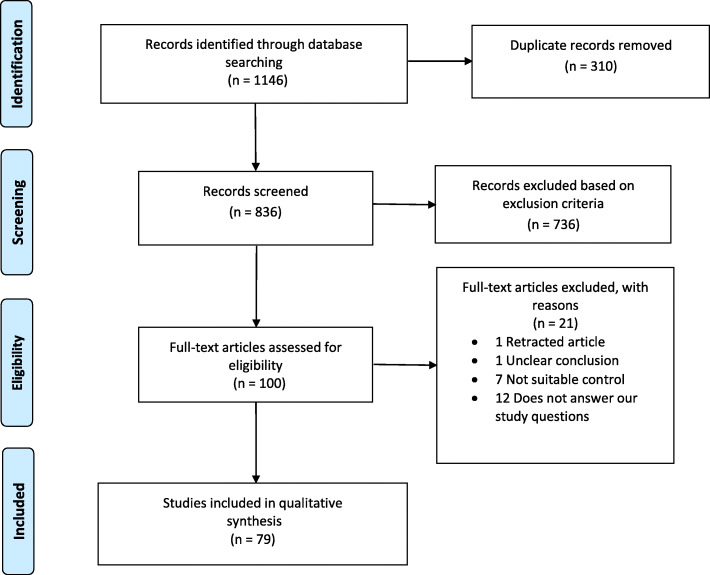
We applied systematic review guidelines to study the role of IL-17F, protein and mRNA expression, polymorphisms, and functions, in cancer. We carried out a systematic search in PubMed, Ovid Medline, Scopus, and Cochrane libraries, yielding 79 articles that met the inclusion criteria.
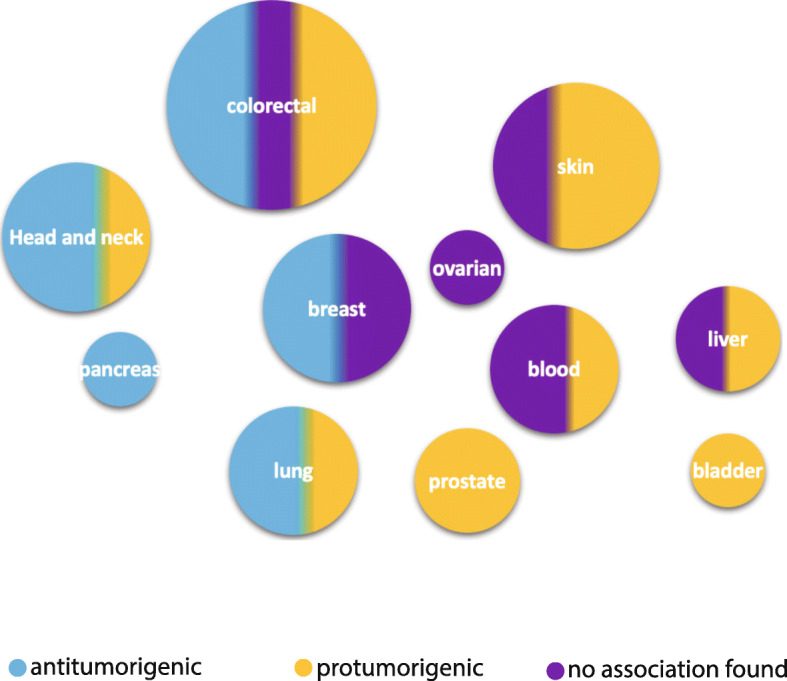
The findings indicated that IL-17F has both anti- and protumorigenic roles, which depend on cancer type and the molecular form and location of IL-17F. As an example, the presence of IL-17F protein in tumor tissue and patient serum has a protective role in oral and pancreatic cancers, whereas it is protumorigenic in prostate and bladder cancers. These effects are proposed to be based on multiple mechanisms, such as inhibition of angiogenesis, vasculogenic mimicry and cancer cell proliferation, migration and invasion, and aggravating the inflammatory process. No solid evidence emerged for the correlation between IL-17F polymorphisms and cancer incidence or patients' prognosis.
IL-17F is a multifaceted cytokine. There is a clear demand for more well-designed studies of IL-17F to elucidate its molecular mechanisms in different types of cancer. The studies presented in this article examined a variety of different designs, study populations and primary/secondary outcomes, which unfortunately reduces the value of direct interstudy comparisons.
白细胞介素 (IL)-17 家族是一组六种细胞因子,在炎症过程中发挥核心作用,并参与癌症进展。白细胞介素-17A 已被证明主要具有促肿瘤作用,但 IL-17 家族的其他成员,包括白细胞介素-17F,受到的关注较少。
我们应用系统评价指南研究白细胞介素-17F、蛋白和 mRNA 表达、多态性和功能在癌症中的作用。我们在 PubMed、Ovid Medline、Scopus 和 Cochrane 图书馆进行了系统搜索,得到了 79 篇符合纳入标准的文章。
研究结果表明,白细胞介素-17F 具有抗肿瘤和促肿瘤作用,这取决于癌症类型以及白细胞介素-17F 的分子形式和位置。例如,肿瘤组织和患者血清中白细胞介素-17F 蛋白的存在对口腔癌和胰腺癌具有保护作用,而对前列腺癌和膀胱癌则具有促肿瘤作用。这些作用被认为是基于多种机制,如抑制血管生成、血管生成模拟和癌细胞增殖、迁移和侵袭,以及加重炎症过程。没有确凿的证据表明白细胞介素-17F 多态性与癌症发病率或患者预后相关。
白细胞介素-17F 是一种多方面的细胞因子。显然需要更多设计良好的研究来阐明其在不同类型癌症中的分子机制。本文介绍的研究检查了各种不同的设计、研究人群和主要/次要结局,这不幸降低了直接进行研究间比较的价值。