Beijing Advanced Innovation Center for Tree Breeding by Molecular Design, Beijing University of Agriculture, Beijing 102206, China.
Department of Plant Sciences, Laboratory of Molecular Biology, Wageningen University, Droevendaalsesteeg 1, 6708 PB Wageningen, The Netherlands.
Plant Physiol. 2021 Jul 6;186(3):1591-1605. doi: 10.1093/plphys/kiab140.
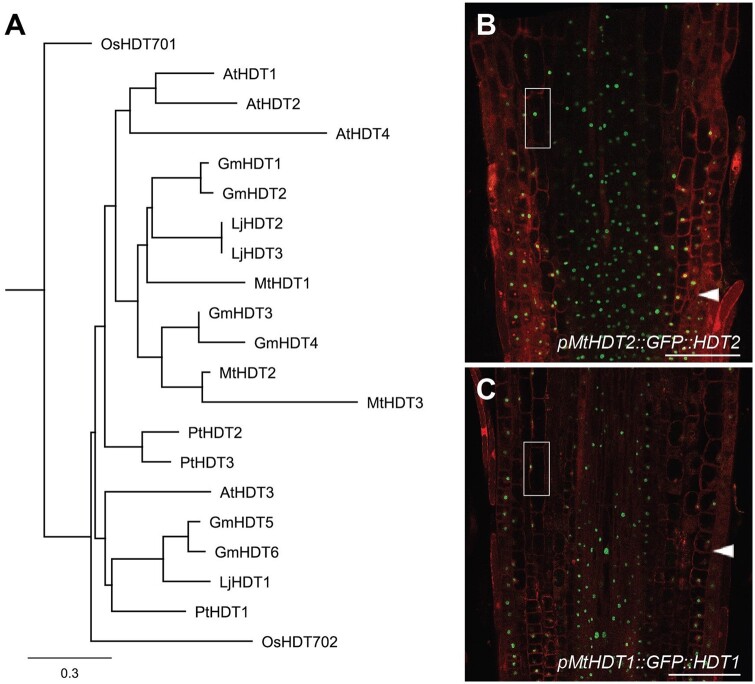
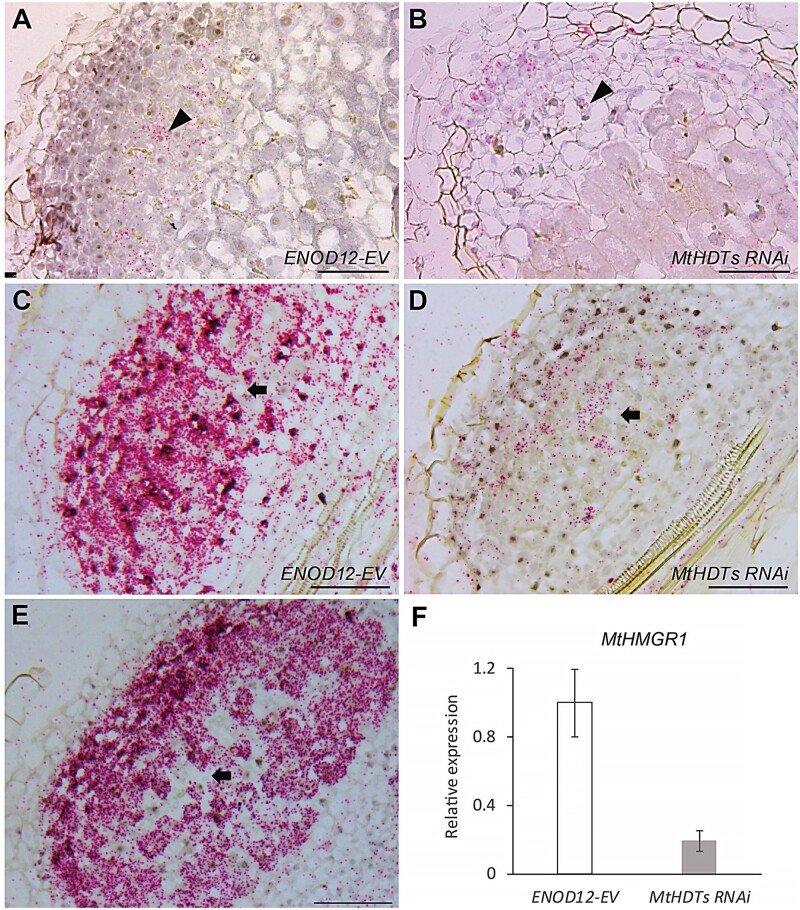
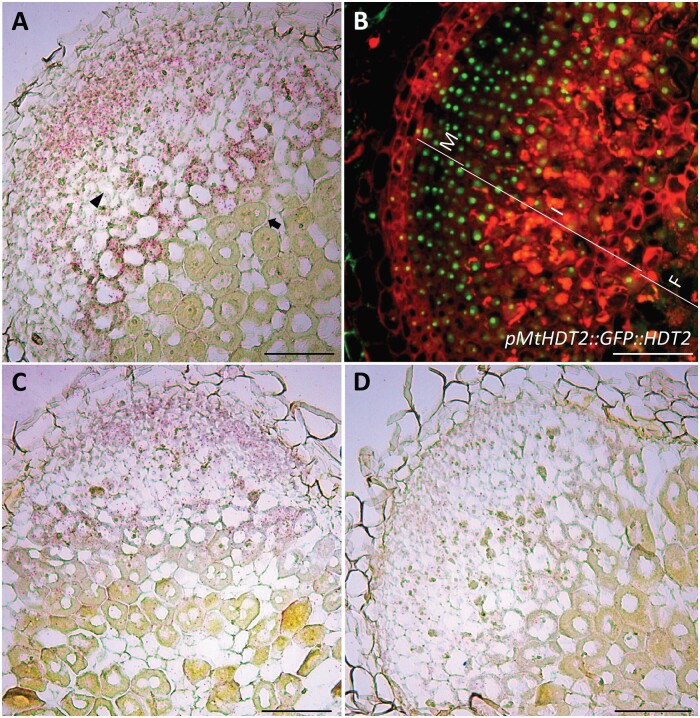
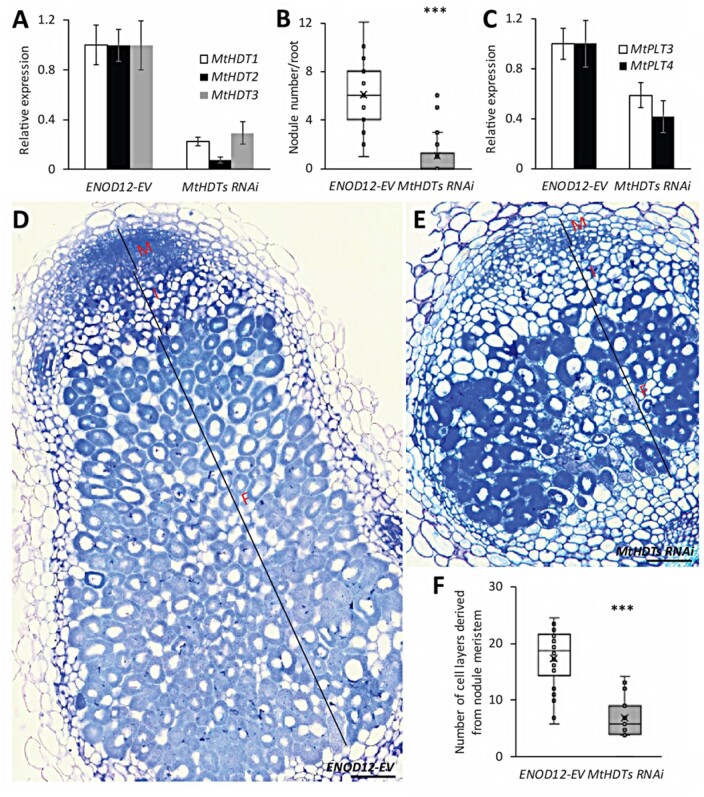
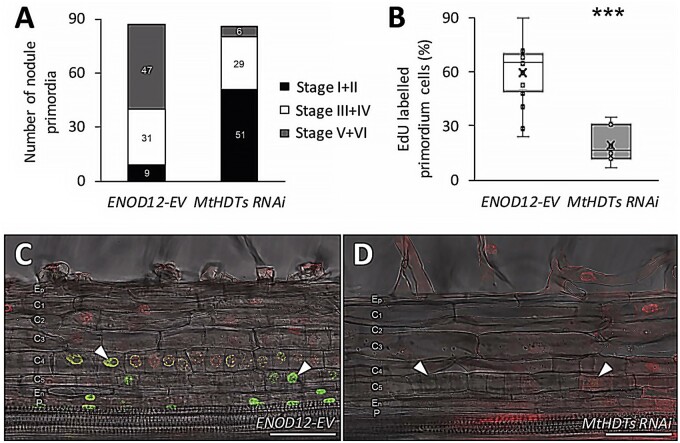
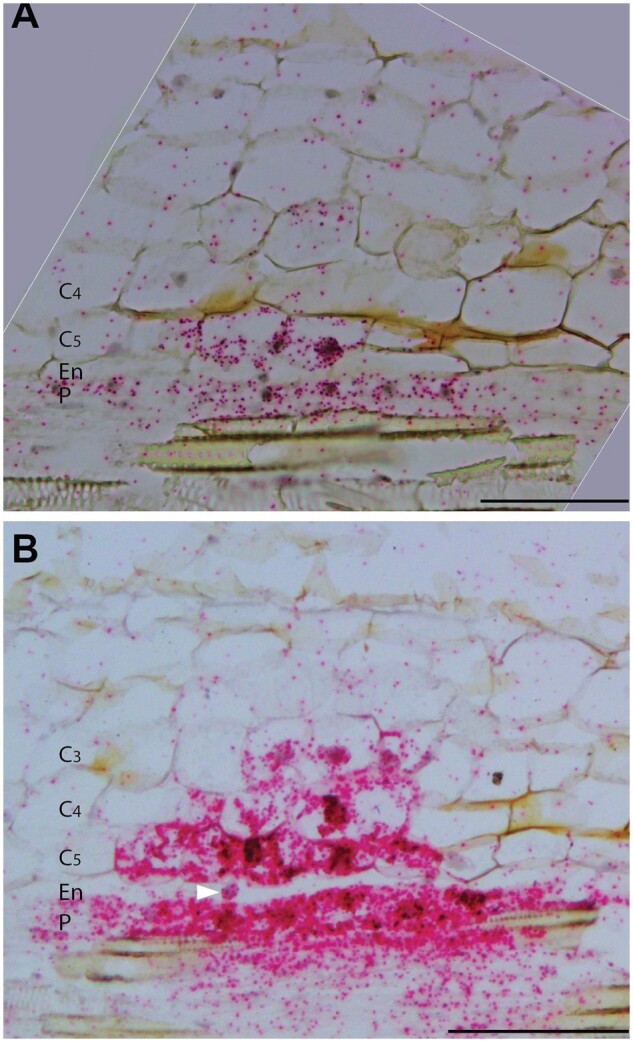
Legume and rhizobium species can establish a nitrogen-fixing nodule symbiosis. Previous studies have shown that several transcription factors that play a role in (lateral) root development are also involved in nodule development. Chromatin remodeling factors, like transcription factors, are key players in regulating gene expression. However, studies have not investigated whether chromatin remodeling genes that are essential for root development are also involved in nodule development. Here, we studied the role of Medicago (Medicago truncatula) histone deacetylases (MtHDTs) in nodule development. Arabidopsis (Arabidopsis thaliana) orthologs of HDTs have been shown to play a role in root development. MtHDT expression is induced in nodule primordia and is maintained in the nodule meristem and infection zone. Conditional, nodule-specific knockdown of MtHDT expression by RNAi blocks nodule primordium development. A few nodules may still form, but their nodule meristems are smaller, and rhizobial colonization of the cells derived from the meristem is markedly reduced. Although the HDTs are expressed during nodule and root development, transcriptome analyses indicate that HDTs control the development of each organ in a different manner. During nodule development, the MtHDTs positively regulate 3-hydroxy-3-methylglutaryl coenzyme a reductase 1 (MtHMGR1). Decreased expression of MtHMGR1 is sufficient to explain the inhibition of primordium formation.
豆科植物和根瘤菌能够建立固氮共生结瘤。先前的研究表明,在侧根发育中起作用的几个转录因子也参与了结瘤的发育。染色质重塑因子,如转录因子,是调节基因表达的关键因素。然而,目前还没有研究是否参与根发育的染色质重塑基因也参与了结瘤的发育。在这里,我们研究了拟南芥(Arabidopsis thaliana)组蛋白去乙酰化酶(HDTs)在结瘤发育中的作用。已经表明,拟南芥的 HDTs 同源物在根发育中发挥作用。MtHDT 的表达在根原基中被诱导,并在根瘤分生组织和侵染区中维持。通过 RNAi 进行条件性、根瘤特异性的 MtHDT 表达敲低会阻断根原基的发育。可能仍会形成一些根瘤,但它们的根瘤分生组织较小,并且来自分生组织的细胞的根瘤菌定植明显减少。尽管在根瘤和根发育过程中都表达了 HDTs,但转录组分析表明,HDTs 以不同的方式控制每个器官的发育。在结瘤发育过程中,MtHDTs 正向调控 3-羟基-3-甲基戊二酰辅酶 A 还原酶 1(MtHMGR1)。MtHMGR1 表达量的降低足以解释原基形成的抑制。