He Zilong, Shao Siyao, Li Jiaqi, Kumar S Santosh, Sokoloff J B, Hong Jiarong
Phys Fluids (1994). 2021 Jan 1;33(1):013309. doi: 10.1063/5.0038562. Epub 2021 Jan 15.
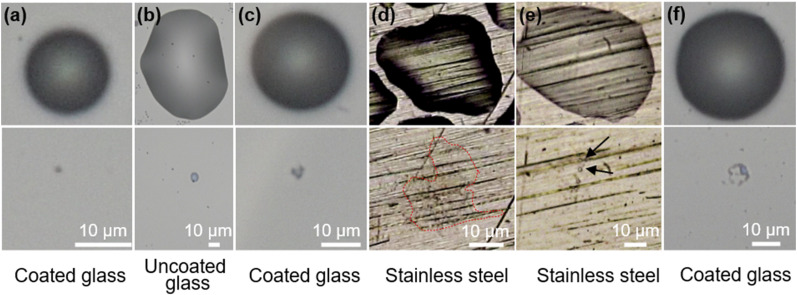
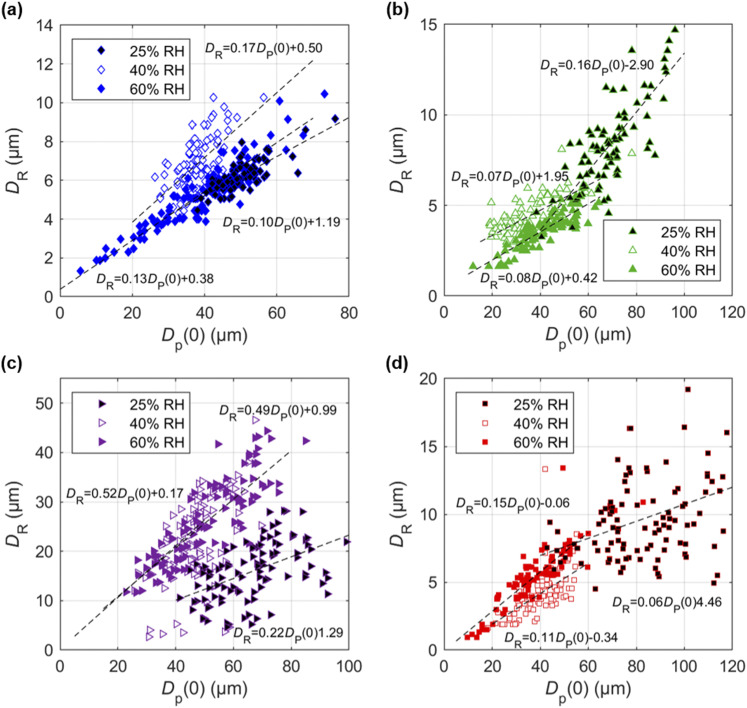
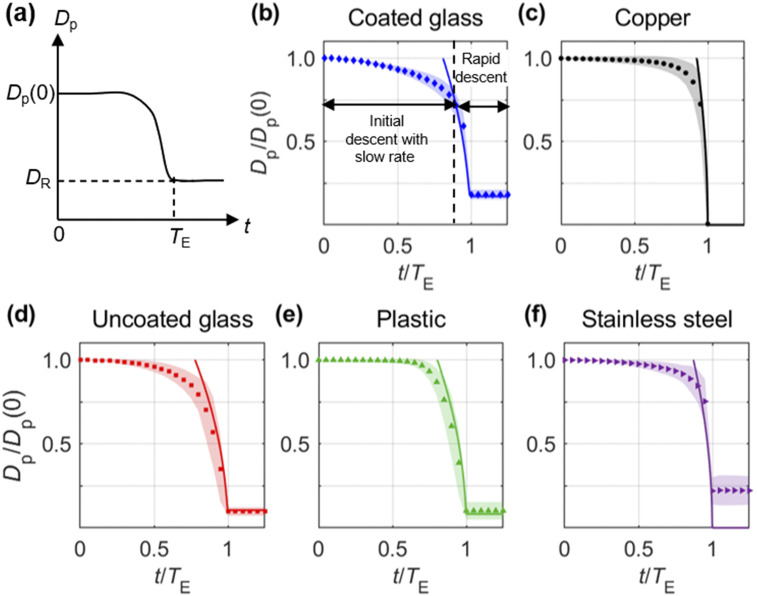
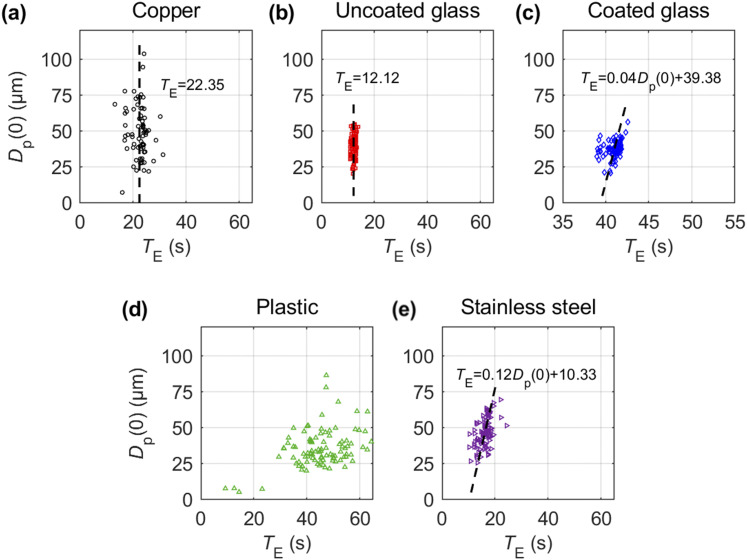
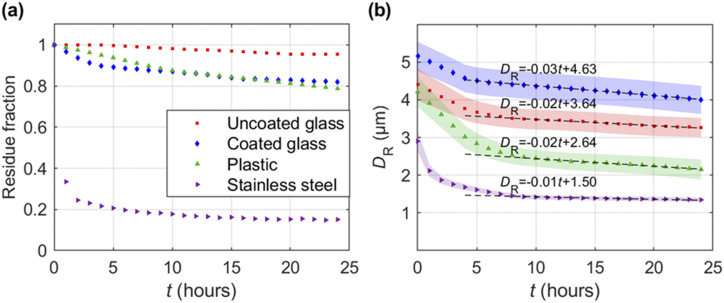
We conducted a systematic investigation of droplet evaporation on different surfaces. We found that droplets formed even with distilled water do not disappear with evaporation but instead shrink to a residue of a few micrometers lasting over 24 h. The residue formation process differs across surfaces and humidity levels. Specifically, under 40% relative humidity, 80% of droplets form residues on plastic and uncoated and coated glass, while less than 20% form on stainless steel and none on copper. The formation of residues and their variability are explained by modeling the evaporation process considering the presence of nonvolatile solutes on substrates and substrate thermal conductivity. Such variability is consistent with the survivability of SARS-CoV-2 measured on these surfaces. We hypothesize that these long-lasting microscale residues can potentially insulate the virus against environmental changes, allowing them to survive and remain infectious for extended durations.
我们对不同表面上的液滴蒸发进行了系统研究。我们发现,即使是用蒸馏水形成的液滴也不会随着蒸发而消失,而是会收缩成几微米的残留物,持续超过24小时。残留物的形成过程因表面和湿度水平而异。具体而言,在相对湿度40%以下时,80%的液滴会在塑料、未涂层和涂层玻璃上形成残留物,而在不锈钢上形成的不到20%,在铜上则没有形成。通过考虑基底上非挥发性溶质的存在和基底热导率对蒸发过程进行建模,解释了残留物的形成及其变异性。这种变异性与在这些表面上测得的SARS-CoV-2的存活能力一致。我们推测,这些持久的微观残留物可能会使病毒免受环境变化的影响,使其能够存活并在较长时间内保持传染性。