Sen Nirvik
Chemical Engineering Division, Bhabha Atomic Research Centre, Trombay, Mumbai 400085, India.
Phys Fluids (1994). 2021 Mar 1;33(3):033311. doi: 10.1063/5.0039559. Epub 2021 Mar 12.
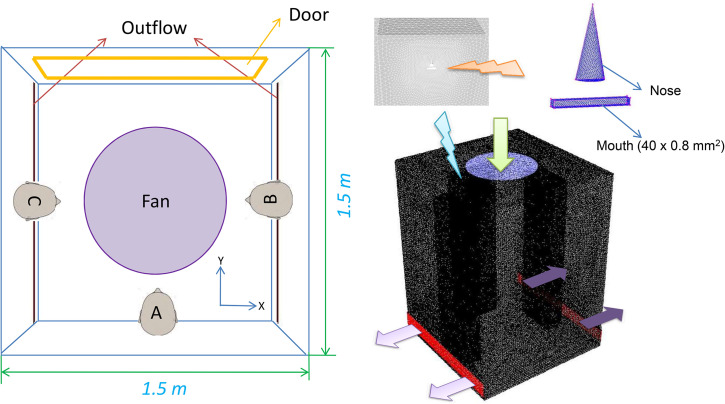
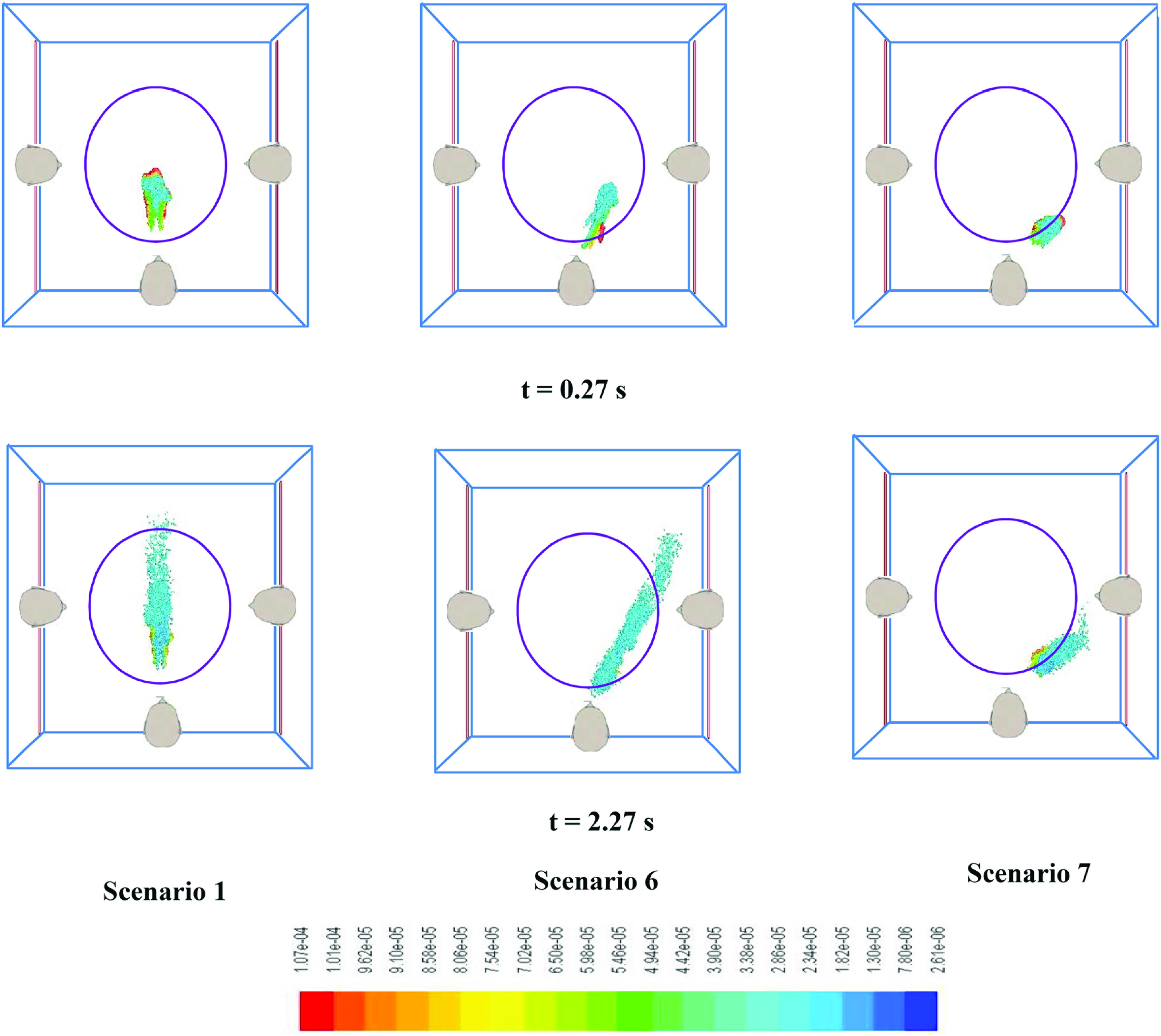
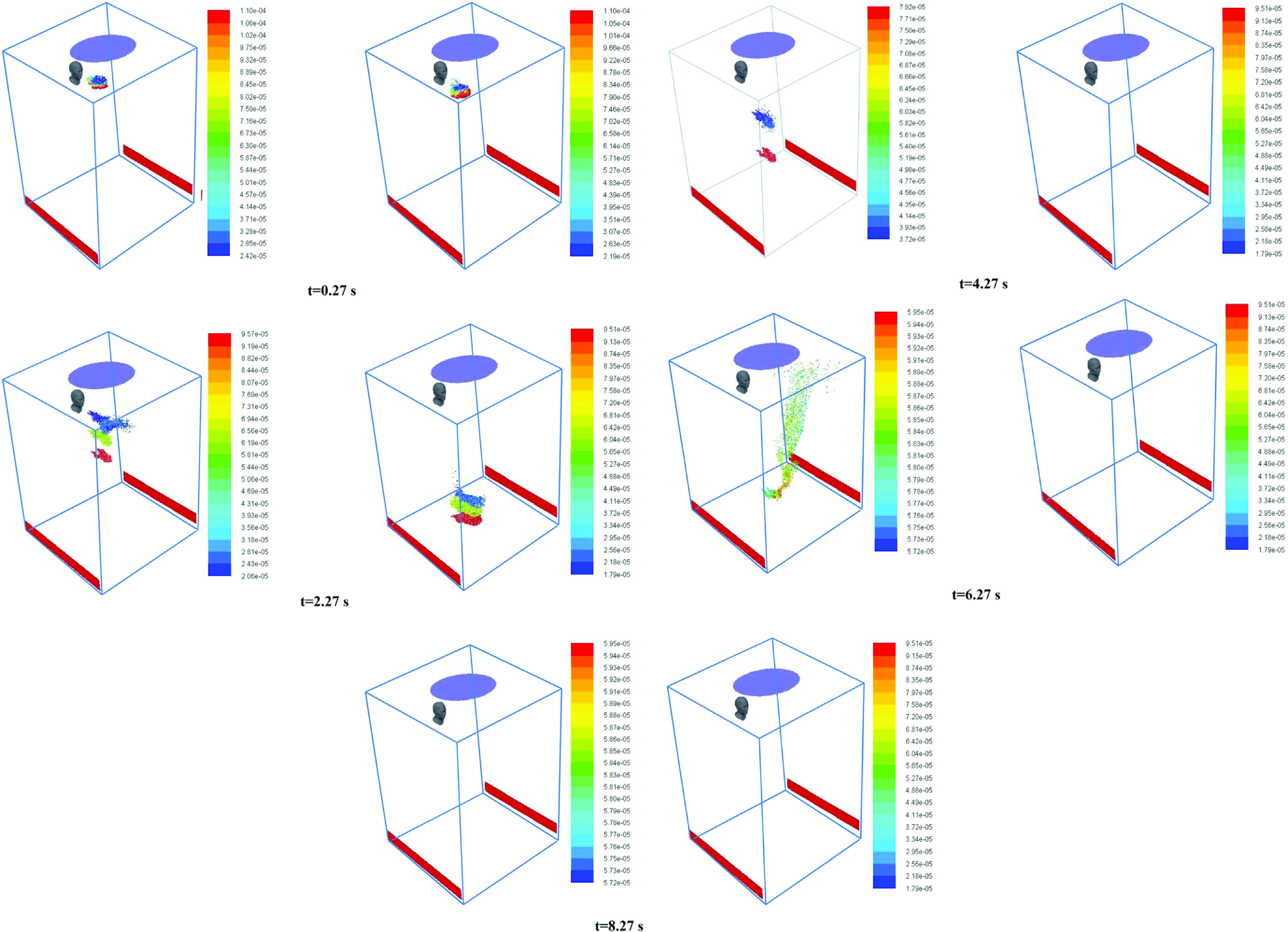
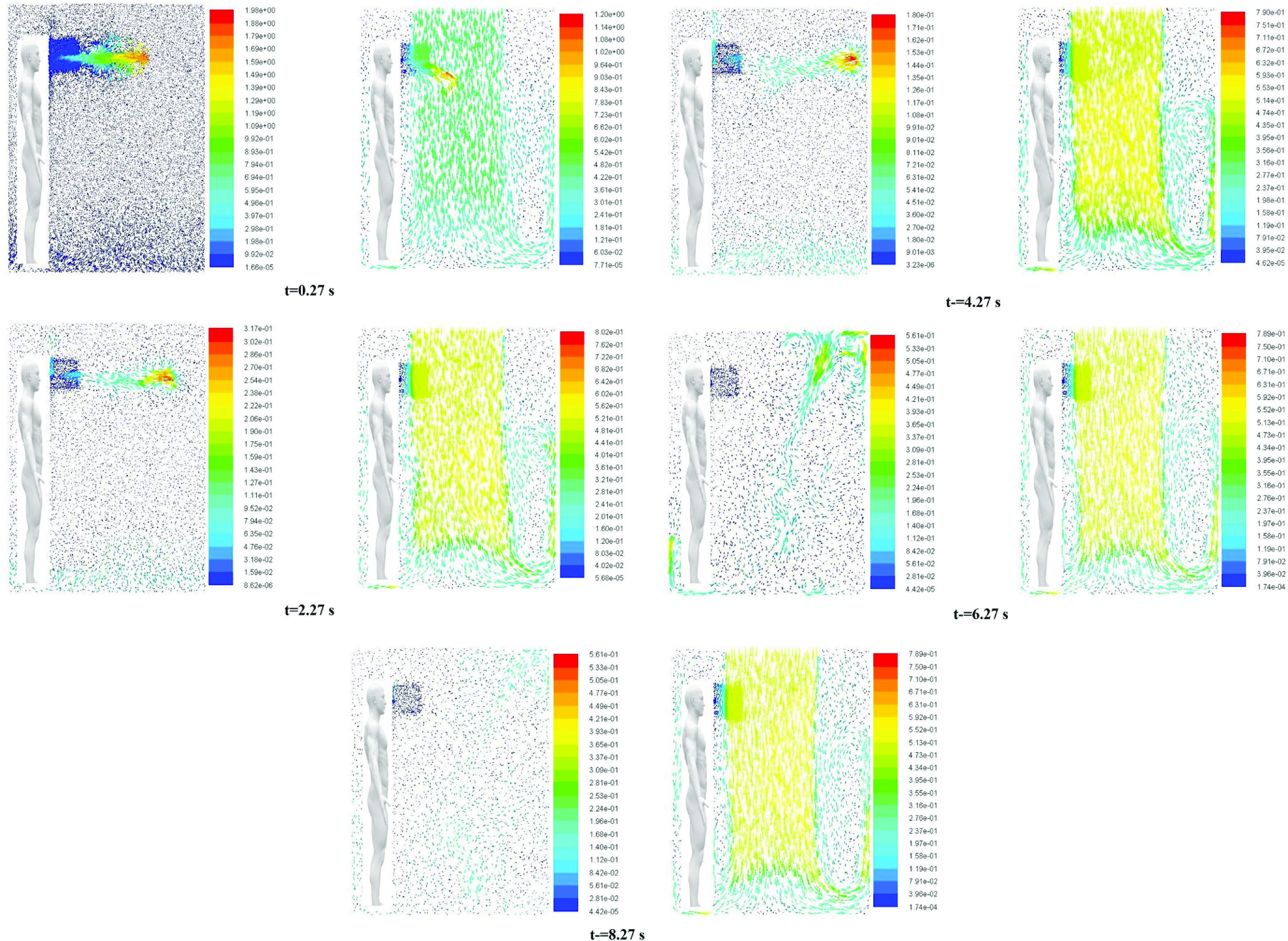
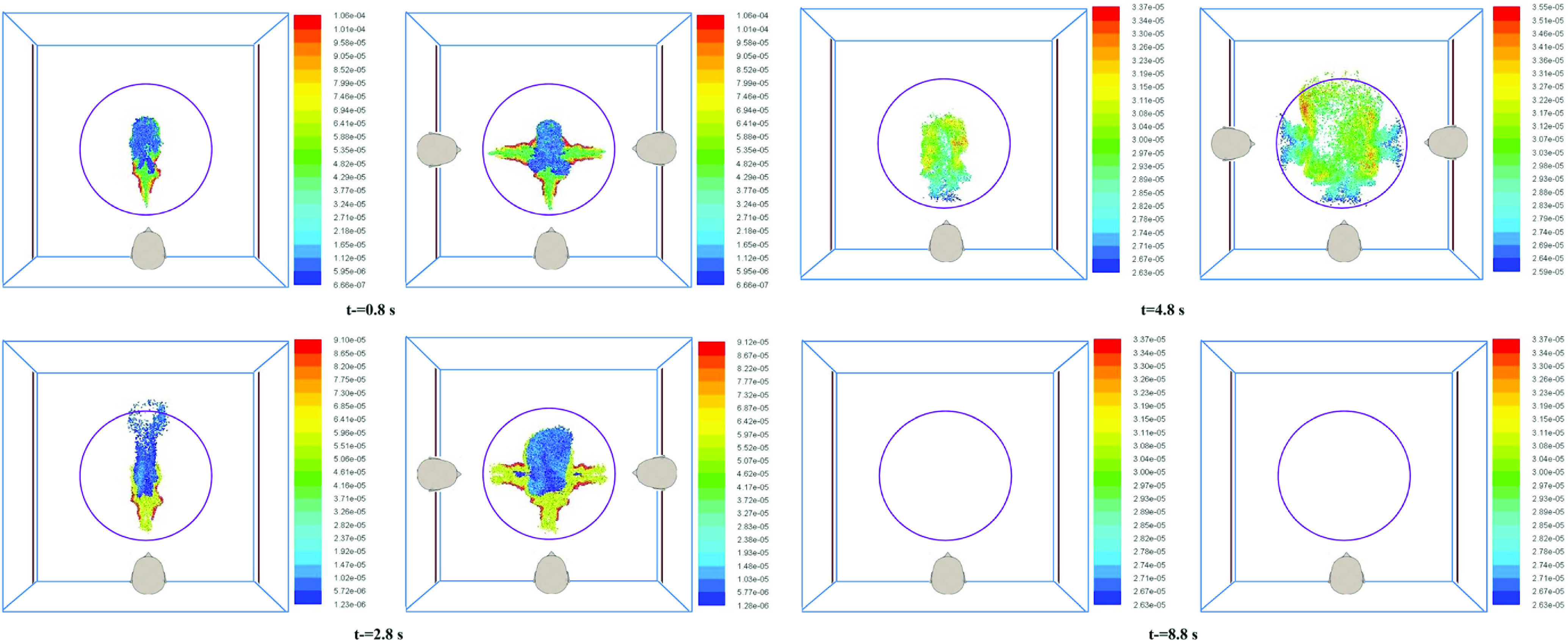
As the world learns to live with COVID-19 and activities/business open up, the use of elevators becomes frequent. A pertinent question is what happens if someone accidentally coughs inside the elevator. In this work, a three dimensional Euler-Lagrangian model is used to understand the transmission and evaporation of micrometer-sized droplets in such cases. The effect of turbulence created by the air puff associated with coughing has been considered. Different possible scenarios varying in the presence of air ventilation within the elevator, number of persons coughing, direction of ejection of cough droplets, and ambient relative humidity and temperature have been postulated and simulated. The results obtained show that in the presence of proper ventilation within the elevator, most of the ejected cough droplets fall to the ground before impacting other persons traveling in the same elevator. However, in the absence of proper ventilation, the turbulence created during coughing transmits the particles all across the elevator enclosure.
随着世界学会与新冠病毒共存且各项活动/业务逐步恢复,电梯的使用变得频繁起来。一个相关的问题是,如果有人在电梯内不小心咳嗽会发生什么。在这项研究中,我们使用三维欧拉-拉格朗日模型来理解在这种情况下微米级液滴的传播和蒸发。我们考虑了咳嗽时伴随的气流所产生的湍流效应。我们假设并模拟了不同的可能场景,这些场景在电梯内的通风情况、咳嗽人数、咳嗽飞沫的喷射方向以及环境相对湿度和温度等方面存在差异。所得结果表明,在电梯内有适当通风的情况下,大多数喷射出的咳嗽飞沫在撞击同乘电梯的其他人之前就落到了地面。然而,在没有适当通风的情况下,咳嗽时产生的湍流会将颗粒传播到整个电梯轿厢内。