Zhu Ming-Zhi, Zhou Fang, Ran Li-Sha, Li Yi-Long, Tan Bin, Wang Kun-Bo, Huang Jian-An, Liu Zhong-Hua
Key Laboratory of Tea Science of Ministry of Education, College of Horticulture, Hunan Agricultural University, Changsha, China.
National Research Center of Engineering Technology for Utilization of Functional Ingredients from Botanicals, Co-Innovation Center of Education Ministry for Utilization of Botanical Functional Ingredients, Hunan Agricultural University, Changsha, China.
Front Plant Sci. 2021 Mar 5;12:606962. doi: 10.3389/fpls.2021.606962. eCollection 2021.
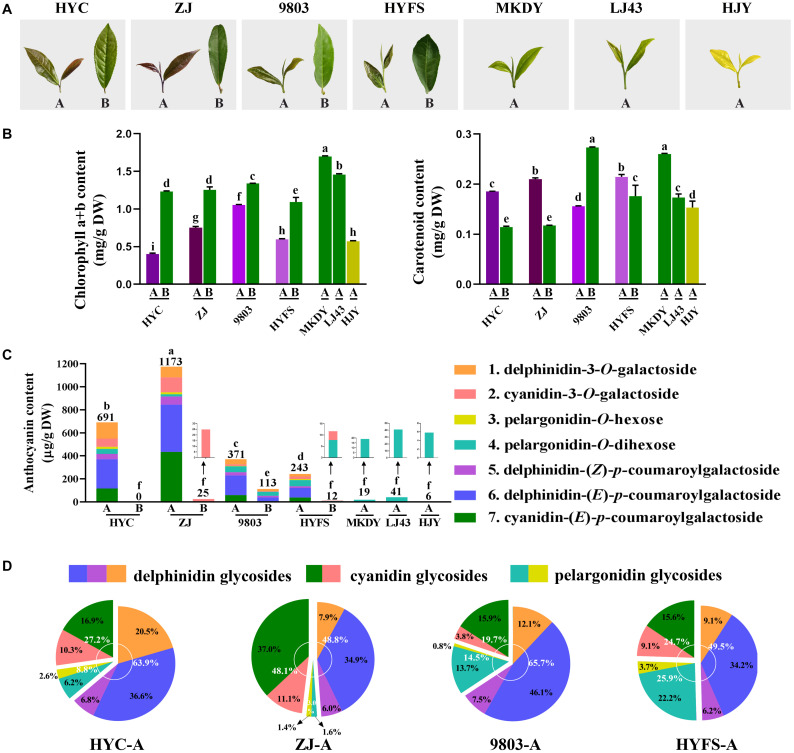
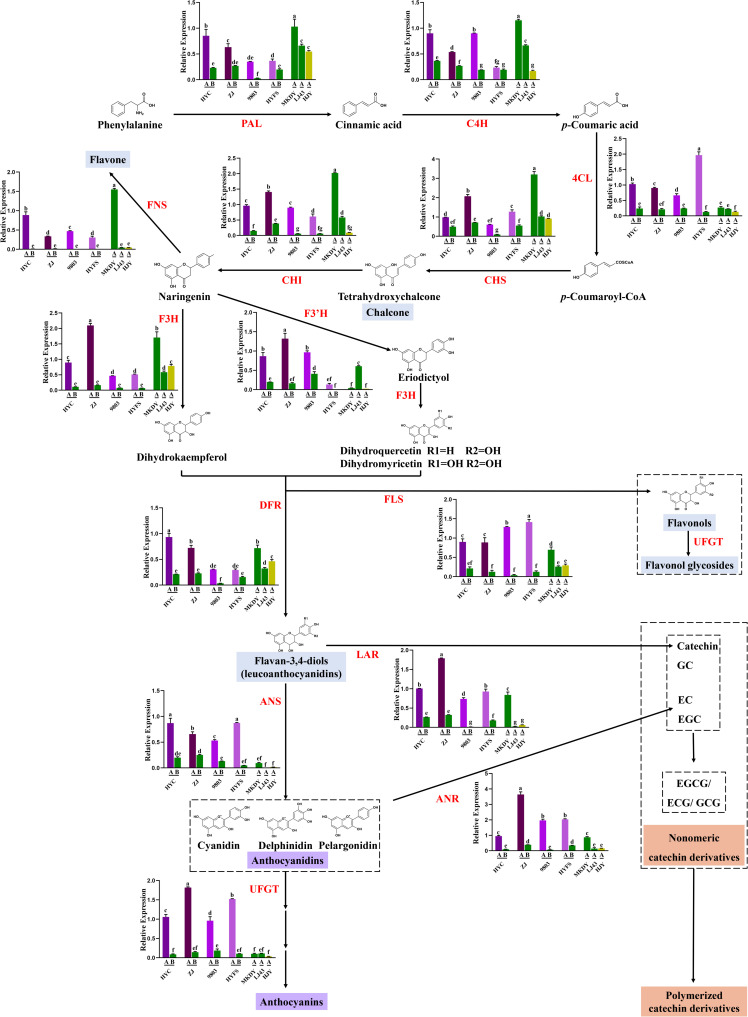
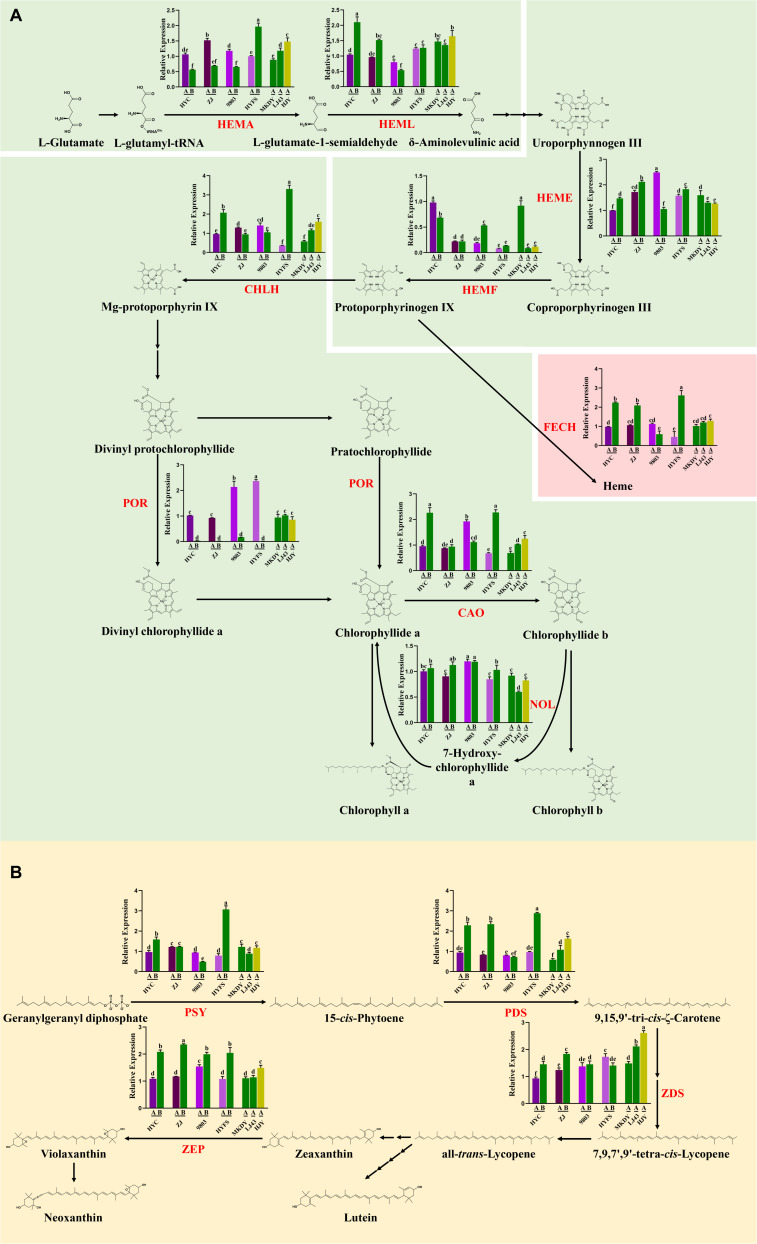
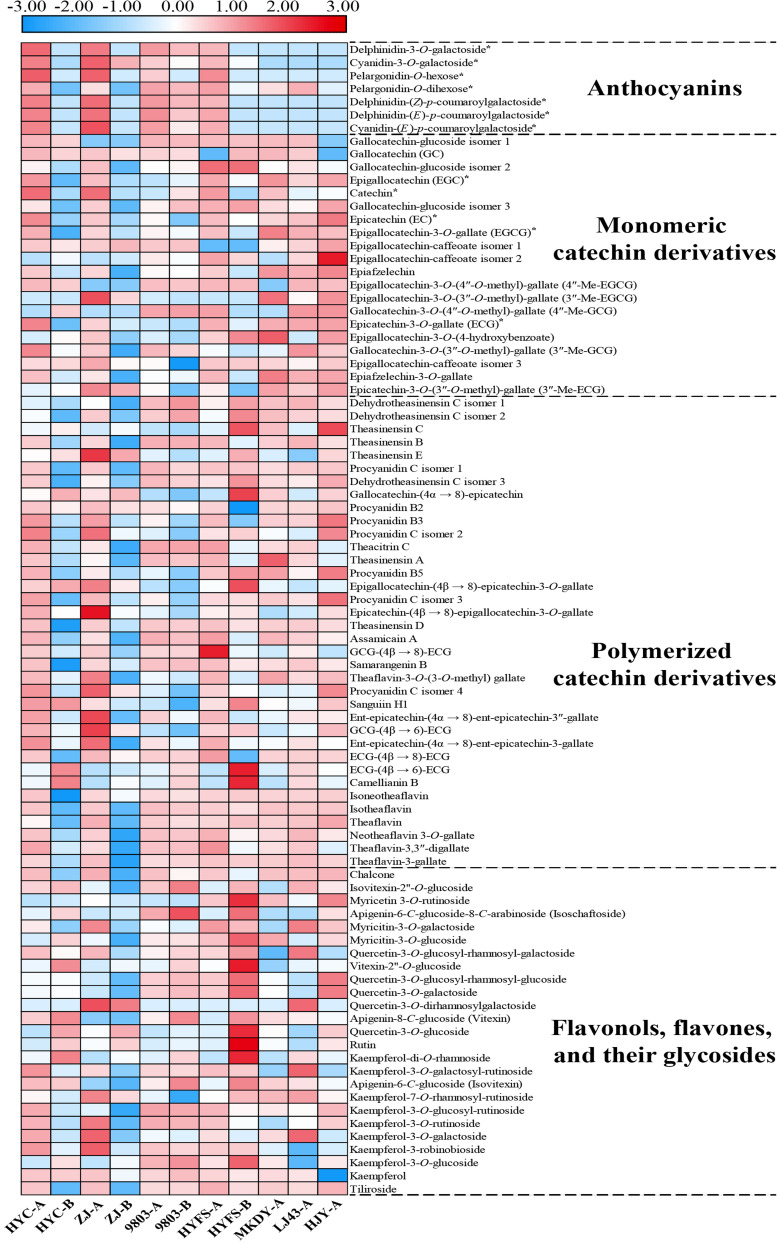
Purple-leaf tea cultivars are known for their specific chemical composition that greatly influences tea bioactivity and plant resistance. Some studies have tried to reveal the purple-leaf formation mechanism of tea by comparing the purple new leaves and green older leaves in the same purple-leaf tea cultivar. It has been reported that almost all structural genes involved in anthocyanin/flavonoid biosynthesis were down-regulated in purple-leaf tea cultivars when the purple new leaves become green older leaves. However, anthocyanin/flavonoid biosynthesis is also affected by the growth period of tea leaves, gradually decreasing as new tea leaves become old tea leaves. This leads to uncertainty as to whether the purple-leaf formation is attributed to the high expression of structural genes in anthocyanin/flavonoid biosynthesis. To better understand the mechanisms underlying purple-leaf formation, we analyzed the biosynthesis of three pigments (chlorophylls, carotenoids, and anthocyanins/flavonoids) by integrated metabolic and gene expression analyses in four purple-leaf tea cultivars including var. and var. . Green-leaf and yellow-leaf cultivars were employed for comparison. The purple-leaf phenotype was mainly attributed to high anthocyanins and low chlorophylls. The purple-leaf phenotype led to other flavonoid changes including lowered monomeric catechin derivatives and elevated polymerized catechin derivatives. Gene expression analysis revealed that 4-coumarate: CoA ligase (), anthocyanidin synthase (), and UDP-glucose: flavonoid 3-O-glucosyltransferase () genes in the anthocyanin biosynthetic pathway and the uroporphyrinogen decarboxylase () gene in the chlorophyll biosynthetic pathway were responsible for high anthocyanin and low chlorophyll, respectively. These findings provide insights into the mechanism of purple-leaf formation in tea cultivars.
紫叶茶品种以其特定的化学成分而闻名,这些化学成分对茶叶的生物活性和植物抗性有很大影响。一些研究试图通过比较同一紫叶茶品种中的紫色新叶和绿色老叶来揭示茶叶紫叶形成的机制。据报道,当紫色新叶变成绿色老叶时,几乎所有参与花青素/类黄酮生物合成的结构基因在紫叶茶品种中均下调。然而,花青素/类黄酮的生物合成也受茶叶生长时期的影响,随着新叶变老叶而逐渐减少。这导致关于紫叶形成是否归因于花青素/类黄酮生物合成中结构基因的高表达存在不确定性。为了更好地理解紫叶形成的潜在机制,我们通过综合代谢和基因表达分析,对包括[品种1]和[品种2]在内的四个紫叶茶品种中的三种色素(叶绿素、类胡萝卜素和花青素/类黄酮)的生物合成进行了分析。使用绿叶和黄叶品种进行比较。紫叶表型主要归因于高花青素和低叶绿素。紫叶表型导致其他类黄酮变化,包括单体儿茶素衍生物含量降低和聚合儿茶素衍生物含量升高。基因表达分析表明,花青素生物合成途径中的4-香豆酸:辅酶A连接酶(4CL)、花青素合酶(ANS)和UDP-葡萄糖:类黄酮3-O-葡萄糖基转移酶(UFGT)基因以及叶绿素生物合成途径中的尿卟啉原脱羧酶(UROD)基因分别导致了高花青素和低叶绿素的产生。这些发现为茶叶品种紫叶形成的机制提供了见解。