Xu Jinwei, Xiao Xin, Zhang Wenbo, Xu Rong, Kim Sang Cheol, Cui Yi, Howard Tyler T, Wu Esther, Cui Yi
Department of Materials Science and Engineering, Stanford University, Stanford, CA 94305, USA.
Stanford Institute for Materials and Energy Sciences, SLAC National Accelerator Laboratory, 2575 Sand Hill Road, Menlo Park, CA 94025, USA.
One Earth. 2020 Nov 20;3(5):574-589. doi: 10.1016/j.oneear.2020.10.014.
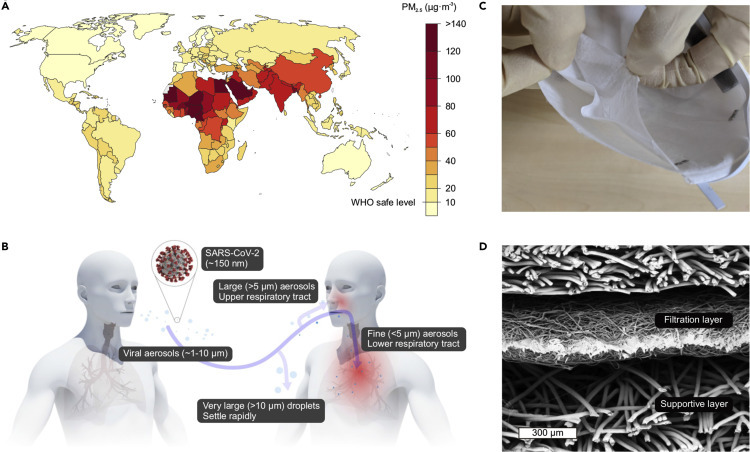
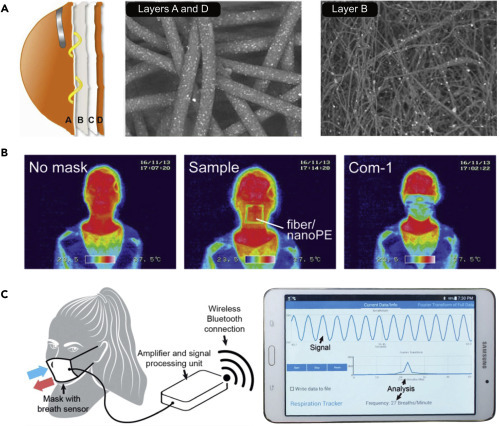
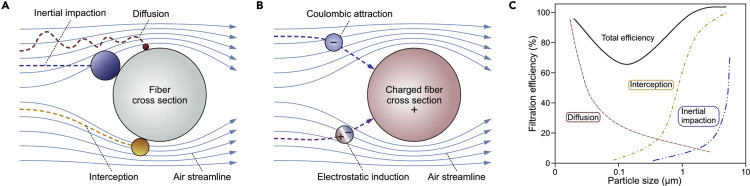
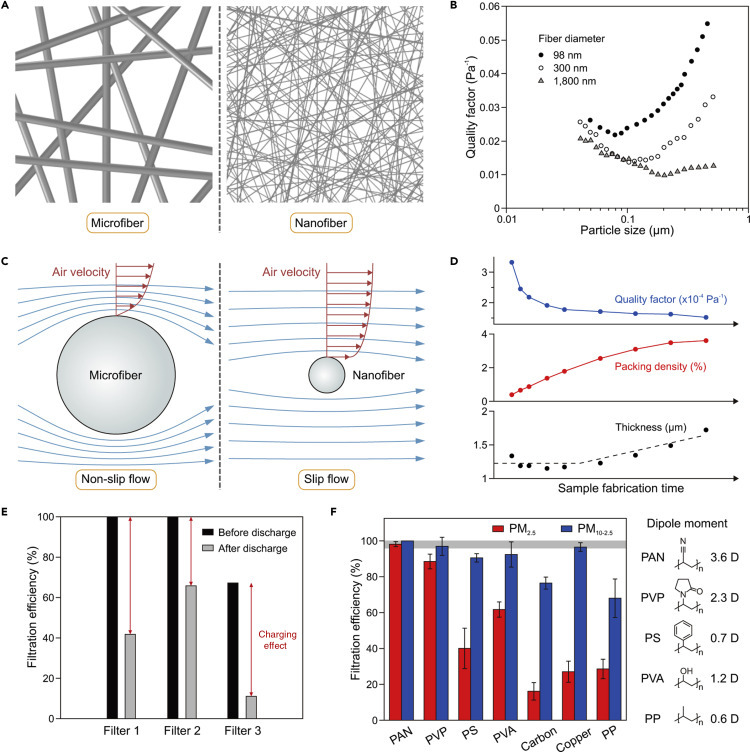
Air-filtering masks, also known as respirators, protect wearers from inhaling fine particulate matter (PM) in polluted air, as well as airborne pathogens during a pandemic, such as the ongoing COVID-19 pandemic. Fibrous medium, used as the filtration layer, is the most essential component of an air-filtering mask. This article presents an overview of the development of fibrous media for air filtration. We first synthesize the literature on several key factors that affect the filtration performance of fibrous media. We then concentrate on two major techniques for fabricating fibrous media, namely, meltblown and electrospinning. In addition, we underscore the importance of electret filters by reviewing various methods for imparting electrostatic charge on fibrous media. Finally, this article concludes with a perspective on the emerging research opportunities amid the COVID-19 crisis.
空气过滤口罩,也称为呼吸器,可保护佩戴者免受污染空气中细颗粒物(PM)的侵害,以及在大流行期间免受空气传播病原体的侵害,例如当前的新冠疫情。用作过滤层的纤维介质是空气过滤口罩最重要的组成部分。本文概述了用于空气过滤的纤维介质的发展情况。我们首先综合了有关影响纤维介质过滤性能的几个关键因素的文献。然后,我们专注于制造纤维介质的两种主要技术,即熔喷和静电纺丝。此外,我们通过回顾在纤维介质上施加静电荷的各种方法,强调了驻极体过滤器的重要性。最后,本文以对新冠疫情危机中新兴研究机会的展望作为结论。