Center for Communicable Disease Dynamics, and Department of Epidemiology, Harvard T H Chan School of Public Health, Boston, MA, USA.
Department of Mathematics and Statistics, Vassar College, Poughkeepsie, NY, USA.
Lancet Microbe. 2021 May;2(5):e219-e224. doi: 10.1016/S2666-5247(21)00004-5. Epub 2021 Mar 12.
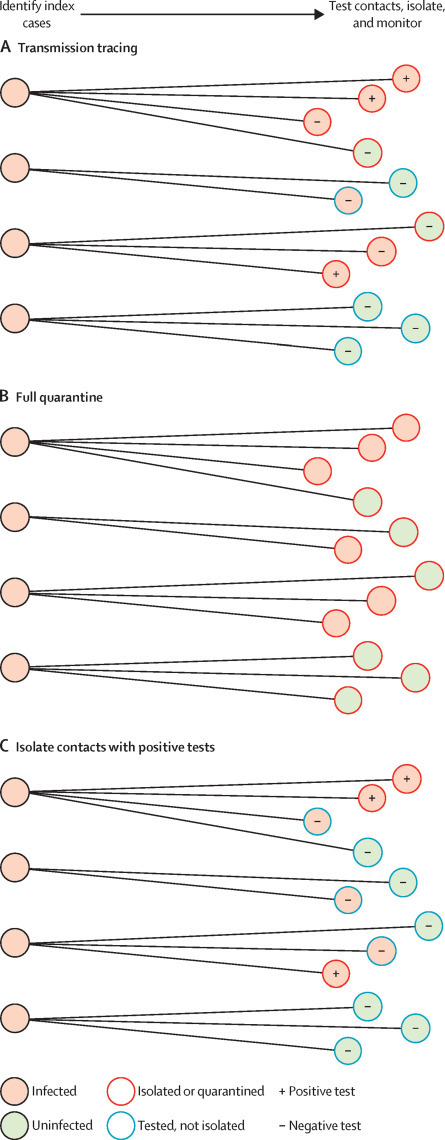
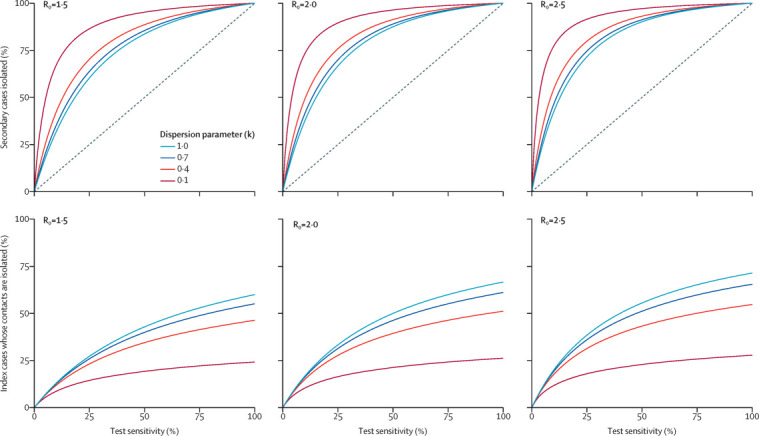
Throughout the COVID-19 pandemic, governments and individuals have attempted a wide variety of strategies to limit the damage of the pandemic on human lives, population health, and economies. Contact tracing has been a commonly used strategy, and various approaches have been proposed and attempted. We summarise some methods of contact tracing and testing, considering the resources demanded by each and how features of SARS-CoV-2 transmission affect their effectiveness. We also propose an approach focusing on tracing transmission events, which can be particularly effective when superspreading events play a large role in transmission. Accounting for the best available evidence on a pathogen and for the availability of resources can make control strategies more effective, even if they are not perfect.
在整个 COVID-19 大流行期间,政府和个人尝试了各种策略来限制大流行对人类生命、人口健康和经济的损害。接触者追踪是一种常用的策略,已经提出并尝试了各种方法。我们总结了一些接触者追踪和检测方法,考虑了每种方法所需的资源,以及 SARS-CoV-2 传播的特征如何影响它们的效果。我们还提出了一种侧重于追踪传播事件的方法,当超级传播事件在传播中起重要作用时,这种方法特别有效。考虑到病原体的最佳现有证据以及资源的可用性,可以使控制策略更加有效,即使它们并不完美。