Mangold Colleen A, Rathbun Molly M, Renner Daniel W, Kuny Chad V, Szpara Moriah L
Departments of Biology, Biochemistry and Molecular Biology, Center for Infectious Disease Dynamics, and the Huck Institutes of the Life Sciences, Pennsylvania State University, University Park, Pennsylvania, United States of America.
Department of Entomology, College of Agricultural Sciences, Pennsylvania State University, University Park, Pennsylvania, United States of America.
PLoS Pathog. 2021 Mar 22;17(3):e1009441. doi: 10.1371/journal.ppat.1009441. eCollection 2021 Mar.
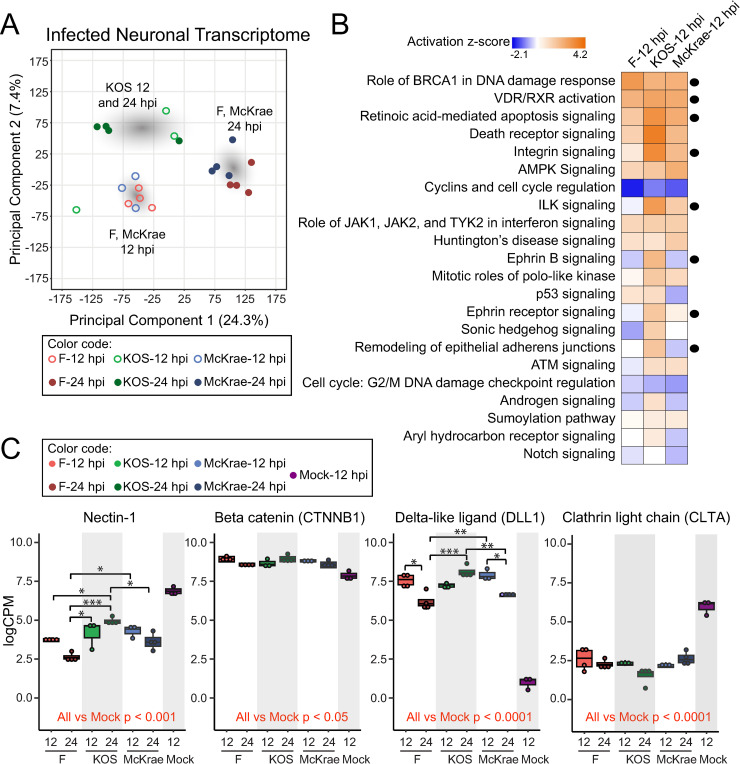
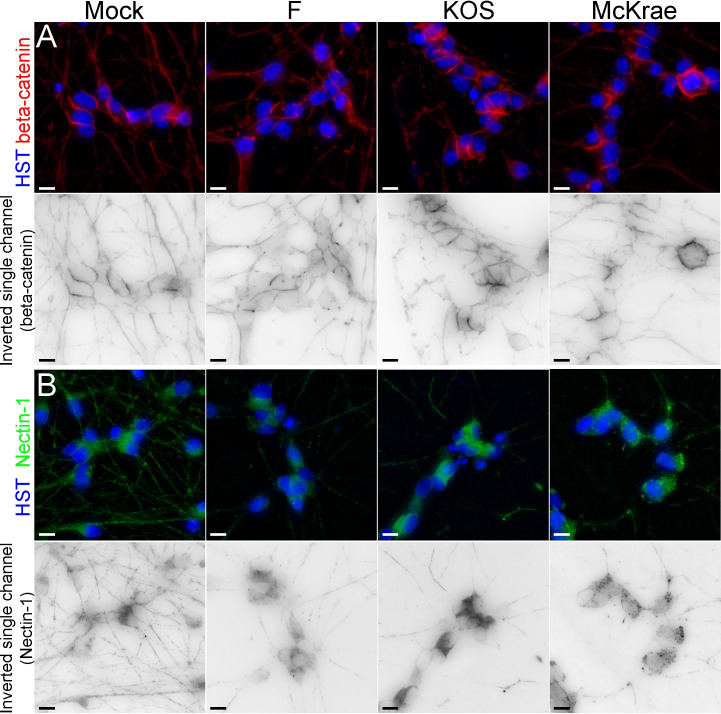
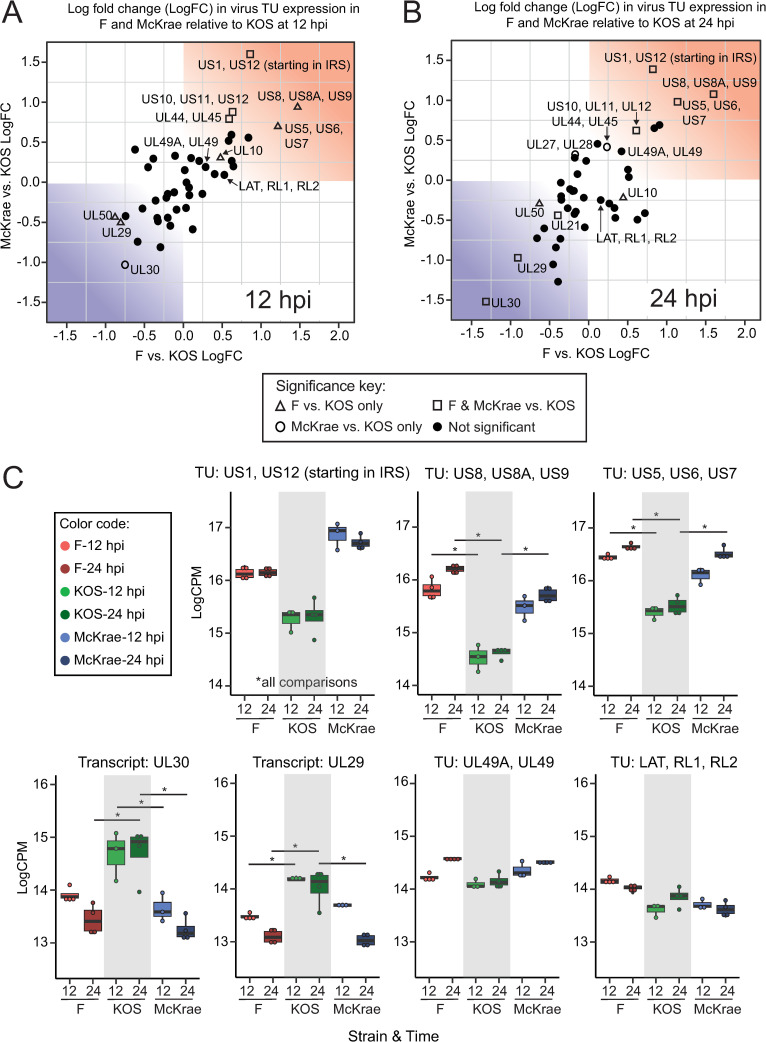
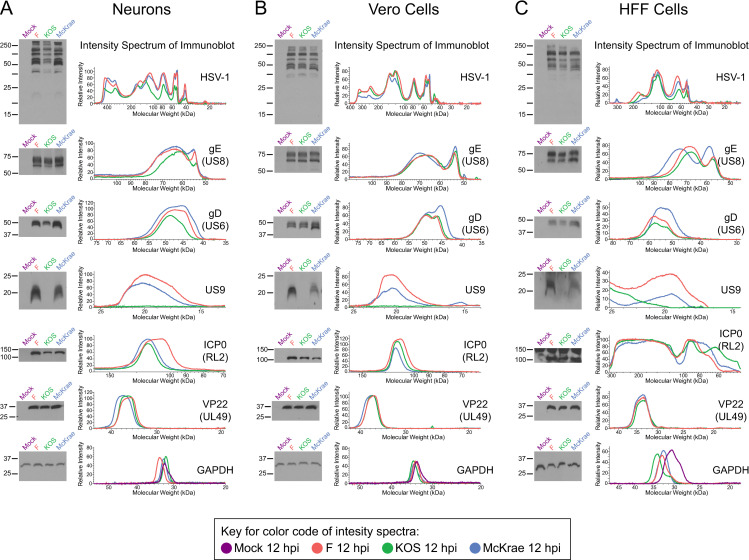
Infection with herpes simplex virus 1 (HSV-1) occurs in over half the global population, causing recurrent orofacial and/or genital lesions. Individual strains of HSV-1 demonstrate differences in neurovirulence in vivo, suggesting that viral genetic differences may impact phenotype. Here differentiated SH-SY5Y human neuronal cells were infected with one of three HSV-1 strains known to differ in neurovirulence in vivo. Host and viral RNA were sequenced simultaneously, revealing strain-specific differences in both viral and host transcription in infected neurons. Neuronal morphology and immunofluorescence data highlight the pathological changes in neuronal cytoarchitecture induced by HSV-1 infection, which may reflect host transcriptional changes in pathways associated with adherens junctions, integrin signaling, and others. Comparison of viral protein levels in neurons and epithelial cells demonstrated that a number of differences were neuron-specific, suggesting that strain-to-strain variations in host and virus transcription are cell type-dependent. Together, these data demonstrate the importance of studying virus strain- and cell-type-specific factors that may contribute to neurovirulence in vivo, and highlight the specificity of HSV-1-host interactions.
全球超过半数人口感染过单纯疱疹病毒1型(HSV-1),会引发复发性口腔面部和/或生殖器损伤。HSV-1的各个毒株在体内的神经毒性存在差异,这表明病毒的基因差异可能会影响其表型。在此,将分化的SH-SY5Y人神经元细胞用已知在体内神经毒性不同的三种HSV-1毒株之一进行感染。同时对宿主和病毒的RNA进行测序,揭示了受感染神经元中病毒和宿主转录的毒株特异性差异。神经元形态学和免疫荧光数据突出了HSV-1感染诱导的神经元细胞结构的病理变化,这可能反映了与黏着连接、整合素信号传导等相关途径中宿主转录的变化。对神经元和上皮细胞中病毒蛋白水平的比较表明,许多差异是神经元特异性的,这表明宿主和病毒转录的毒株间差异是细胞类型依赖性的。总之,这些数据证明了研究可能导致体内神经毒性的病毒毒株和细胞类型特异性因素的重要性,并突出了HSV-1与宿主相互作用的特异性。