Peng Rui, Li Yan
Department of Clinical Laboratory, Renmin Hospital of Wuhan University, Wuhan, Hubei Province, 430060, People's Republic of China.
J Inflamm Res. 2021 Mar 16;14:897-905. doi: 10.2147/JIR.S298270. eCollection 2021.
Elevated levels of tenascin-C are linked to increased risk and severity of major depressive disorder (MDD), while testosterone shows a protective effect. The present study explored associations between serum levels of tenascin-C and testosterone in Chinese men with MDD.
Testosterone and tenascin-C levels were measured in sera of 412 men with MDD and 237 age- and sex-matched controls. Serum levels of thyroid hormone, lipids, and high-sensitivity C-reactive protein (hs-CRP) were also quantified. Potential associations were examined using covariance, subgroup analysis, and multivariate linear regression analyses.
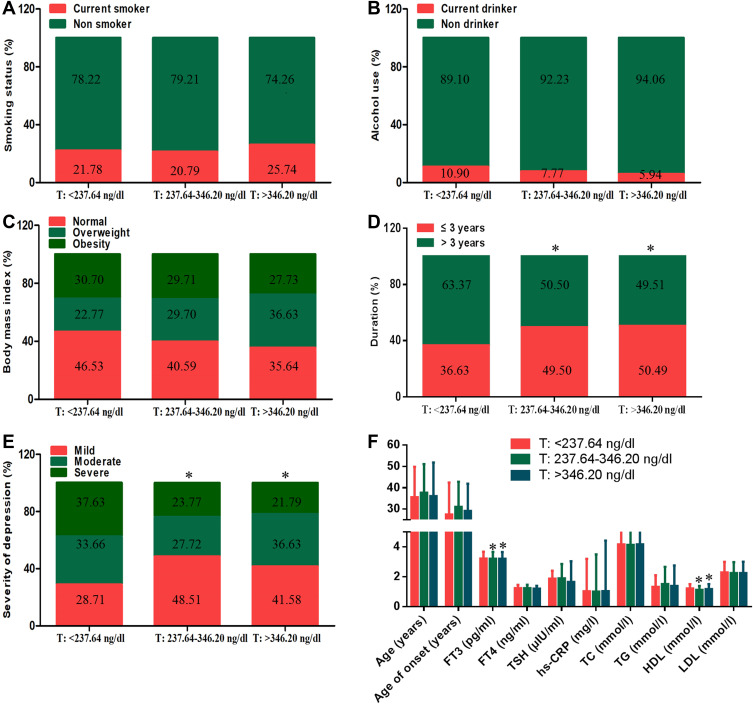
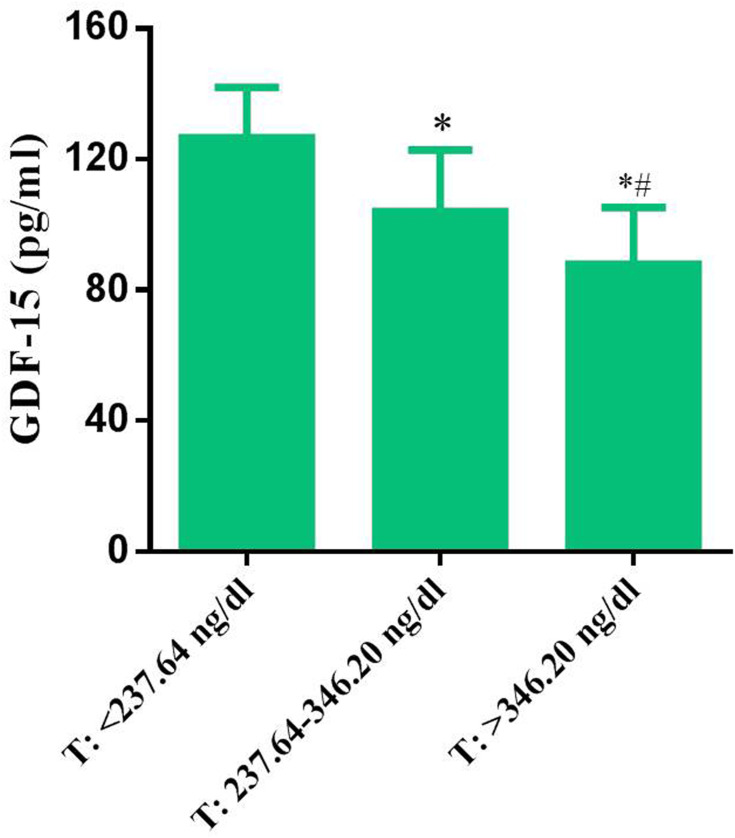
Significantly higher concentrations of tenascin-C were detected in sera of subjects with MDD than in controls. Among subjects with MDD, testosterone concentrations inversely correlated with tenascin-C levels. This relationship was observed when patients were stratified by age at onset; duration or severity of depression; or concentration of thyroid hormones, low- or high-density lipoprotein, or hs-CRP. The negative association remained even when the statistical model was adjusted for age, smoking status, alcohol use, and body mass index. Linear regression with bootstrap resampling confirmed that high tenascin-C levels inversely correlated with testosterone levels.
In men with MDD, high tenascin-C concentrations correlate with testosterone deficiency. The combination of elevated tenascin-C and testosterone deficiency may be associated with MDD progression.
腱生蛋白-C水平升高与重度抑郁症(MDD)的风险增加及病情严重程度相关,而睾酮具有保护作用。本研究探讨了中国男性MDD患者血清中腱生蛋白-C水平与睾酮之间的关联。
测定了412例男性MDD患者及237例年龄和性别匹配的对照者血清中的睾酮和腱生蛋白-C水平。还对血清甲状腺激素、血脂和高敏C反应蛋白(hs-CRP)水平进行了定量。使用协方差分析、亚组分析和多元线性回归分析来检验潜在关联。
MDD患者血清中腱生蛋白-C的浓度显著高于对照组。在MDD患者中,睾酮浓度与腱生蛋白-C水平呈负相关。当根据发病年龄、抑郁持续时间或严重程度、甲状腺激素浓度、低密度或高密度脂蛋白或hs-CRP对患者进行分层时,均观察到这种关系。即使在统计模型中对年龄、吸烟状况、饮酒情况和体重指数进行调整后,这种负相关仍然存在。通过自助重采样进行的线性回归证实,高腱生蛋白-C水平与睾酮水平呈负相关。
在男性MDD患者中,高腱生蛋白-C浓度与睾酮缺乏相关。腱生蛋白-C升高与睾酮缺乏的组合可能与MDD的进展有关。