• 文献检索
  • 文档翻译
  • 深度研究
  • 学术资讯
  • Suppr Zotero 插件Zotero 插件
  • 邀请有礼
  • 套餐&价格
  • 历史记录
应用&插件
Suppr Zotero 插件Zotero 插件浏览器插件Mac 客户端Windows 客户端微信小程序
定价
高级版会员购买积分包购买API积分包
服务
文献检索文档翻译深度研究API 文档MCP 服务
关于我们
关于 Suppr公司介绍联系我们用户协议隐私条款
关注我们

Suppr 超能文献

核心技术专利:CN118964589B侵权必究
粤ICP备2023148730 号-1Suppr @ 2026

文献检索

告别复杂PubMed语法,用中文像聊天一样搜索,搜遍4000万医学文献。AI智能推荐,让科研检索更轻松。

立即免费搜索

文件翻译

保留排版,准确专业,支持PDF/Word/PPT等文件格式,支持 12+语言互译。

免费翻译文档

深度研究

AI帮你快速写综述,25分钟生成高质量综述,智能提取关键信息,辅助科研写作。

立即免费体验

一种基于深度神经网络的新型分类器架构,用于利用实验室检查结果检测新型冠状病毒肺炎。

A novel classifier architecture based on deep neural network for COVID-19 detection using laboratory findings.

作者信息

Göreke Volkan, Sarı Vekil, Kockanat Serdar

机构信息

Sivas Vocational School of Technical Sciences, Sivas Cumhuriyet University, 58140, Sivas, Turkey.

Department of Electrical and Electronics Engineering, Sivas Cumhuriyet University, 58140, Sivas, Turkey.

出版信息

Appl Soft Comput. 2021 Jul;106:107329. doi: 10.1016/j.asoc.2021.107329. Epub 2021 Mar 19.

DOI:10.1016/j.asoc.2021.107329
PMID:33758581
原文链接:https://pmc.ncbi.nlm.nih.gov/articles/PMC7972831/
Abstract

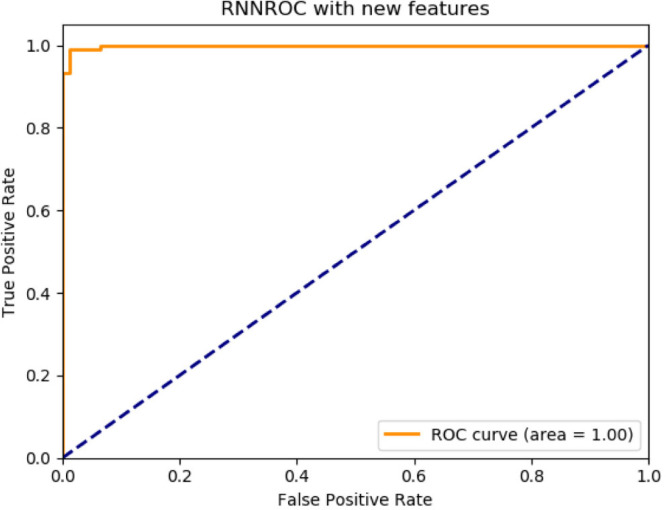
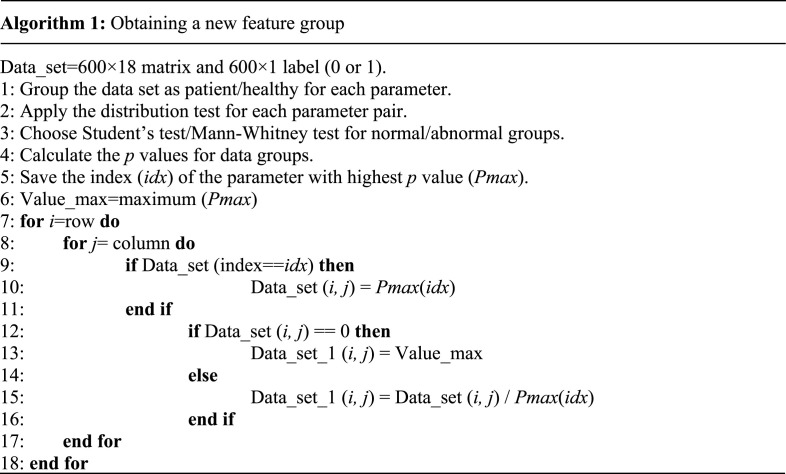
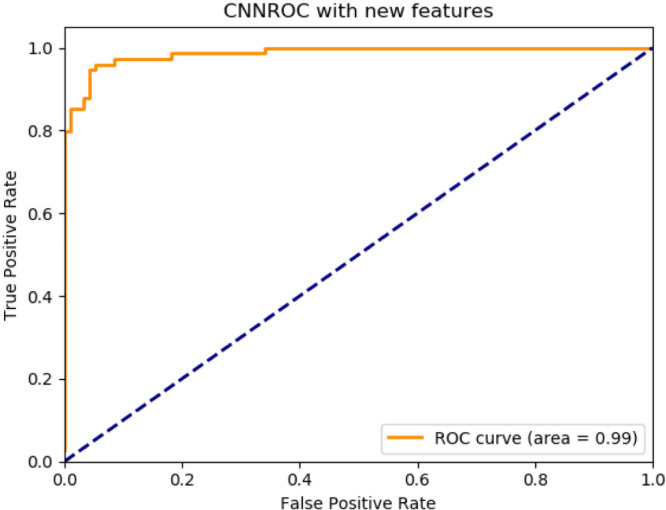
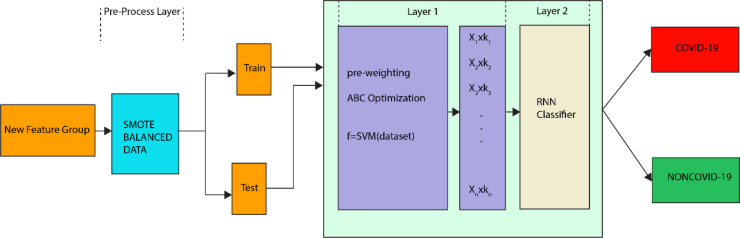
Unfortunately, Coronavirus disease 2019 (COVID-19) is spreading rapidly all over the world. Along with causing many deaths, it has substantially affected the social life, economics, and infrastructure worldwide in a negative manner. Therefore, it is very important to be able to diagnose the COVID-19 quickly and correctly. In this study, a new feature group based on laboratory findings was obtained considering ethnical and genetic differences for interpretation of blood data. Then, using this feature group, a new hybrid classifier architecture based on deep learning was designed and COVID-19 detection was made. Classification performance indicators were obtained as accuracy of 94.95%, F1-score of 94.98%, precision of 94.98%, recall of 94.98% and AUC of 100%. Achieved results were compared with those of the deep learning classifiers suggested in literature. According to these results, proposed method shows superior performance and can provide more convenience and precision to experts for diagnosis of COVID-19 disease.

摘要

不幸的是,2019冠状病毒病(COVID-19)正在全球迅速蔓延。它在造成许多人死亡的同时,还对全球的社会生活、经济和基础设施产生了严重的负面影响。因此,能够快速、准确地诊断COVID-19非常重要。在本研究中,考虑到种族和基因差异以解释血液数据,基于实验室检查结果获得了一个新的特征组。然后,使用该特征组,设计了一种基于深度学习的新型混合分类器架构并进行了COVID-19检测。分类性能指标为:准确率94.95%、F1分数94.98%、精确率94.98%、召回率94.98%和曲线下面积100%。将取得的结果与文献中提出的深度学习分类器的结果进行了比较。根据这些结果,所提出的方法表现出优越的性能,可为专家诊断COVID-19疾病提供更多便利和精确性。
https://cdn.ncbi.nlm.nih.gov/pmc/blobs/4b69/7972831/f3b1a7290d9a/gr7_lrg.jpg
https://cdn.ncbi.nlm.nih.gov/pmc/blobs/4b69/7972831/f8d34eb6175d/gr1_lrg.jpg
https://cdn.ncbi.nlm.nih.gov/pmc/blobs/4b69/7972831/2d397238ac68/fx1_lrg.jpg
https://cdn.ncbi.nlm.nih.gov/pmc/blobs/4b69/7972831/ee46076e4bca/fx2_lrg.jpg
https://cdn.ncbi.nlm.nih.gov/pmc/blobs/4b69/7972831/f246dfe89658/fx3_lrg.jpg
https://cdn.ncbi.nlm.nih.gov/pmc/blobs/4b69/7972831/1ad92c7cfc80/gr2_lrg.jpg
https://cdn.ncbi.nlm.nih.gov/pmc/blobs/4b69/7972831/96b623a52711/gr3_lrg.jpg
https://cdn.ncbi.nlm.nih.gov/pmc/blobs/4b69/7972831/a388dff39c6f/gr4_lrg.jpg
https://cdn.ncbi.nlm.nih.gov/pmc/blobs/4b69/7972831/d69a484ff8e7/gr5_lrg.jpg
https://cdn.ncbi.nlm.nih.gov/pmc/blobs/4b69/7972831/3f258560a69b/gr6_lrg.jpg
https://cdn.ncbi.nlm.nih.gov/pmc/blobs/4b69/7972831/f3b1a7290d9a/gr7_lrg.jpg
https://cdn.ncbi.nlm.nih.gov/pmc/blobs/4b69/7972831/f8d34eb6175d/gr1_lrg.jpg
https://cdn.ncbi.nlm.nih.gov/pmc/blobs/4b69/7972831/2d397238ac68/fx1_lrg.jpg
https://cdn.ncbi.nlm.nih.gov/pmc/blobs/4b69/7972831/ee46076e4bca/fx2_lrg.jpg
https://cdn.ncbi.nlm.nih.gov/pmc/blobs/4b69/7972831/f246dfe89658/fx3_lrg.jpg
https://cdn.ncbi.nlm.nih.gov/pmc/blobs/4b69/7972831/1ad92c7cfc80/gr2_lrg.jpg
https://cdn.ncbi.nlm.nih.gov/pmc/blobs/4b69/7972831/96b623a52711/gr3_lrg.jpg
https://cdn.ncbi.nlm.nih.gov/pmc/blobs/4b69/7972831/a388dff39c6f/gr4_lrg.jpg
https://cdn.ncbi.nlm.nih.gov/pmc/blobs/4b69/7972831/d69a484ff8e7/gr5_lrg.jpg
https://cdn.ncbi.nlm.nih.gov/pmc/blobs/4b69/7972831/3f258560a69b/gr6_lrg.jpg
https://cdn.ncbi.nlm.nih.gov/pmc/blobs/4b69/7972831/f3b1a7290d9a/gr7_lrg.jpg

相似文献

1
A novel classifier architecture based on deep neural network for COVID-19 detection using laboratory findings.一种基于深度神经网络的新型分类器架构,用于利用实验室检查结果检测新型冠状病毒肺炎。
Appl Soft Comput. 2021 Jul;106:107329. doi: 10.1016/j.asoc.2021.107329. Epub 2021 Mar 19.
2
COVID-19 diagnosis: A comprehensive review of pre-trained deep learning models based on feature extraction algorithm.COVID-19诊断:基于特征提取算法的预训练深度学习模型综合综述
Results Eng. 2023 Jun;18:101020. doi: 10.1016/j.rineng.2023.101020. Epub 2023 Mar 16.
3
Hybrid COVID-19 segmentation and recognition framework (HMB-HCF) using deep learning and genetic algorithms.使用深度学习和遗传算法的混合式新冠病毒分割与识别框架(HMB-HCF)
Artif Intell Med. 2021 Sep;119:102156. doi: 10.1016/j.artmed.2021.102156. Epub 2021 Aug 28.
4
COV-VGX: An automated COVID-19 detection system using X-ray images and transfer learning.COV-VGX:一种使用X射线图像和迁移学习的自动化新冠病毒检测系统。
Inform Med Unlocked. 2021;26:100741. doi: 10.1016/j.imu.2021.100741. Epub 2021 Sep 17.
5
COVID-19 diagnosis from routine blood tests using artificial intelligence techniques.使用人工智能技术通过常规血液检测诊断新冠病毒肺炎
Biomed Signal Process Control. 2022 Feb;72:103263. doi: 10.1016/j.bspc.2021.103263. Epub 2021 Nov 1.
6
COVID-19 detection in CT and CXR images using deep learning models.使用深度学习模型进行 CT 和 CXR 图像中的 COVID-19 检测。
Biogerontology. 2022 Feb;23(1):65-84. doi: 10.1007/s10522-021-09946-7. Epub 2022 Jan 22.
7
DeepCOVIDNet: Deep Convolutional Neural Network for COVID-19 Detection from Chest Radiographic Images.深度新冠病毒检测网络:用于从胸部X光图像中检测新冠病毒的深度卷积神经网络。
Proceedings (IEEE Int Conf Bioinformatics Biomed). 2021 Dec;2021:1703-1710. doi: 10.1109/bibm52615.2021.9669767.
8
Detecting COVID-19 patients via MLES-Net deep learning models from X-Ray images.基于 X 光图像的 MLES-Net 深度学习模型对 COVID-19 患者的检测。
BMC Med Imaging. 2022 Jul 30;22(1):135. doi: 10.1186/s12880-022-00861-y.
9
COVID-AleXception: A Deep Learning Model Based on a Deep Feature Concatenation Approach for the Detection of COVID-19 from Chest X-ray Images.COVID-AleXception:一种基于深度特征拼接方法的深度学习模型,用于从胸部X光图像中检测新冠肺炎。
Healthcare (Basel). 2022 Oct 18;10(10):2072. doi: 10.3390/healthcare10102072.
10
Transfer learning-based ensemble support vector machine model for automated COVID-19 detection using lung computerized tomography scan data.基于迁移学习的集成支持向量机模型,用于使用肺部计算机断层扫描数据自动检测 COVID-19。
Med Biol Eng Comput. 2021 Apr;59(4):825-839. doi: 10.1007/s11517-020-02299-2. Epub 2021 Mar 18.

引用本文的文献

1
Removing Adversarial Noise in X-ray Images via Total Variation Minimization and Patch-Based Regularization for Robust Deep Learning-based Diagnosis.通过全变差最小化和基于补丁的正则化去除X射线图像中的对抗噪声以实现基于深度学习的稳健诊断
J Imaging Inform Med. 2024 Dec;37(6):3282-3303. doi: 10.1007/s10278-023-00919-5. Epub 2024 Jun 17.
2
A Survey of COVID-19 Diagnosis Using Routine Blood Tests with the Aid of Artificial Intelligence Techniques.借助人工智能技术利用常规血液检测进行新冠病毒诊断的调查
Diagnostics (Basel). 2023 May 16;13(10):1749. doi: 10.3390/diagnostics13101749.
3
Analyzing the effect of data preprocessing techniques using machine learning algorithms on the diagnosis of COVID-19.

本文引用的文献

1
Comparison of deep learning approaches to predict COVID-19 infection.预测新型冠状病毒肺炎感染的深度学习方法比较
Chaos Solitons Fractals. 2020 Nov;140:110120. doi: 10.1016/j.chaos.2020.110120. Epub 2020 Jul 11.
2
Clinical Predictive Models for COVID-19: Systematic Study.新型冠状病毒肺炎的临床预测模型:系统研究
J Med Internet Res. 2020 Oct 6;22(10):e21439. doi: 10.2196/21439.
3
Data augmentation for deep-learning-based electroencephalography.基于深度学习的脑电图数据增强
使用机器学习算法分析数据预处理技术对新型冠状病毒肺炎诊断的影响。
Concurr Comput. 2022 Dec 25;34(28):e7393. doi: 10.1002/cpe.7393. Epub 2022 Oct 18.
4
Biphasic majority voting-based comparative COVID-19 diagnosis using chest X-ray images.基于双相多数投票的使用胸部X光图像的COVID-19比较诊断
Expert Syst Appl. 2023 Apr 15;216:119430. doi: 10.1016/j.eswa.2022.119430. Epub 2022 Dec 21.
5
Evaluation of Diagnostic Strategies for Identifying SARS-CoV-2 Infection in Clinical Practice: a Systematic Review and Compliance with the Standards for Reporting Diagnostic Accuracy Studies Guideline (STARD).评估临床实践中识别 SARS-CoV-2 感染的诊断策略:系统评价及对诊断准确性研究报告标准(STARD)的遵循情况。
Microbiol Spectr. 2022 Aug 31;10(4):e0030022. doi: 10.1128/spectrum.00300-22. Epub 2022 Jun 14.
6
An Ensemble Learning Model for COVID-19 Detection from Blood Test Samples.基于血液检测样本的 COVID-19 检测的集成学习模型。
Sensors (Basel). 2022 Mar 13;22(6):2224. doi: 10.3390/s22062224.
7
Developing an artificial neural network for detecting COVID-19 disease.开发用于检测新冠肺炎疾病的人工神经网络。
J Educ Health Promot. 2022 Jan 31;11:2. doi: 10.4103/jehp.jehp_387_21. eCollection 2022.
8
Boosting COVID-19 Image Classification Using MobileNetV3 and Aquila Optimizer Algorithm.使用MobileNetV3和天鹰座优化器算法增强新冠病毒图像分类
Entropy (Basel). 2021 Oct 22;23(11):1383. doi: 10.3390/e23111383.
9
A new composite approach for COVID-19 detection in X-ray images using deep features.一种利用深度特征在X射线图像中检测新型冠状病毒肺炎的新复合方法。
Appl Soft Comput. 2021 Nov;111:107669. doi: 10.1016/j.asoc.2021.107669. Epub 2021 Jul 5.
J Neurosci Methods. 2020 Dec 1;346:108885. doi: 10.1016/j.jneumeth.2020.108885. Epub 2020 Jul 31.
4
Use of Machine Learning and Artificial Intelligence to predict SARS-CoV-2 infection from Full Blood Counts in a population.利用机器学习和人工智能从人群的全血细胞计数中预测 SARS-CoV-2 感染。
Int Immunopharmacol. 2020 Sep;86:106705. doi: 10.1016/j.intimp.2020.106705. Epub 2020 Jun 16.
5
Detection of COVID-19 Infection from Routine Blood Exams with Machine Learning: A Feasibility Study.利用机器学习从常规血液检查中检测 COVID-19 感染:一项可行性研究。
J Med Syst. 2020 Jul 1;44(8):135. doi: 10.1007/s10916-020-01597-4.
6
Artificial intelligence-enabled rapid diagnosis of patients with COVID-19.人工智能助力 COVID-19 患者快速诊断。
Nat Med. 2020 Aug;26(8):1224-1228. doi: 10.1038/s41591-020-0931-3. Epub 2020 May 19.
7
Abnormalities of peripheral blood system in patients with COVID-19 in Wenzhou, China.中国温州地区 COVID-19 患者外周血象系统的异常。
Clin Chim Acta. 2020 Aug;507:174-180. doi: 10.1016/j.cca.2020.04.024. Epub 2020 Apr 24.
8
Virological assessment of hospitalized patients with COVID-2019.住院 COVID-19 患者的病毒学评估。
Nature. 2020 May;581(7809):465-469. doi: 10.1038/s41586-020-2196-x. Epub 2020 Apr 1.
9
Clinical Characteristics of Coronavirus Disease 2019 in China.《中国 2019 年冠状病毒病临床特征》
N Engl J Med. 2020 Apr 30;382(18):1708-1720. doi: 10.1056/NEJMoa2002032. Epub 2020 Feb 28.
10
Sensitivity of Chest CT for COVID-19: Comparison to RT-PCR.胸部CT对新型冠状病毒肺炎的敏感性:与逆转录聚合酶链反应的比较。
Radiology. 2020 Aug;296(2):E115-E117. doi: 10.1148/radiol.2020200432. Epub 2020 Feb 19.