Ozcan Tayyip
Department of Computer Engineering, Erciyes University, 38039, Melikgazi, Kayseri, Turkey.
Appl Soft Comput. 2021 Nov;111:107669. doi: 10.1016/j.asoc.2021.107669. Epub 2021 Jul 5.
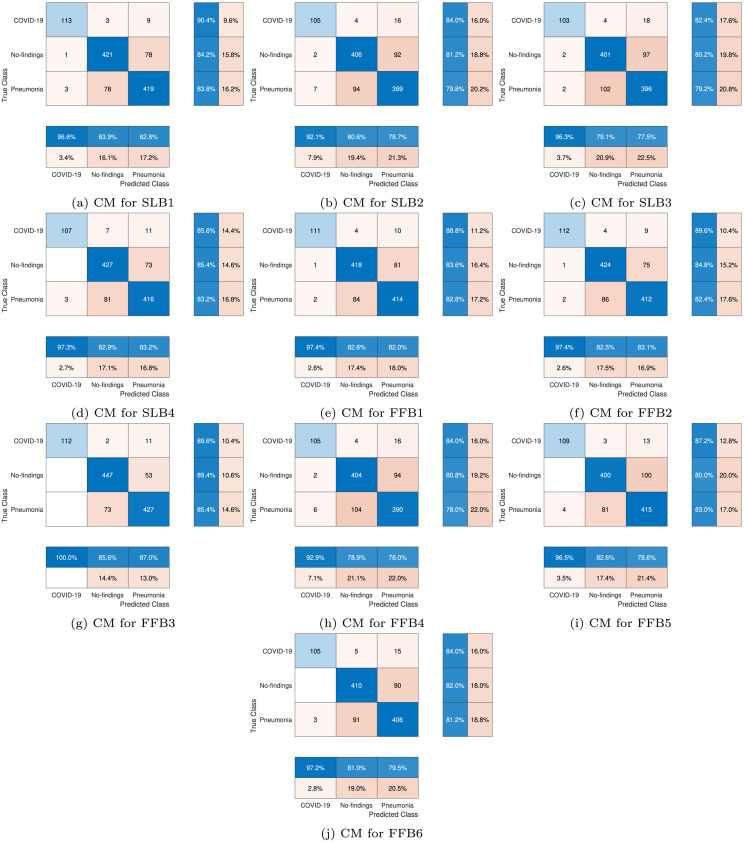
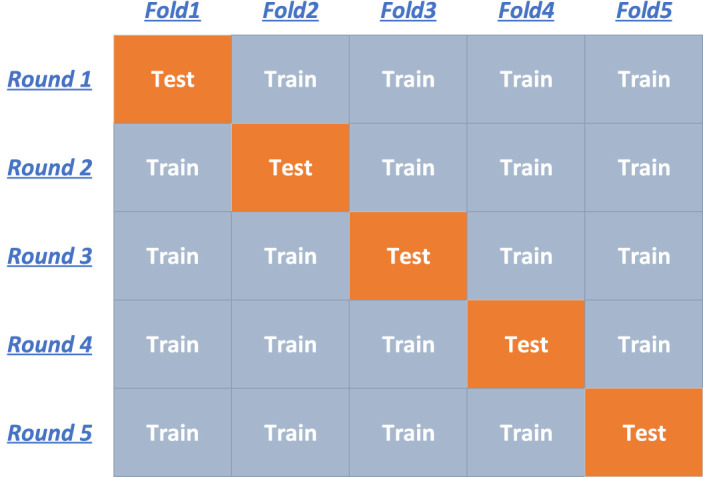
The new type of coronavirus, COVID 19, appeared in China at the end of 2019. It has become a pandemic that is spreading all over the world in a very short time. The detection of this disease, which has serious health and socio-economic damages, is of vital importance. COVID-19 detection is performed by applying PCR and serological tests. Additionally, COVID detection is possible using X-ray and computed tomography images. Disease detection has an important position in scientific researches that includes artificial intelligence methods. The combined models, which consist of different phases, are frequently used for classification problems. In this paper, a new combined approach is proposed to detect COVID-19 cases using deep features obtained from X-ray images. Two main variances of the approach can be presented as single layer-based (SLB) and feature fusion-based (FFB). SLB model consists of pre-processing, deep feature extraction, post-processing, and classification phases. On the other side, the FFB model consists of pre-processing, deep feature extraction, feature fusion, post-processing, and classification phases. Four different SLB and six different FFB models were developed according to the number and binary combination of layers used in the feature extraction phase. Each model is employed for binary and multi-class classification experiments. According to experimental results, the accuracy performance for COVID-19 and no-findings classification of the proposed FFB3 model is 99.52%, which is better than the best performance accuracy (of 98.08%) in the literature. Concurrently, for multi-class classification, the proposed FFB3 model has an accuracy performance of 87.64% outperforming the best existing work (which reported an 87.02% classification performance). Various metrics, including sensitivity, specificity, precision, and F1-score metrics are used for performance analysis. For all performance metrics, the FFB3 model recorded a higher success rate than existing work in the literature. To the best of our knowledge, these accuracy rates are the best in the literature for the dataset and data split type (five-fold cross-validation). Composite models (SLBs and FFBs), which are generated in this paper, are successful ways to detect COVID-19. Experimental results show that feature extraction, pre-processing, post-processing, and hyperparameter tuning are the steps are necessary to obtain a higher success. For prospective works, different types of pre-trained models and other hyperparameter tuning methods can be implemented.
新型冠状病毒COVID - 19于2019年底在中国出现。它已演变成一场大流行病,在极短时间内蔓延至全球。对这种造成严重健康和社会经济损害的疾病进行检测至关重要。COVID - 19检测通过应用聚合酶链式反应(PCR)和血清学检测来进行。此外,利用X射线和计算机断层扫描图像也能够检测出COVID。疾病检测在包括人工智能方法的科学研究中占据重要地位。由不同阶段组成的组合模型常用于分类问题。在本文中,提出了一种新的组合方法,利用从X射线图像中获取的深度特征来检测COVID - 19病例。该方法的两个主要变体可表示为基于单层的(SLB)和基于特征融合的(FFB)。SLB模型由预处理、深度特征提取、后处理和分类阶段组成。另一方面,FFB模型由预处理、深度特征提取、特征融合、后处理和分类阶段组成。根据特征提取阶段所使用层的数量和二元组合,开发了四种不同的SLB模型和六种不同的FFB模型。每个模型都用于二元和多类分类实验。根据实验结果,所提出的FFB3模型对COVID - 19和未发现病例分类的准确率为99.52%,优于文献中最佳的性能准确率(98.08%)。同时,对于多类分类,所提出的FFB3模型的准确率为87.64%,超过了现有最佳工作(报告的分类性能为87.02%)。包括灵敏度、特异性、精确率和F1分数指标在内的各种指标用于性能分析。对于所有性能指标,FFB3模型的成功率均高于文献中的现有工作。据我们所知,对于该数据集和数据划分类型(五折交叉验证),这些准确率在文献中是最佳的。本文中生成的复合模型(SLB和FFB)是检测COVID - 19的成功方法。实验结果表明,特征提取、预处理、后处理和超参数调整是获得更高成功率所必需的步骤。对于未来的工作,可以实施不同类型的预训练模型和其他超参数调整方法。