• 文献检索
  • 文档翻译
  • 深度研究
  • 学术资讯
  • Suppr Zotero 插件Zotero 插件
  • 邀请有礼
  • 套餐&价格
  • 历史记录
应用&插件
Suppr Zotero 插件Zotero 插件浏览器插件Mac 客户端Windows 客户端微信小程序
定价
高级版会员购买积分包购买API积分包
服务
文献检索文档翻译深度研究API 文档MCP 服务
关于我们
关于 Suppr公司介绍联系我们用户协议隐私条款
关注我们

Suppr 超能文献

核心技术专利:CN118964589B侵权必究
粤ICP备2023148730 号-1Suppr @ 2026

文献检索

告别复杂PubMed语法,用中文像聊天一样搜索,搜遍4000万医学文献。AI智能推荐,让科研检索更轻松。

立即免费搜索

文件翻译

保留排版,准确专业,支持PDF/Word/PPT等文件格式,支持 12+语言互译。

免费翻译文档

深度研究

AI帮你快速写综述,25分钟生成高质量综述,智能提取关键信息,辅助科研写作。

立即免费体验

基于迁移学习的集成支持向量机模型,用于使用肺部计算机断层扫描数据自动检测 COVID-19。

Transfer learning-based ensemble support vector machine model for automated COVID-19 detection using lung computerized tomography scan data.

机构信息

Computer Science and Engineering Department, Indian Institute of Technology Delhi, New Delhi, 110016, India.

Electrical Engineering Department, Indian Institute of Technology Delhi, New Delhi, 110016, India.

出版信息

Med Biol Eng Comput. 2021 Apr;59(4):825-839. doi: 10.1007/s11517-020-02299-2. Epub 2021 Mar 18.

DOI:10.1007/s11517-020-02299-2
PMID:33738639
原文链接:https://pmc.ncbi.nlm.nih.gov/articles/PMC7972022/
Abstract

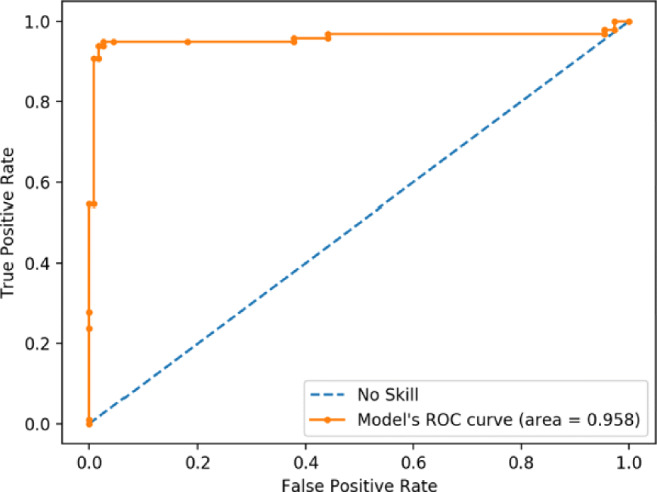
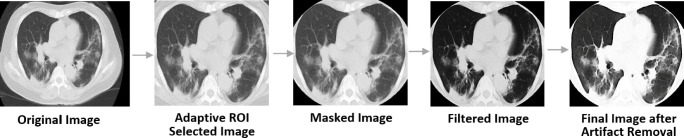
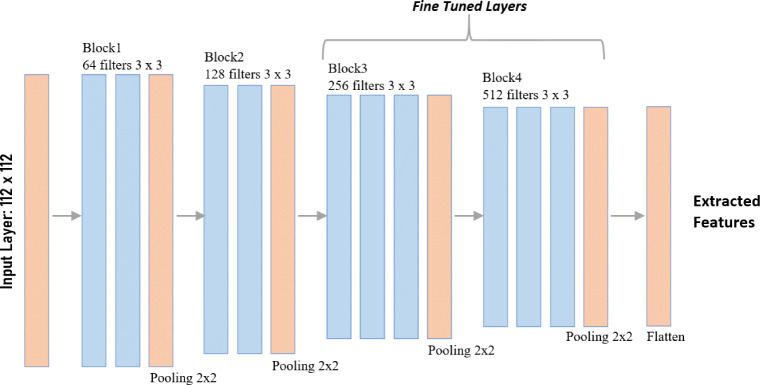
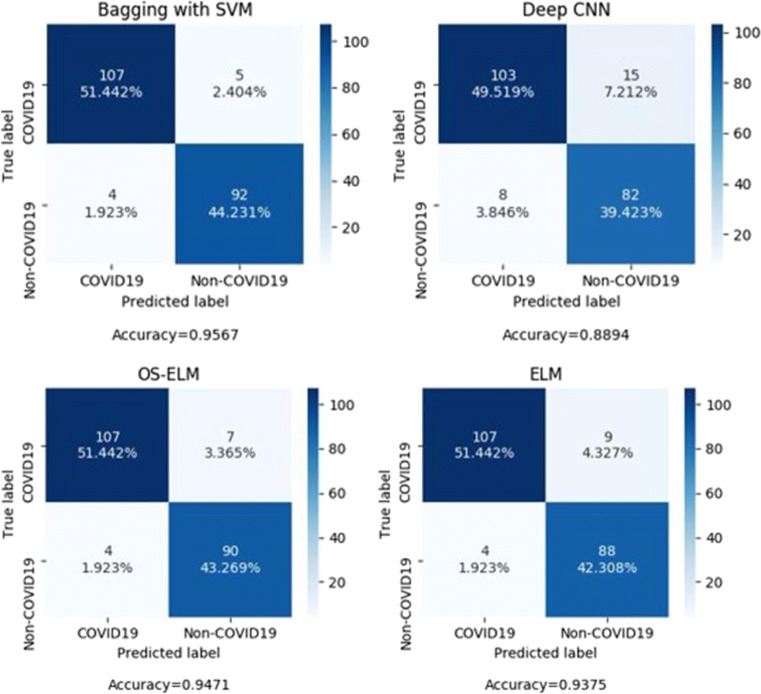
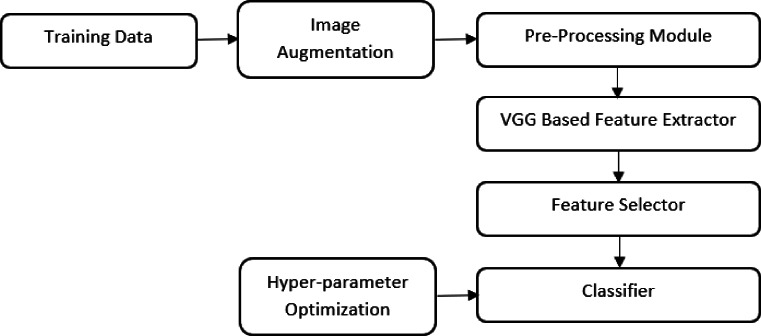
The novel discovered disease coronavirus popularly known as COVID-19 is caused due to severe acute respiratory syndrome coronavirus 2 (SARS-CoV-2) and declared a pandemic by the World Health Organization (WHO). An early-stage detection of COVID-19 is crucial for the containment of the pandemic it has caused. In this study, a transfer learning-based COVID-19 screening technique is proposed. The motivation of this study is to design an automated system that can assist medical staff especially in areas where trained staff are outnumbered. The study investigates the potential of transfer learning-based models for automatically diagnosing diseases like COVID-19 to assist the medical force, especially in times of an outbreak. In the proposed work, a deep learning model, i.e., truncated VGG16 (Visual Geometry Group from Oxford) is implemented to screen COVID-19 CT scans. The VGG16 architecture is fine-tuned and used to extract features from CT scan images. Further principal component analysis (PCA) is used for feature selection. For the final classification, four different classifiers, namely deep convolutional neural network (DCNN), extreme learning machine (ELM), online sequential ELM, and bagging ensemble with support vector machine (SVM) are compared. The best performing classifier bagging ensemble with SVM within 385 ms achieved an accuracy of 95.7%, the precision of 95.8%, area under curve (AUC) of 0.958, and an F1 score of 95.3% on 208 test images. The results obtained on diverse datasets prove the superiority and robustness of the proposed work. A pre-processing technique has also been proposed for radiological data. The study further compares pre-trained CNN architectures and classification models against the proposed technique.

摘要

新型发现的疾病冠状病毒,通常称为 COVID-19,是由严重急性呼吸系统综合症冠状病毒 2(SARS-CoV-2)引起,并被世界卫生组织(WHO)宣布为大流行。早期发现 COVID-19 对于遏制其造成的大流行至关重要。在这项研究中,提出了一种基于迁移学习的 COVID-19 筛查技术。本研究的目的是设计一种自动化系统,以协助医务人员,特别是在医务人员短缺的地区。本研究探讨了基于迁移学习的模型在自动诊断 COVID-19 等疾病方面的潜力,以协助医疗力量,特别是在疫情爆发期间。在提出的工作中,实现了一种深度学习模型,即截断的 VGG16(牛津视觉几何组),用于筛查 COVID-19 CT 扫描。微调 VGG16 架构,并用于从 CT 扫描图像中提取特征。进一步使用主成分分析(PCA)进行特征选择。对于最终分类,比较了四种不同的分类器,即深度卷积神经网络(DCNN)、极限学习机(ELM)、在线顺序 ELM 和袋装集成与支持向量机(SVM)。在 208 张测试图像上,385 毫秒内性能最佳的分类器袋装集成与 SVM 达到了 95.7%的准确率、95.8%的精度、0.958 的 AUC 和 95.3%的 F1 分数。在不同数据集上获得的结果证明了所提出的工作的优越性和鲁棒性。还提出了一种用于放射学数据的预处理技术。该研究进一步比较了预训练的 CNN 架构和分类模型与所提出的技术。
https://cdn.ncbi.nlm.nih.gov/pmc/blobs/551f/7972022/1ba505842ff9/11517_2020_2299_Fig9_HTML.jpg
https://cdn.ncbi.nlm.nih.gov/pmc/blobs/551f/7972022/e22883fef56b/11517_2020_2299_Fig1_HTML.jpg
https://cdn.ncbi.nlm.nih.gov/pmc/blobs/551f/7972022/f74cdefe6057/11517_2020_2299_Fig2_HTML.jpg
https://cdn.ncbi.nlm.nih.gov/pmc/blobs/551f/7972022/9e1aa801682e/11517_2020_2299_Fig3_HTML.jpg
https://cdn.ncbi.nlm.nih.gov/pmc/blobs/551f/7972022/42a824197cbd/11517_2020_2299_Fig4_HTML.jpg
https://cdn.ncbi.nlm.nih.gov/pmc/blobs/551f/7972022/0a3d301b6761/11517_2020_2299_Fig5_HTML.jpg
https://cdn.ncbi.nlm.nih.gov/pmc/blobs/551f/7972022/5d35119c6f07/11517_2020_2299_Fig6_HTML.jpg
https://cdn.ncbi.nlm.nih.gov/pmc/blobs/551f/7972022/a60b2f19d446/11517_2020_2299_Fig7_HTML.jpg
https://cdn.ncbi.nlm.nih.gov/pmc/blobs/551f/7972022/980c8facf26c/11517_2020_2299_Fig8_HTML.jpg
https://cdn.ncbi.nlm.nih.gov/pmc/blobs/551f/7972022/1ba505842ff9/11517_2020_2299_Fig9_HTML.jpg
https://cdn.ncbi.nlm.nih.gov/pmc/blobs/551f/7972022/e22883fef56b/11517_2020_2299_Fig1_HTML.jpg
https://cdn.ncbi.nlm.nih.gov/pmc/blobs/551f/7972022/f74cdefe6057/11517_2020_2299_Fig2_HTML.jpg
https://cdn.ncbi.nlm.nih.gov/pmc/blobs/551f/7972022/9e1aa801682e/11517_2020_2299_Fig3_HTML.jpg
https://cdn.ncbi.nlm.nih.gov/pmc/blobs/551f/7972022/42a824197cbd/11517_2020_2299_Fig4_HTML.jpg
https://cdn.ncbi.nlm.nih.gov/pmc/blobs/551f/7972022/0a3d301b6761/11517_2020_2299_Fig5_HTML.jpg
https://cdn.ncbi.nlm.nih.gov/pmc/blobs/551f/7972022/5d35119c6f07/11517_2020_2299_Fig6_HTML.jpg
https://cdn.ncbi.nlm.nih.gov/pmc/blobs/551f/7972022/a60b2f19d446/11517_2020_2299_Fig7_HTML.jpg
https://cdn.ncbi.nlm.nih.gov/pmc/blobs/551f/7972022/980c8facf26c/11517_2020_2299_Fig8_HTML.jpg
https://cdn.ncbi.nlm.nih.gov/pmc/blobs/551f/7972022/1ba505842ff9/11517_2020_2299_Fig9_HTML.jpg

相似文献

1
Transfer learning-based ensemble support vector machine model for automated COVID-19 detection using lung computerized tomography scan data.基于迁移学习的集成支持向量机模型,用于使用肺部计算机断层扫描数据自动检测 COVID-19。
Med Biol Eng Comput. 2021 Apr;59(4):825-839. doi: 10.1007/s11517-020-02299-2. Epub 2021 Mar 18.
2
Optimised genetic algorithm-extreme learning machine approach for automatic COVID-19 detection.优化遗传算法-极限学习机方法自动检测 COVID-19。
PLoS One. 2020 Dec 15;15(12):e0242899. doi: 10.1371/journal.pone.0242899. eCollection 2020.
3
Deep Convolutional Neural Network-Based Computer-Aided Detection System for COVID-19 Using Multiple Lung Scans: Design and Implementation Study.基于深度学习卷积神经网络的多部位肺部 CT 扫描 COVID-19 计算机辅助检测系统:设计与实现研究。
J Med Internet Res. 2021 Apr 26;23(4):e27468. doi: 10.2196/27468.
4
A Novel Deep Learning and Ensemble Learning Mechanism for Delta-Type COVID-19 Detection.一种用于德尔塔型 COVID-19 检测的新型深度学习和集成学习机制。
Front Public Health. 2022 Jul 8;10:875971. doi: 10.3389/fpubh.2022.875971. eCollection 2022.
5
Multi-objective Genetic Algorithm Based Deep Learning Model for Automated COVID-19 Detection Using Medical Image Data.基于多目标遗传算法的深度学习模型,用于利用医学图像数据自动检测新冠肺炎
J Med Biol Eng. 2021;41(5):678-689. doi: 10.1007/s40846-021-00653-9. Epub 2021 Sep 1.
6
Transfer learning based novel ensemble classifier for COVID-19 detection from chest CT-scans.基于迁移学习的新型集成分类器用于从胸部 CT 扫描中检测 COVID-19。
Comput Biol Med. 2022 Feb;141:105127. doi: 10.1016/j.compbiomed.2021.105127. Epub 2021 Dec 11.
7
Automated detection of COVID-19 using ensemble of transfer learning with deep convolutional neural network based on CT scans.基于 CT 扫描的深度学习卷积神经网络集成迁移学习的 COVID-19 自动检测。
Int J Comput Assist Radiol Surg. 2021 Jan;16(1):115-123. doi: 10.1007/s11548-020-02286-w. Epub 2020 Nov 16.
8
Computer aid screening of COVID-19 using X-ray and CT scan images: An inner comparison.基于 X 射线和 CT 扫描图像的 COVID-19 计算机辅助筛查:内部比较。
J Xray Sci Technol. 2021;29(2):197-210. doi: 10.3233/XST-200784.
9
Detection and analysis of COVID-19 in medical images using deep learning techniques.使用深度学习技术在医学图像中检测和分析 COVID-19。
Sci Rep. 2021 Oct 4;11(1):19638. doi: 10.1038/s41598-021-99015-3.
10
A new hybrid ensemble machine-learning model for severity risk assessment and post-COVID prediction system.一种新的混合集成机器学习模型,用于严重程度风险评估和 COVID 后预测系统。
Math Biosci Eng. 2022 Apr 13;19(6):6102-6123. doi: 10.3934/mbe.2022285.

引用本文的文献

1
Deep viewing for the identification of Covid-19 infection status from chest X-Ray image using CNN based architecture.基于卷积神经网络架构,通过深度观察从胸部X光图像识别新冠病毒感染状态。
Intell Syst Appl. 2022 Nov;16:200130. doi: 10.1016/j.iswa.2022.200130. Epub 2022 Oct 6.
2
A Hybrid Deep Learning CNN model for COVID-19 detection from chest X-rays.一种用于从胸部X光片中检测新冠肺炎的混合深度学习卷积神经网络模型。
Heliyon. 2024 Feb 29;10(5):e26938. doi: 10.1016/j.heliyon.2024.e26938. eCollection 2024 Mar 15.
3
Robust Medical Diagnosis: A Novel Two-Phase Deep Learning Framework for Adversarial Proof Disease Detection in Radiology Images.

本文引用的文献

1
COVID-19 Detection Through Transfer Learning Using Multimodal Imaging Data.利用多模态成像数据通过迁移学习进行新冠病毒疾病检测
IEEE Access. 2020 Aug 14;8:149808-149824. doi: 10.1109/ACCESS.2020.3016780. eCollection 2020.
2
Text Data Augmentation for Deep Learning.用于深度学习的文本数据增强
J Big Data. 2021;8(1):101. doi: 10.1186/s40537-021-00492-0. Epub 2021 Jul 19.
3
JCS: An Explainable COVID-19 Diagnosis System by Joint Classification and Segmentation.JCS:基于联合分类与分割的 COVID-19 可解释诊断系统。
稳健医学诊断:一种新颖的两阶段深度学习框架,用于放射图像中的对抗性证明疾病检测。
J Imaging Inform Med. 2024 Feb;37(1):308-338. doi: 10.1007/s10278-023-00916-8. Epub 2024 Jan 10.
4
Diagnosis of COVID-19 with simultaneous accurate prediction of cardiac abnormalities from chest computed tomographic images.基于胸部计算机断层扫描图像对 COVID-19 进行诊断并同时准确预测心脏异常。
PLoS One. 2023 Dec 14;18(12):e0290494. doi: 10.1371/journal.pone.0290494. eCollection 2023.
5
Cloud-Based Quad Deep Ensemble Framework for the Detection of COVID-19 Omicron and Delta Variants.用于检测新冠病毒奥密克戎和德尔塔变体的基于云的四重深度集成框架
Diagnostics (Basel). 2023 Nov 9;13(22):3419. doi: 10.3390/diagnostics13223419.
6
A Wearable Multimodal Wireless Sensing System for Respiratory Monitoring and Analysis.一种用于呼吸监测和分析的可穿戴式多模态无线传感系统。
Sensors (Basel). 2023 Jul 29;23(15):6790. doi: 10.3390/s23156790.
7
Deep Learning Methods for Interpretation of Pulmonary CT and X-ray Images in Patients with COVID-19-Related Lung Involvement: A Systematic Review.用于解读2019冠状病毒病相关肺部受累患者肺部CT和X线图像的深度学习方法:一项系统综述
J Clin Med. 2023 May 13;12(10):3446. doi: 10.3390/jcm12103446.
8
An XAI approach for COVID-19 detection using transfer learning with X-ray images.一种使用X射线图像的迁移学习进行COVID-19检测的可解释人工智能方法。
Heliyon. 2023 Apr;9(4):e15137. doi: 10.1016/j.heliyon.2023.e15137. Epub 2023 Apr 7.
9
Design and Analysis of a Deep Learning Ensemble Framework Model for the Detection of COVID-19 and Pneumonia Using Large-Scale CT Scan and X-ray Image Datasets.使用大规模CT扫描和X射线图像数据集检测新冠肺炎和肺炎的深度学习集成框架模型的设计与分析
Bioengineering (Basel). 2023 Mar 16;10(3):363. doi: 10.3390/bioengineering10030363.
10
CCTCOVID: COVID-19 detection from chest X-ray images using Compact Convolutional Transformers.CCTCOVID:使用紧凑型卷积变压器从胸部 X 光图像中检测 COVID-19。
Front Public Health. 2023 Feb 27;11:1025746. doi: 10.3389/fpubh.2023.1025746. eCollection 2023.
IEEE Trans Image Process. 2021;30:3113-3126. doi: 10.1109/TIP.2021.3058783. Epub 2021 Feb 24.
4
COVID-Net: a tailored deep convolutional neural network design for detection of COVID-19 cases from chest X-ray images.COVID-Net:一种针对胸部 X 光图像中 COVID-19 病例检测的定制化深度卷积神经网络设计。
Sci Rep. 2020 Nov 11;10(1):19549. doi: 10.1038/s41598-020-76550-z.
5
COVID19XrayNet: A Two-Step Transfer Learning Model for the COVID-19 Detecting Problem Based on a Limited Number of Chest X-Ray Images.COVID19XrayNet:一种基于少量胸部 X 光图像的 COVID-19 检测问题的两步迁移学习模型。
Interdiscip Sci. 2020 Dec;12(4):555-565. doi: 10.1007/s12539-020-00393-5. Epub 2020 Sep 21.
6
COVID-19 detection in CT images with deep learning: A voting-based scheme and cross-datasets analysis.基于深度学习的CT图像中COVID-19检测:一种基于投票的方案及跨数据集分析
Inform Med Unlocked. 2020;20:100427. doi: 10.1016/j.imu.2020.100427. Epub 2020 Sep 14.
7
Automated Deep Transfer Learning-Based Approach for Detection of COVID-19 Infection in Chest X-rays.基于自动深度迁移学习的胸部X光片中COVID-19感染检测方法
Ing Rech Biomed. 2022 Apr;43(2):114-119. doi: 10.1016/j.irbm.2020.07.001. Epub 2020 Jul 3.
8
Deep Transfer Learning Based Classification Model for COVID-19 Disease.基于深度迁移学习的新冠肺炎疾病分类模型
Ing Rech Biomed. 2022 Apr;43(2):87-92. doi: 10.1016/j.irbm.2020.05.003. Epub 2020 May 20.
9
Deep-COVID: Predicting COVID-19 from chest X-ray images using deep transfer learning.深度 COVID:使用深度迁移学习从胸部 X 光图像预测 COVID-19。
Med Image Anal. 2020 Oct;65:101794. doi: 10.1016/j.media.2020.101794. Epub 2020 Jul 21.
10
Systematic review of artificial intelligence techniques in the detection and classification of COVID-19 medical images in terms of evaluation and benchmarking: Taxonomy analysis, challenges, future solutions and methodological aspects.基于评估和基准的 COVID-19 医学图像检测和分类的人工智能技术的系统评价:分类分析、挑战、未来解决方案和方法学方面。
J Infect Public Health. 2020 Oct;13(10):1381-1396. doi: 10.1016/j.jiph.2020.06.028. Epub 2020 Jul 1.