School of Pharmacy, Henan University, Kaifeng, Henan 475004, P.R. China.
Department of Anesthesiology, The First Affiliated Hospital, Zhengzhou University, Zhengzhou, Henan 450052, P.R. China.
Oncol Rep. 2021 May;45(5). doi: 10.3892/or.2021.8019. Epub 2021 Mar 24.
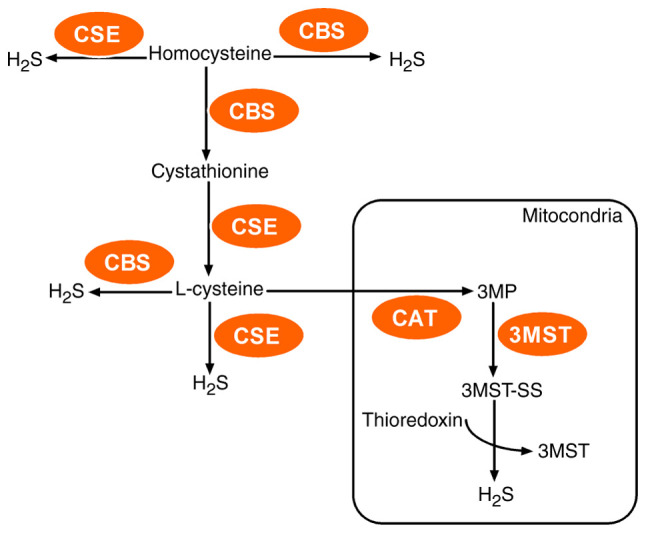
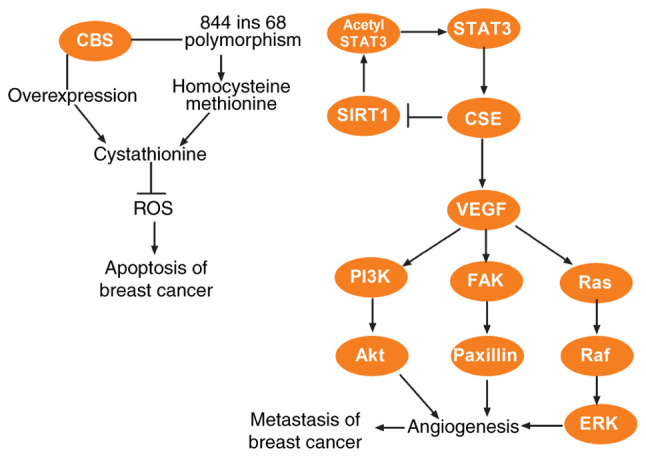
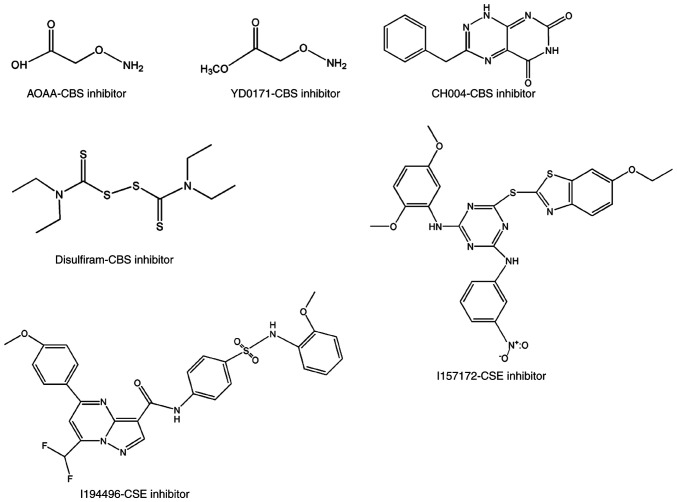
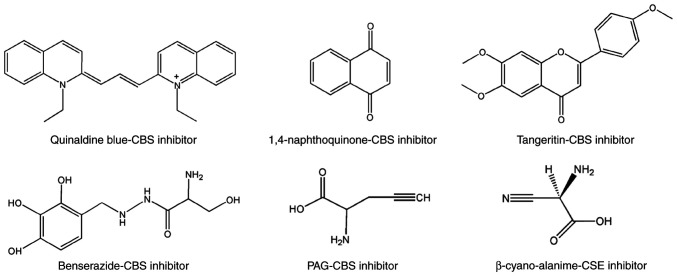
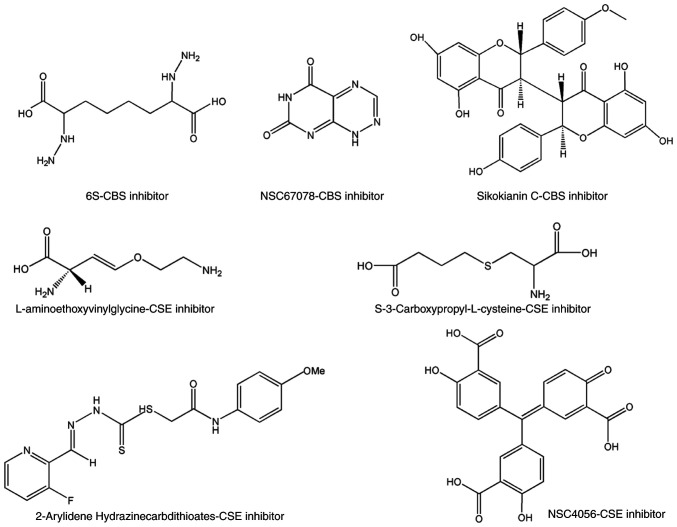
Hydrogen sulfide (HS), the third gas signal molecule, is associated with the modulation of various physiological and pathological processes. Recent studies have reevealed that endogenous HS may promote proliferation, induce angiogenesis and inhibit apoptosis, thereby stimulating oncogenesis. Conversely, decreased endogenous HS release suppresses growth of various tumors including breast cancer. This observation suggests an alternative tumor therapy strategy by inhibiting HS‑producing enzymes to reduce the release of endogenous HS. Breast cancer is the most common type of cancer in women. Due to the lack of approved targeted therapy, its recurrence and metastasis still affect its clinical treatment. In recent years, significant progress has been made in the control of breast cancer by using inhibitors on HS‑producing enzymes. This review summarized the roles of endogenous HS‑producing enzymes in breast cancer and the effects of the enzyme inhibitors on anticancer and anti‑metastasis, with the aim of providing new insights for the treatment of breast cancer.
硫化氢(HS)是第三种气体信号分子,与多种生理和病理过程的调节有关。最近的研究表明,内源性 HS 可能促进增殖、诱导血管生成和抑制细胞凋亡,从而刺激肿瘤发生。相反,内源性 HS 释放减少会抑制包括乳腺癌在内的各种肿瘤的生长。这一观察结果提示了一种通过抑制产生 HS 的酶来减少内源性 HS 释放的肿瘤治疗的替代策略。乳腺癌是女性最常见的癌症类型。由于缺乏批准的靶向治疗药物,其复发和转移仍然影响其临床治疗效果。近年来,利用 HS 产生酶抑制剂控制乳腺癌取得了显著进展。本综述总结了内源性 HS 产生酶在乳腺癌中的作用以及酶抑制剂在抗癌和抗转移方面的作用,以期为乳腺癌的治疗提供新的思路。