Dallman Timothy J, Greig David R, Gharbia Saheer E, Jenkins Claire
National Infection Service, Public Health England, London, NW9 5EQ, UK.
Division of Infection and Immunity, The Roslin Institute and Royal (Dick) School of Veterinary Studies, University of Edinburgh, Easter Bush, EH25 9RG, UK.
Microb Genom. 2019 Sep;7(6). doi: 10.1099/mgen.0.000551.
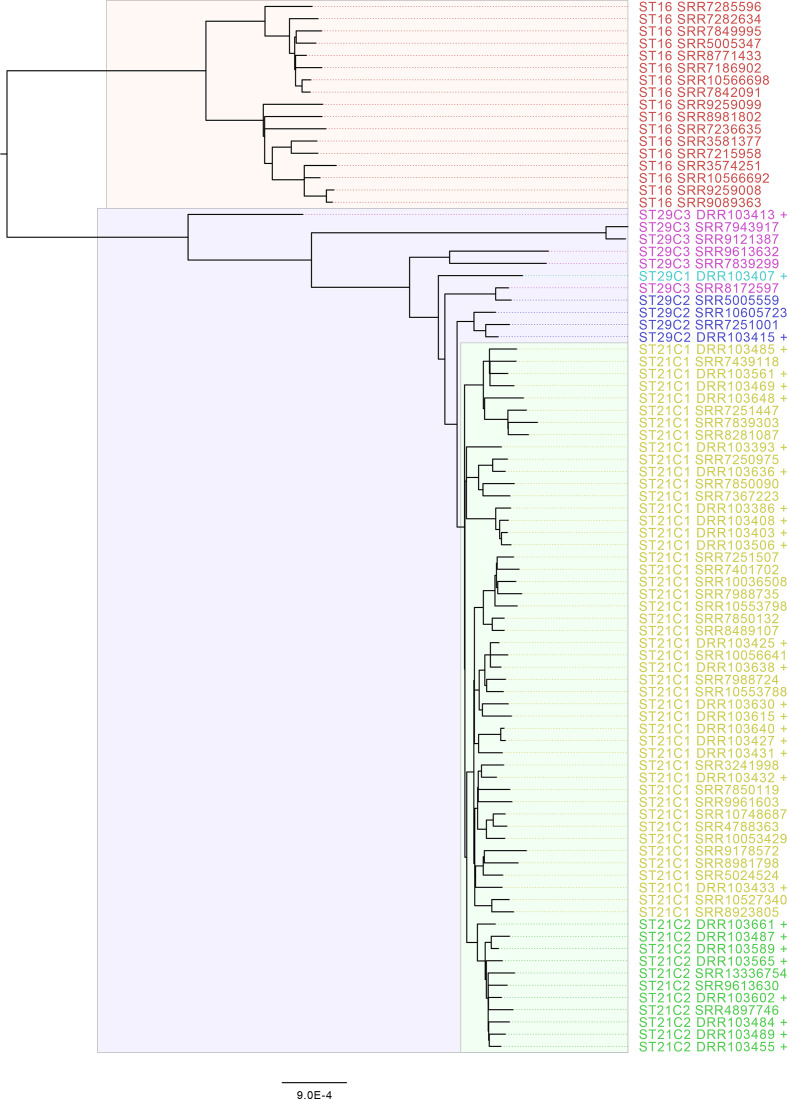
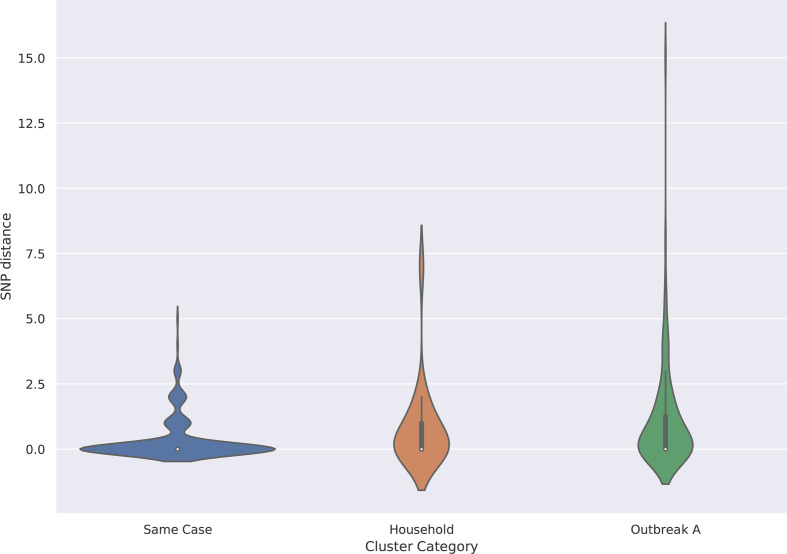
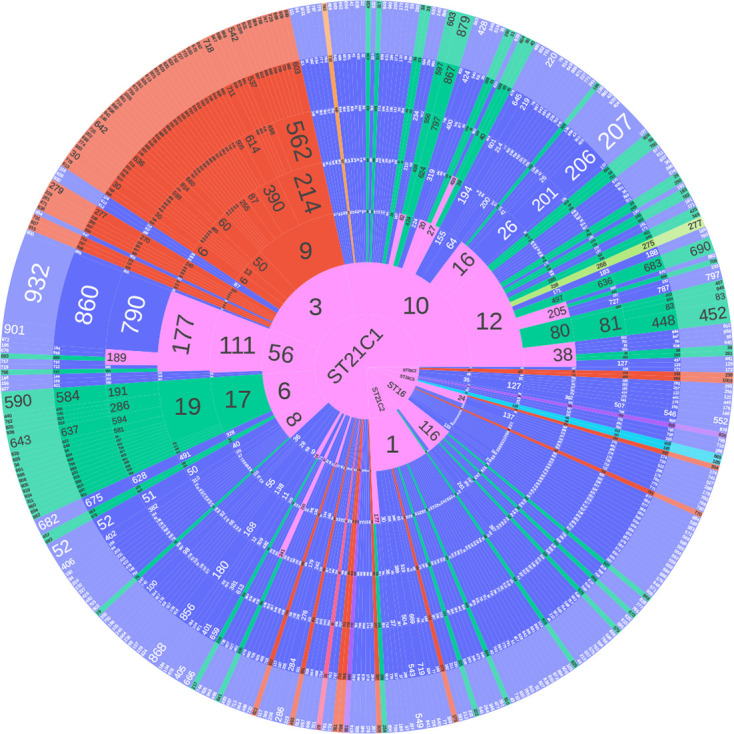
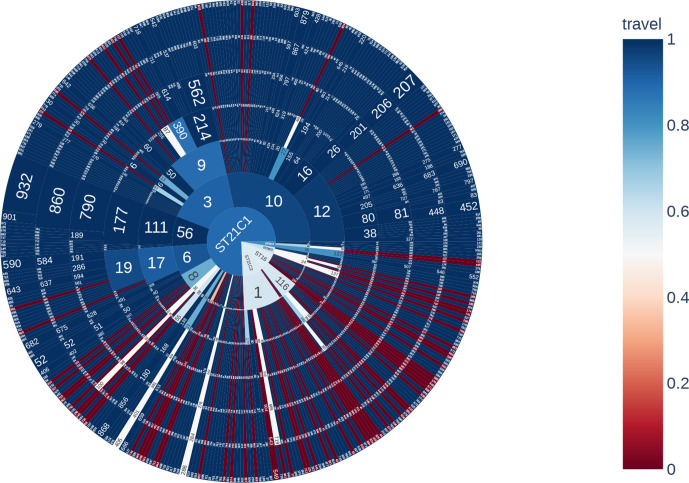
The increasing use of PCR for the detection of gastrointestinal pathogens in hospital laboratories in England has improved the detection of Shiga toxin-producing (STEC), and the diagnosis of haemolytic uraemic syndrome (HUS). We aimed to analyse the microbiological characteristics and phylogenetic relationships of STEC O26:H11, clonal complex (CC) 29, in England to inform surveillance, and to assess the threat to public health. There were 502 STEC belonging to CC29 isolated between 2014 and 2019, of which 416 were from individual cases. The majority of isolates belonged to one of three major sequence types (STs), ST16 (=37), ST21 (=350) and ST29 (=24). ST16 and ST29 were mainly isolated from cases reporting recent travel abroad. Within ST21, there were three main clades associated with domestic acquisition. All three domestic clades had Shiga toxin subtype gene () profiles associated with causing severe clinical outcomes including STEC-HUS, specifically either , or . Isolates from the same patient, same household or same outbreak with an established source for the most part fell within 5-SNP single linkage clusters. There were 19 5-SNP community clusters, of which six were travel-associated and one was an outbreak of 16 cases caused by the consumption of contaminated salad leaves. Of the remaining 12 clusters, 9/12 were either temporally or geographically related or both. Exposure to foodborne STEC O26:H11 ST21 capable of causing severe clinical outcomes, including STEC-HUS, is an emerging risk to public health in England. The lack of comprehensive surveillance of this STEC serotype is a concern, and there is a need to expand the implementation of methods capable of detecting STEC in local hospital settings.
在英格兰的医院实验室中,聚合酶链反应(PCR)在检测胃肠道病原体方面的应用日益广泛,这提高了产志贺毒素大肠杆菌(STEC)的检测率以及溶血性尿毒症综合征(HUS)的诊断水平。我们旨在分析英格兰产志贺毒素大肠杆菌O26:H11克隆复合体(CC)29的微生物学特征和系统发育关系,为监测提供信息,并评估对公众健康的威胁。2014年至2019年间分离出502株属于CC29的STEC,其中416株来自个体病例。大多数分离株属于三种主要序列类型(STs)之一,即ST16(=37株)、ST21(=350株)和ST29(=24株)。ST16和ST29主要从报告近期出国旅行的病例中分离得到。在ST21内,有三个主要分支与国内感染相关。所有三个国内分支都具有与导致包括STEC-HUS在内的严重临床结局相关的志贺毒素亚型基因()谱,具体为 、 或 。来自同一患者、同一家庭或同一暴发且有确定来源的分离株在很大程度上属于5个单核苷酸多态性(SNP)单连锁簇。有19个5-SNP社区簇,其中6个与旅行相关,1个是由食用受污染的沙拉叶引起的16例暴发。在其余12个簇中,9/12在时间或地理上相关或两者都相关。暴露于能够导致包括STEC-HUS在内的严重临床结局的食源性STEC O26:H11 ST21对英格兰的公众健康是一种新出现的风险。对这种STEC血清型缺乏全面监测令人担忧,有必要扩大在当地医院环境中能够检测STEC的方法的应用。