Department of Dermatology, Huashan Hospital, Fudan University, Shanghai, China.
PLoS One. 2021 Mar 24;16(3):e0248650. doi: 10.1371/journal.pone.0248650. eCollection 2021.
Acne vulgaris and rosacea are common inflammatory complications of the skin, both characterized by abnormal infiltration of immune cells. The two diseases can be differentiated based on characteristic profile of the immune cell infiltrates at the periphery of disease lesions. In addition, dysregulated infiltration of immune cells not only occur in the acne lesions but also in non-lesional areas of patients with the disease, thus characterizing the immune infiltration in these sites can further enhance our understanding on the pathogenesis of acne.
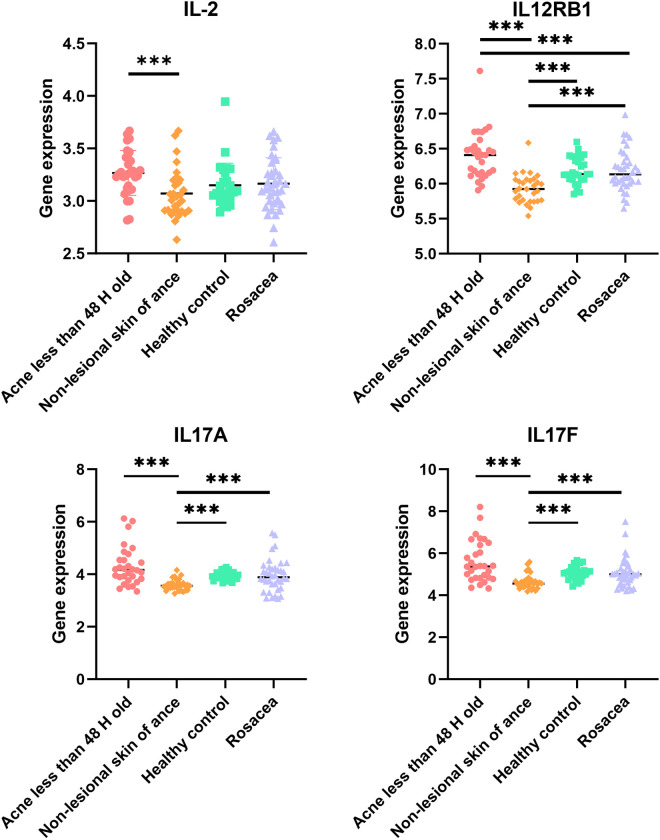
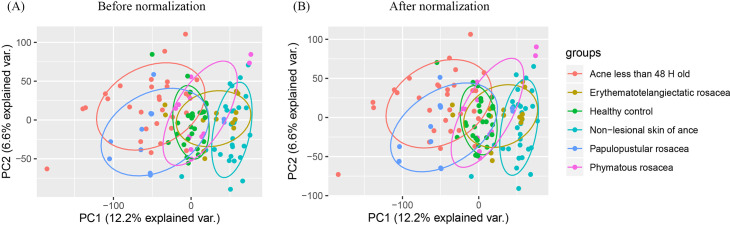
Five microarray data-sets (GSE108110, GSE53795, GSE65914, GSE14905 and GSE78097) were downloaded from Gene Expression Omnibus. After removing the batch effects and normalizing the data, we applied the CIBERSORT algorithm combined with signature matrix LM22, to describe 22 types of immune cells' infiltration in acne less than 48 hour (H) old, in comparation with non-lesional skin of acne patients, healthy skin and rosacea (including erythematotelangiectatic rosacea, papulopustular rosacea and phymatous rosacea) and we compared gene expression of Th1 and Th17-related molecules in acne, rosacea and healthy control.
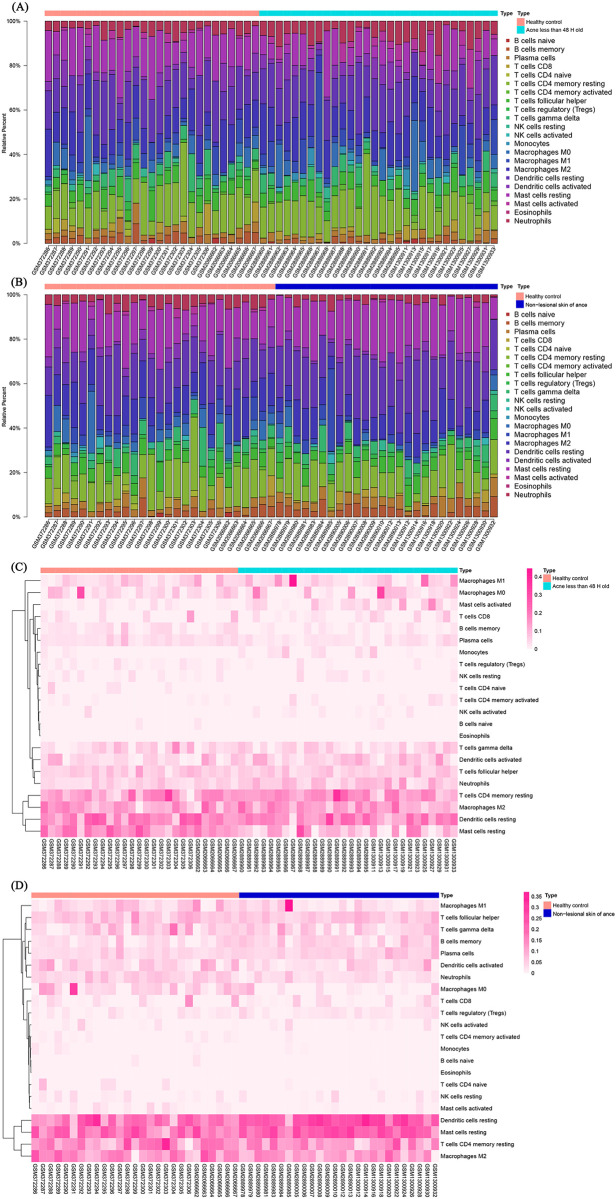
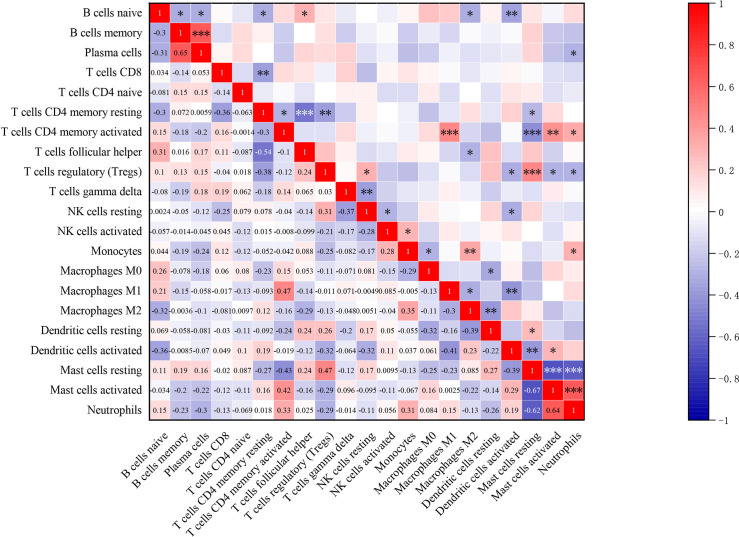
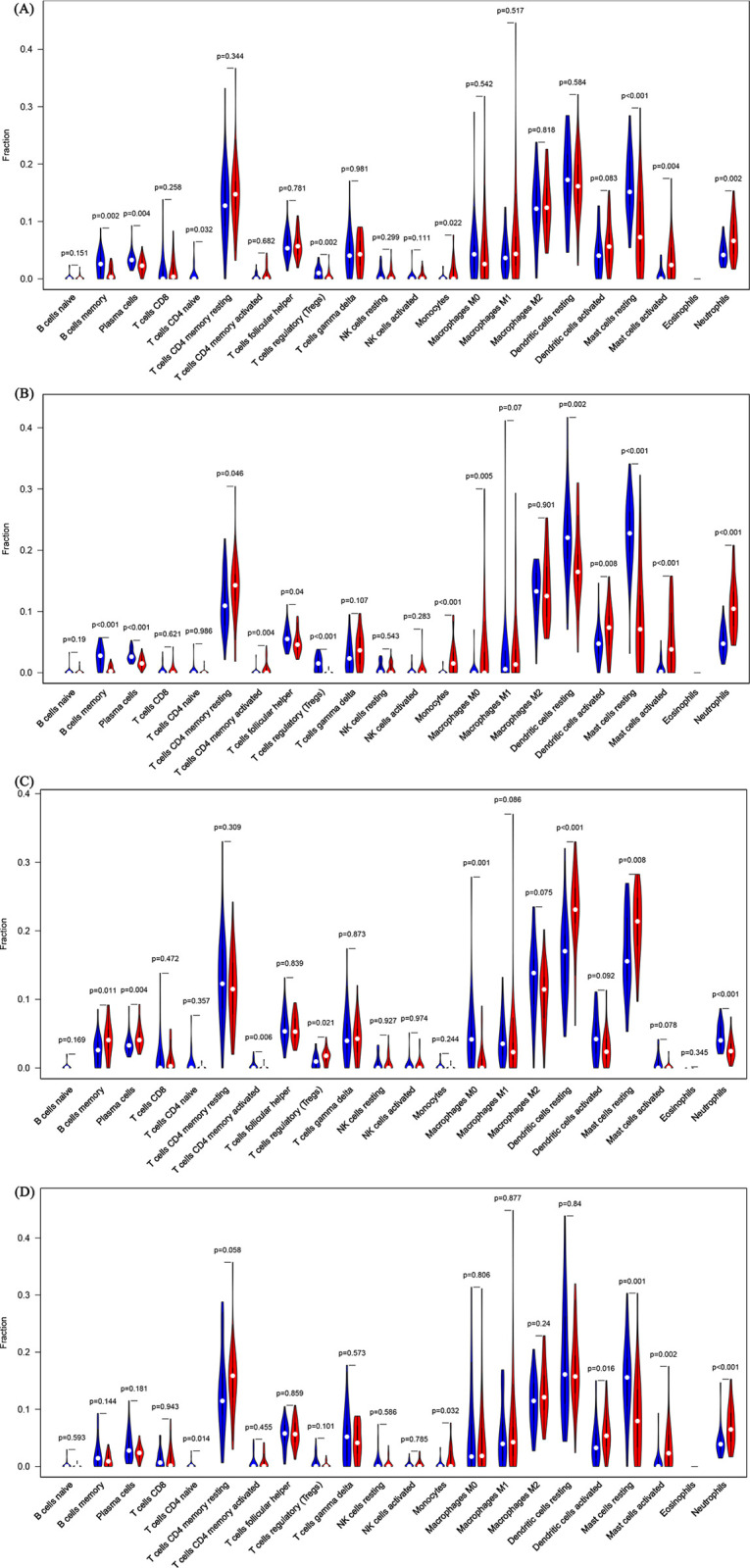
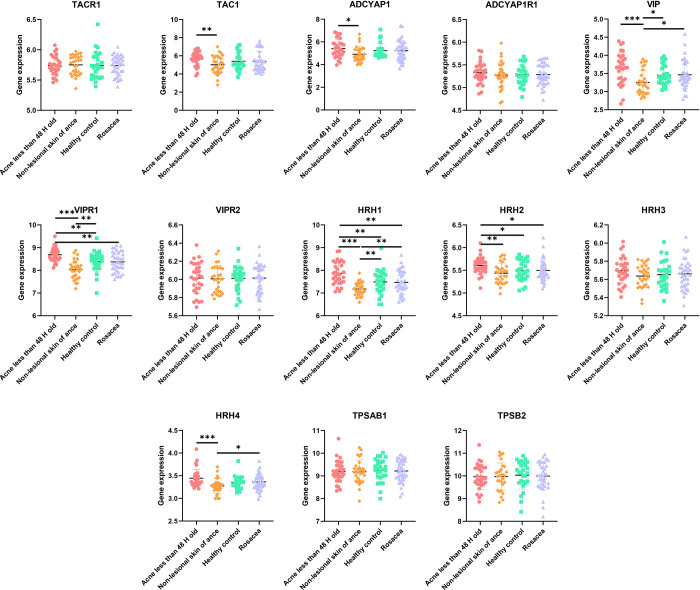
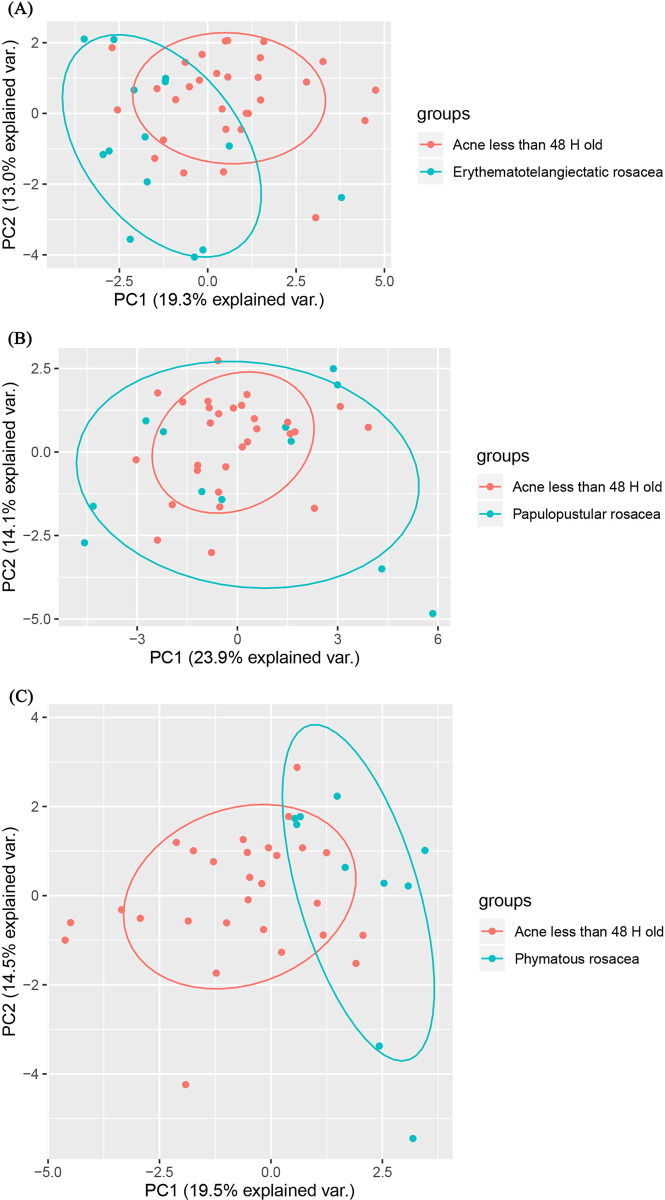
Compared with the non-lesional skin of acne patients, healthy individuals and rosacea patients, there is a significant increase in infiltration of neutrophils, monocytes and activated mast cells around the acne lesions, less than 48 H after their development. Contrarily, few naive CD4+ T cells, plasma cells, memory B cells and resting mast cells infiltrate acne sites compared to the aforementioned groups of individuals. Moreover, the infiltration of Regulatory T cells (Tregs) in acne lesions is substantially lower, relative to non-lesional sites of acne patients and skin of healthy individuals. In addition, non-lesional sites of acne patients exhibit lower infiltration of activated memory CD4+ T cells, plasma cells, memory B cells, M0 macrophages, neutrophils, resting mast cells but higher infiltration of Tregs and resting dendritic cells relative to skin of healthy individuals. Intriguingly, we found that among the 3 rosacea subtypes, the immune infiltration profile of papulopustular rosacea is the closest to that of acne lesions. In addition, through gene expression analysis of acne, rosacea and skin tissues of healthy individuals, we found a higher infiltration of Th1 and Th17 cells in acne lesions, relative to non-lesional skin areas of acne patients.
Our study provides new insights into the inflammatory pathogenesis of acne, and the difference between acne and rosacea, which helps in differentiating the two diseases. Our findings also guide on appropriate target therapy of the immune cell infiltrates in the two disease conditions.
寻常痤疮和酒渣鼻是常见的皮肤炎症性并发症,均表现为免疫细胞的异常浸润。这两种疾病可以根据疾病病变周围免疫细胞浸润的特征谱来区分。此外,免疫细胞的失调浸润不仅发生在痤疮病变部位,也发生在疾病患者的非病变部位,因此对这些部位的免疫浸润进行特征化可以进一步增强我们对痤疮发病机制的理解。
从基因表达综合数据库中下载了五个微阵列数据集(GSE108110、GSE53795、GSE65914、GSE14905 和 GSE78097)。在去除批次效应并对数据进行标准化后,我们应用 CIBERSORT 算法结合特征矩阵 LM22,描述了 48 小时以内的痤疮病变中 22 种免疫细胞的浸润情况,并与痤疮患者的非病变皮肤、健康皮肤和酒渣鼻(包括红斑毛细血管扩张性酒渣鼻、丘疹脓疱性酒渣鼻和酒渣鼻)进行了比较,我们比较了痤疮、酒渣鼻和健康对照组中 Th1 和 Th17 相关分子的基因表达。
与痤疮患者的非病变皮肤、健康个体和酒渣鼻患者相比,在发病后 48 小时以内,痤疮病变周围浸润的中性粒细胞、单核细胞和活化的肥大细胞明显增加。相反,与上述个体相比,幼稚 CD4+T 细胞、浆细胞、记忆 B 细胞和静止肥大细胞很少浸润痤疮部位。此外,痤疮病变中的调节性 T 细胞(Tregs)浸润明显低于痤疮患者的非病变部位和健康个体的皮肤。此外,与健康个体的皮肤相比,痤疮患者的非病变部位的活化记忆 CD4+T 细胞、浆细胞、记忆 B 细胞、M0 巨噬细胞、中性粒细胞、静止肥大细胞浸润较低,但 Tregs 和静止树突状细胞浸润较高。有趣的是,我们发现,在 3 种酒渣鼻亚型中,丘疹脓疱性酒渣鼻的免疫浸润模式与痤疮病变最为相似。此外,通过对痤疮、酒渣鼻和健康个体皮肤组织的基因表达分析,我们发现痤疮病变中 Th1 和 Th17 细胞的浸润高于痤疮患者的非病变皮肤区域。
我们的研究为痤疮的炎症发病机制以及痤疮和酒渣鼻之间的差异提供了新的见解,有助于区分这两种疾病。我们的发现还指导了针对这两种疾病情况下免疫细胞浸润的适当靶向治疗。