Song Ran, Gao Yajing, Dozmorov Igor, Malladi Venkat, Saha Irene, McDaniel Margaret M, Parameswaran Sreeja, Liang Chaoying, Arana Carlos, Zhang Bo, Wakeland Benjamin, Zhou Jinchun, Weirauch Matthew T, Kottyan Leah C, Wakeland Edward K, Pasare Chandrashekhar
Department of Immunology, University of Texas Southwestern Medical Center, Dallas, TX 75390, USA.
Bioinformatics Core Facility, University of Texas Southwestern Medical Center, Dallas, TX 75390, USA.
Cell Rep. 2021 Mar 23;34(12):108891. doi: 10.1016/j.celrep.2021.108891.
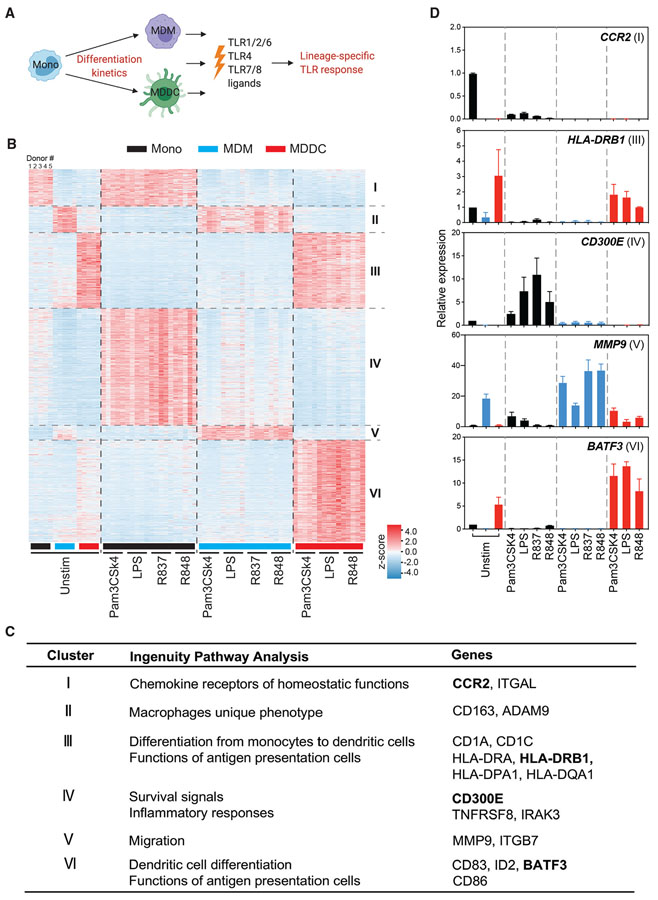
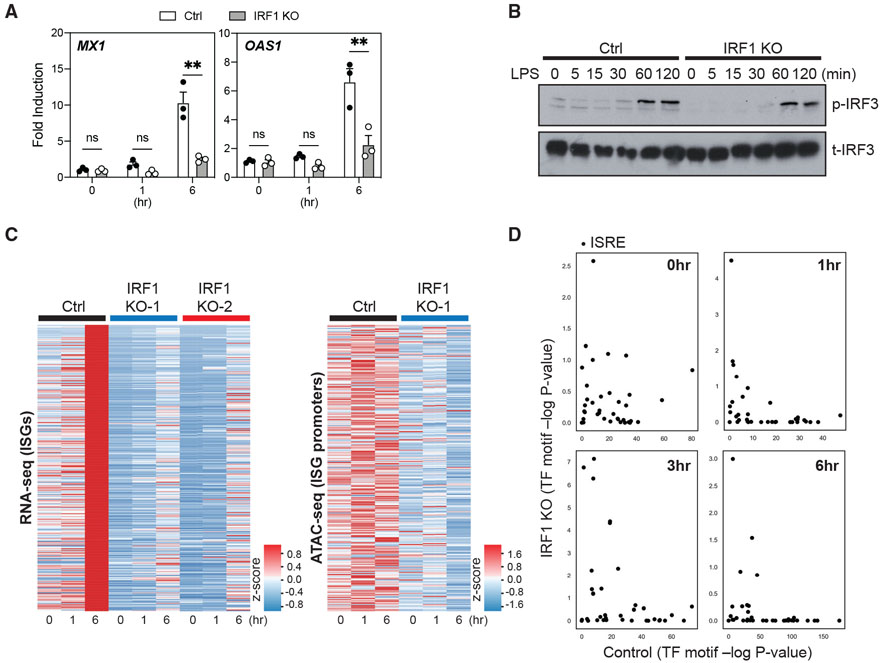
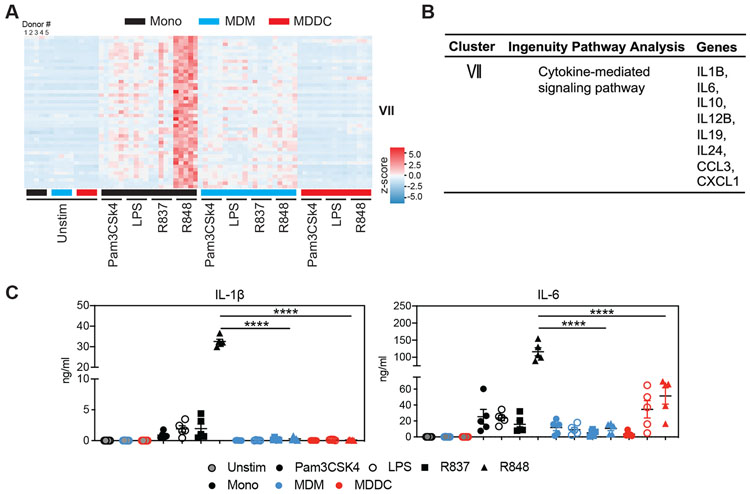
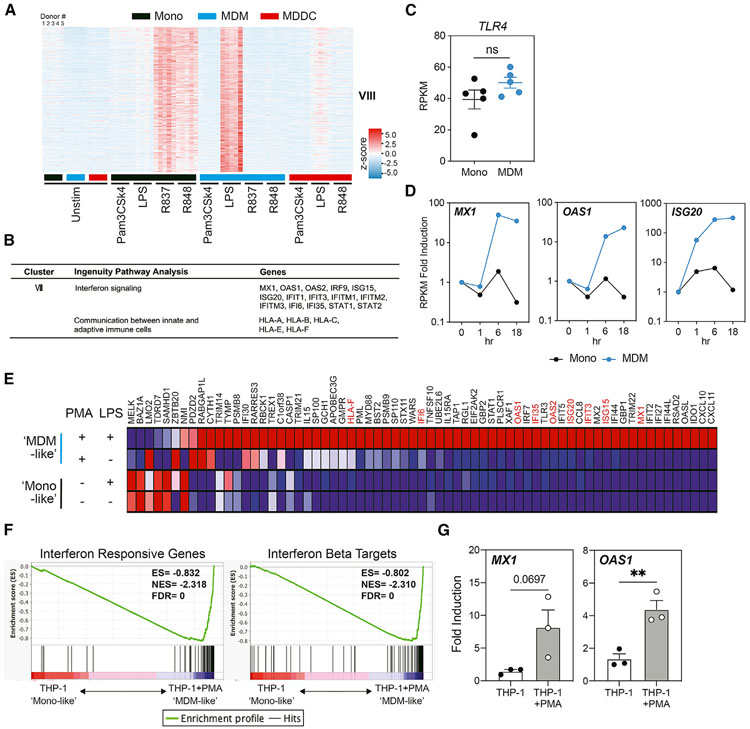
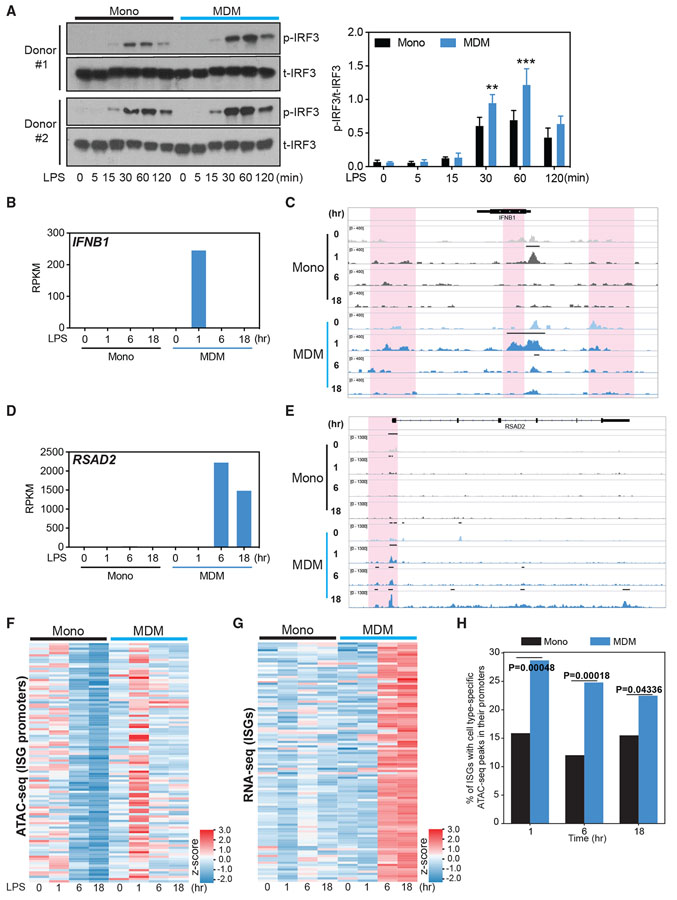
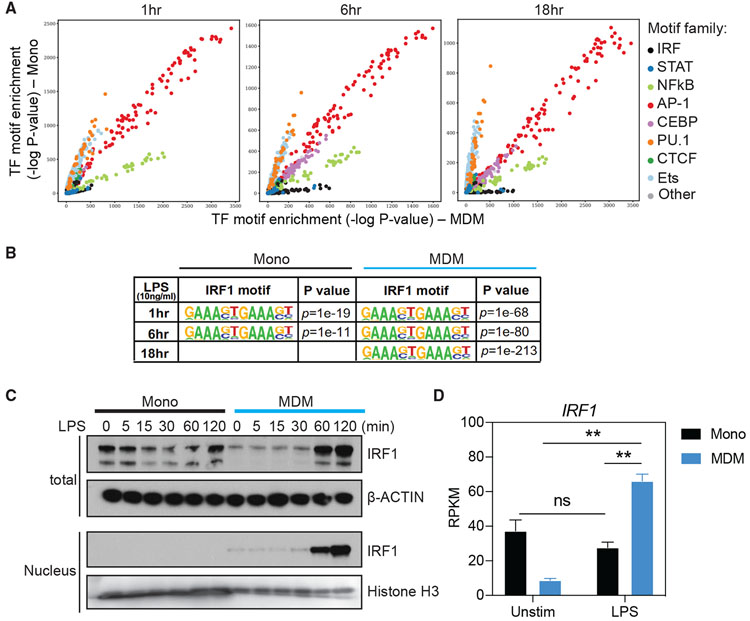
Myeloid lineage cells use TLRs to recognize and respond to diverse microbial ligands. Although unique transcription factors dictate the outcome of specific TLR signaling, whether lineage-specific differences exist to further modulate the quality of TLR-induced inflammation remains unclear. Comprehensive analysis of global gene transcription in human monocytes, monocyte-derived macrophages, and monocyte-derived dendritic cells stimulated with various TLR ligands identifies multiple lineage-specific, TLR-responsive gene programs. Monocytes are hyperresponsive to TLR7/8 stimulation that correlates with the higher expression of the receptors. While macrophages and monocytes express similar levels of TLR4, macrophages, but not monocytes, upregulate interferon-stimulated genes (ISGs) in response to TLR4 stimulation. We find that TLR4 signaling in macrophages uniquely engages transcription factor IRF1, which facilitates the opening of ISG loci for transcription. This study provides a critical mechanistic basis for lineage-specific TLR responses and uncovers IRF1 as a master regulator for the ISG transcriptional program in human macrophages.
髓系细胞利用Toll样受体(TLR)来识别并响应多种微生物配体。尽管独特的转录因子决定了特定TLR信号传导的结果,但尚不清楚是否存在谱系特异性差异以进一步调节TLR诱导的炎症反应的质量。对用各种TLR配体刺激的人类单核细胞、单核细胞衍生的巨噬细胞和单核细胞衍生的树突状细胞中的全局基因转录进行全面分析,确定了多个谱系特异性的TLR反应性基因程序。单核细胞对TLR7/8刺激反应过度,这与受体的较高表达相关。虽然巨噬细胞和单核细胞表达相似水平的TLR4,但巨噬细胞而非单核细胞在响应TLR4刺激时会上调干扰素刺激基因(ISG)。我们发现巨噬细胞中的TLR4信号传导独特地激活转录因子IRF1,IRF1促进ISG基因座的开放以进行转录。这项研究为谱系特异性TLR反应提供了关键的机制基础,并揭示IRF1是人类巨噬细胞中ISG转录程序的主要调节因子。