Max Perutz Labs, Vienna Biocenter Campus (VBC), Vienna, 1030, Austria.
University of Vienna, Center for Molecular Biology, Department of Microbiology, Immunobiology and Genetics, Vienna, 1030, Austria.
EMBO J. 2024 Jun;43(11):2233-2263. doi: 10.1038/s44318-024-00092-7. Epub 2024 Apr 24.
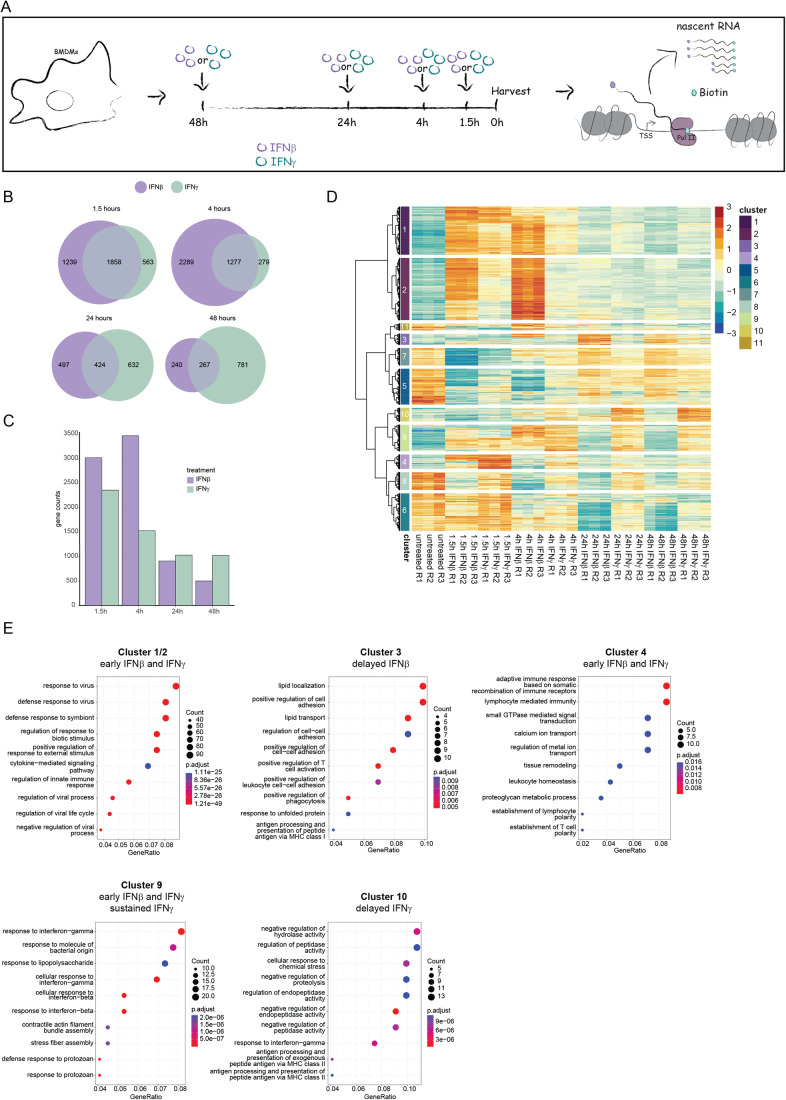
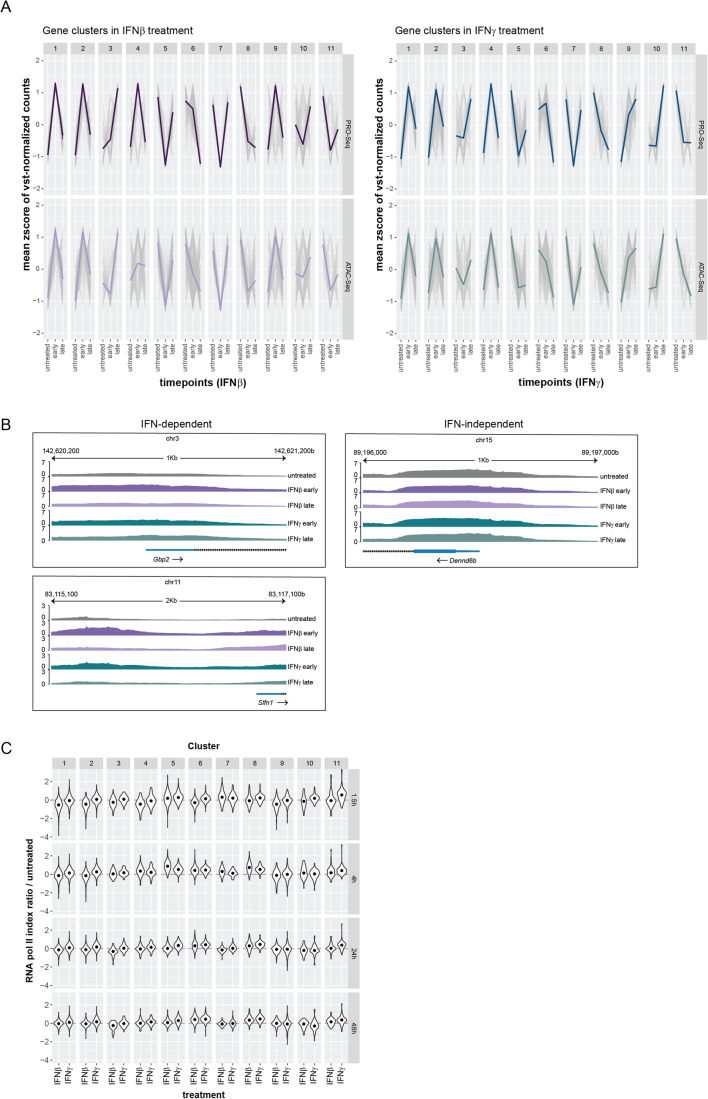
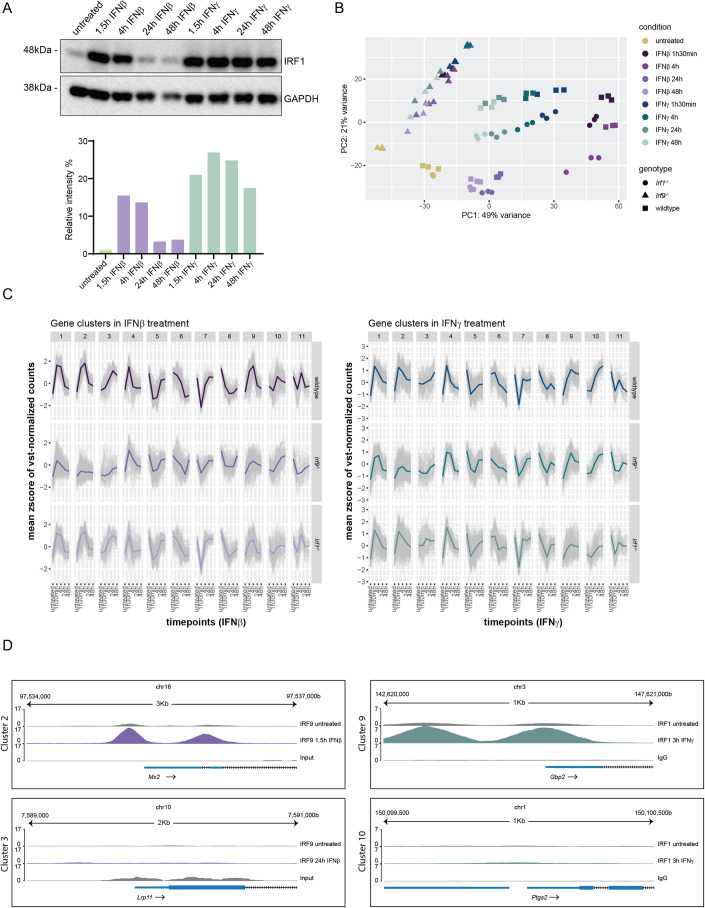
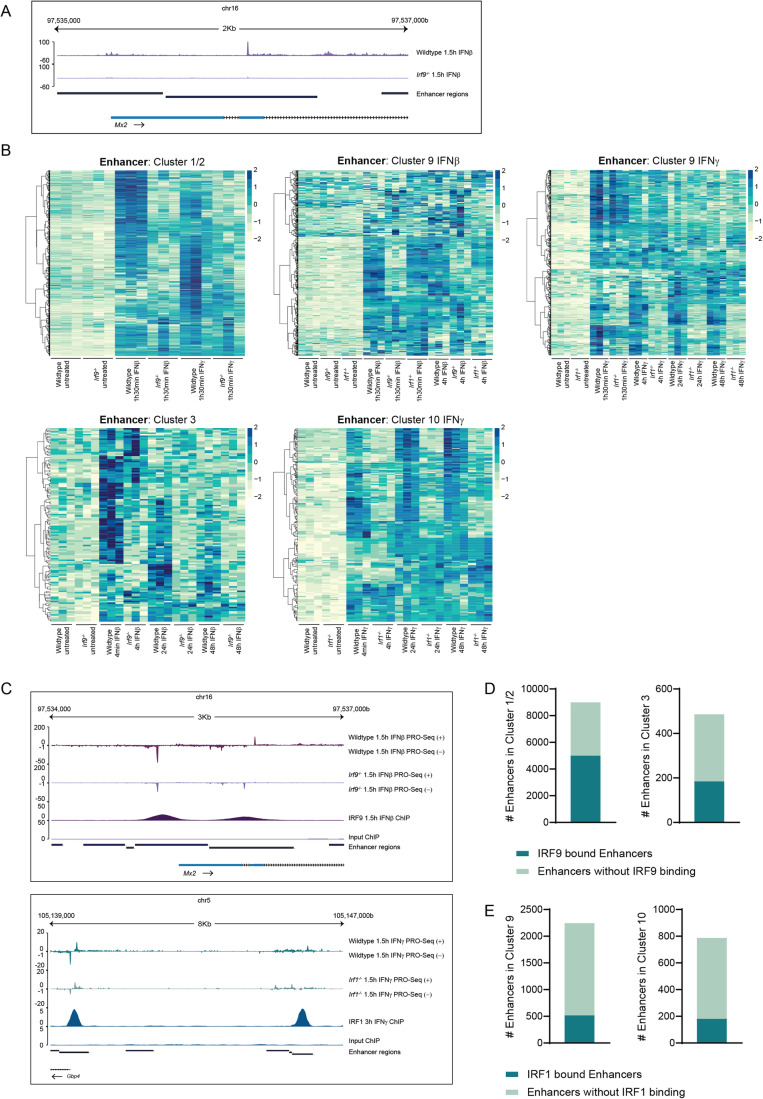
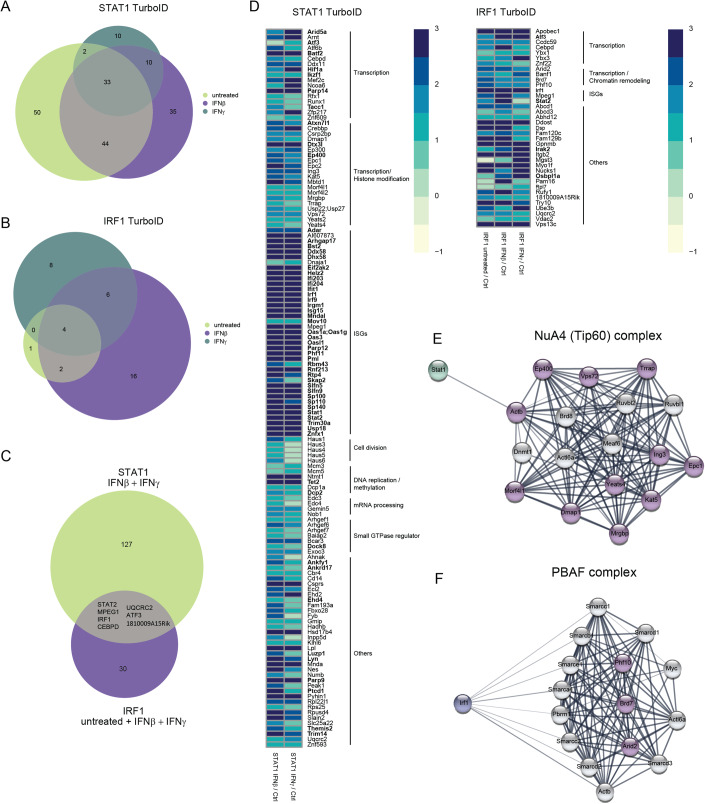
Type I interferons (IFN-I, including IFNβ) and IFNγ produce overlapping, yet clearly distinct immunological activities. Recent data show that the distinctness of global transcriptional responses to the two IFN types is not apparent when comparing their immediate effects. By analyzing nascent transcripts induced by IFN-I or IFNγ over a period of 48 h, we now show that the distinctiveness of the transcriptomes emerges over time and is based on differential employment of the ISGF3 complex as well as of the second-tier transcription factor IRF1. The distinct transcriptional properties of ISGF3 and IRF1 correspond with a largely diverse nuclear protein interactome. Mechanistically, we describe the specific input of ISGF3 and IRF1 into enhancer activation and the regulation of chromatin accessibility at interferon-stimulated genes (ISG). We further report differences between the IFN types in altering RNA polymerase II pausing at ISG 5' ends. Our data provide insight how transcriptional regulators create immunological identities of IFN-I and IFNγ.
I 型干扰素(IFN-I,包括 IFNβ)和 IFNγ 产生重叠但明显不同的免疫学活性。最近的数据表明,当比较两种 IFN 类型的即时效应时,它们对全球转录反应的明显区别并不明显。通过在 48 小时内分析 IFN-I 或 IFNγ 诱导的新生转录本,我们现在表明,转录组的独特性随着时间的推移而出现,并且基于 ISGF3 复合物以及第二级转录因子 IRF1 的差异利用。ISGF3 和 IRF1 的不同转录特性与核蛋白相互作用组的差异有关。从机制上讲,我们描述了 ISGF3 和 IRF1 对增强子激活和干扰素刺激基因(ISG)的染色质可及性调节的具体作用。我们还报告了 IFN 类型在改变 RNA 聚合酶 II 在 ISG 5' 末端暂停方面的差异。我们的数据提供了关于转录调节剂如何为 IFN-I 和 IFNγ 创造免疫学特性的见解。