Salvi Carola, Leiker Emily K, Baricca Beatrix, Molinari Maria A, Eleopra Roberto, Nichelli Paolo F, Grafman Jordan, Dunsmoor Joseph E
Department of Psychiatry, University of Texas at Austin, Austin, TX, United States.
Neurology Clinic, Department of Neuroscience, Ospedale Civile S. Agostino Estense, Modena University Hospital, University of Modena and Reggio Emilia, Modena, Italy.
Front Psychol. 2021 Mar 5;12:646448. doi: 10.3389/fpsyg.2021.646448. eCollection 2021.
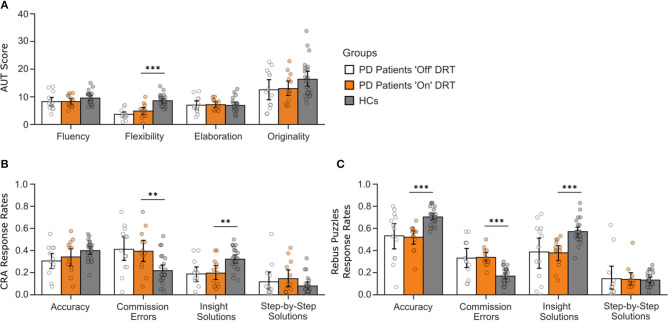
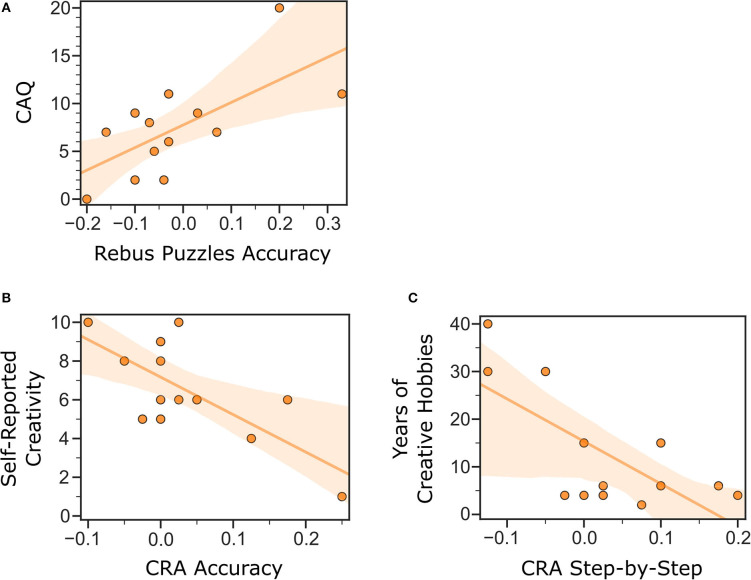
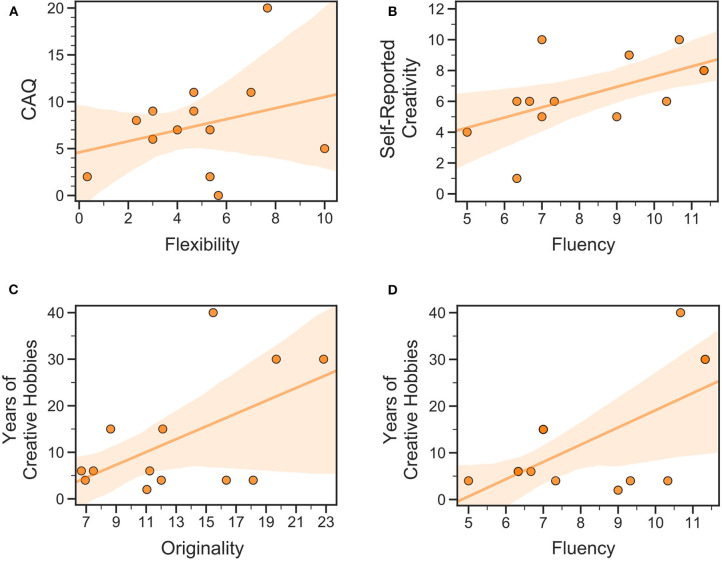
Parkinson's disease (PD) patients receiving dopaminergic treatment may experience bursts of creativity. Although this phenomenon is sometimes recognized among patients and their clinicians, the association between dopamine replacement therapy (DRT) in PD patients and creativity remains underexplored. It is unclear, for instance, whether DRT affects creativity through convergent or divergent thinking, idea generation, or a general lack of inhibition. It is also unclear whether DRT only augments pre-existing creative attributes or generates creativity . Here, we tested a group of PD patients when "on" and "off" dopaminergic treatment on a series of tests of creative problem-solving (Alternative Uses Task, Compound Remote Associates, Rebus Puzzles), and related their performance to a group of matched healthy controls as well as to their pre-PD creative skills and measures of inhibition/impulsivity. Results did not provide strong evidence that DRT improved creative thinking in PD patients. Rather, PD patients "on" medication showed less flexibility in divergent thinking, generated fewer ideas insight, and showed worse performance in convergent thinking overall (by making more errors) than healthy controls. Pre-PD creative skills predicted enhanced flexibility and fluency in divergent thinking when PD patients were "on" medication. However, results on convergent thinking were mixed. Finally, PD patients who exhibited deficits in a measure of inhibitory control showed weaker convergent thinking while "on" medication, supporting previous evidence on the importance of inhibitory control in creative problem-solving. Altogether, results do not support the hypothesis that DRT promotes creative thinking in PD. We speculate that bursts of artistic production in PD are perhaps conflated with creativity due to lay conceptions of creativity (i.e., an art-bias).
接受多巴胺能治疗的帕金森病(PD)患者可能会经历创造力的爆发。尽管这种现象有时在患者及其临床医生中得到认可,但PD患者的多巴胺替代疗法(DRT)与创造力之间的关联仍未得到充分探索。例如,尚不清楚DRT是通过聚合思维还是发散思维、想法产生或普遍缺乏抑制来影响创造力。也不清楚DRT只是增强了预先存在的创造性属性还是产生了创造力。在这里,我们对一组PD患者在多巴胺能治疗“开”和“关”时进行了一系列创造性问题解决测试(替代用途任务、复合远程联想、画谜),并将他们的表现与一组匹配的健康对照以及他们PD发病前的创造性技能和抑制/冲动测量结果进行了比较。结果没有提供强有力的证据表明DRT改善了PD患者的创造性思维。相反,正在服药的PD患者在发散思维中表现出较低的灵活性,产生的想法和洞察力较少,并且在聚合思维方面总体表现更差(犯错更多),比健康对照差。PD发病前的创造性技能预测了PD患者服药时在发散思维中的灵活性和流畅性增强。然而,聚合思维的结果好坏参半。最后,在抑制控制测量中表现出缺陷的PD患者在服药时聚合思维较弱,这支持了先前关于抑制控制在创造性问题解决中的重要性的证据。总之,结果不支持DRT促进PD患者创造性思维的假设。我们推测,PD患者的艺术创作爆发可能由于对创造力的外行观念(即艺术偏见)而与创造力混为一谈。