Zhu Jun-Yi, Lee Jin-Gu, van de Leemput Joyce, Lee Hangnoh, Han Zhe
Center for Precision Disease Modeling, Department of Medicine, University of Maryland School of Medicine, Baltimore, MD, USA.
Division of Endocrinology, Diabetes and Nutrition, Department of Medicine, University of Maryland School of Medicine, Baltimore, MD, USA.
Cell Biosci. 2021 Mar 25;11(1):59. doi: 10.1186/s13578-021-00567-8.
SARS-CoV-2 causes COVID-19 with a widely diverse disease profile that affects many different tissues. The mechanisms underlying its pathogenicity in host organisms remain unclear. Animal models for studying the pathogenicity of SARS-CoV-2 proteins are lacking.
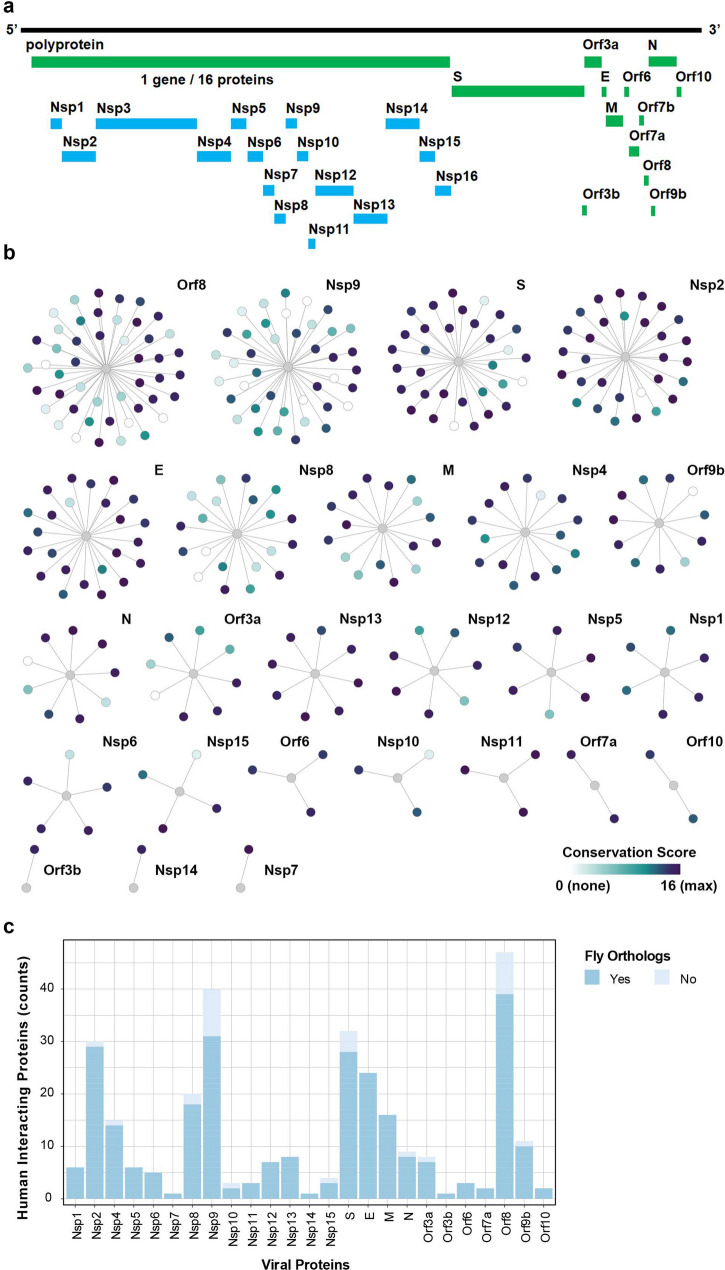
Using bioinformatic analysis, we found that 90% of the virus-host interactions involve human proteins conserved in Drosophila. Therefore, we generated a series of transgenic fly lines for individual SARS-CoV-2 genes, and used the Gal4-UAS system to express these viral genes in Drosophila to study their pathogenicity.
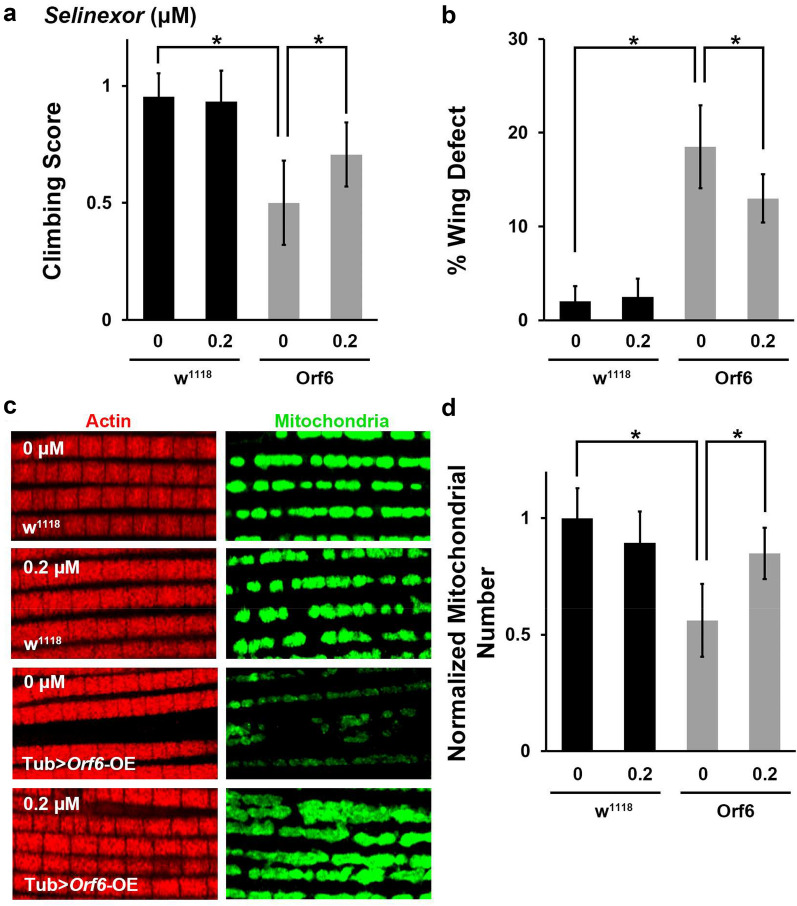
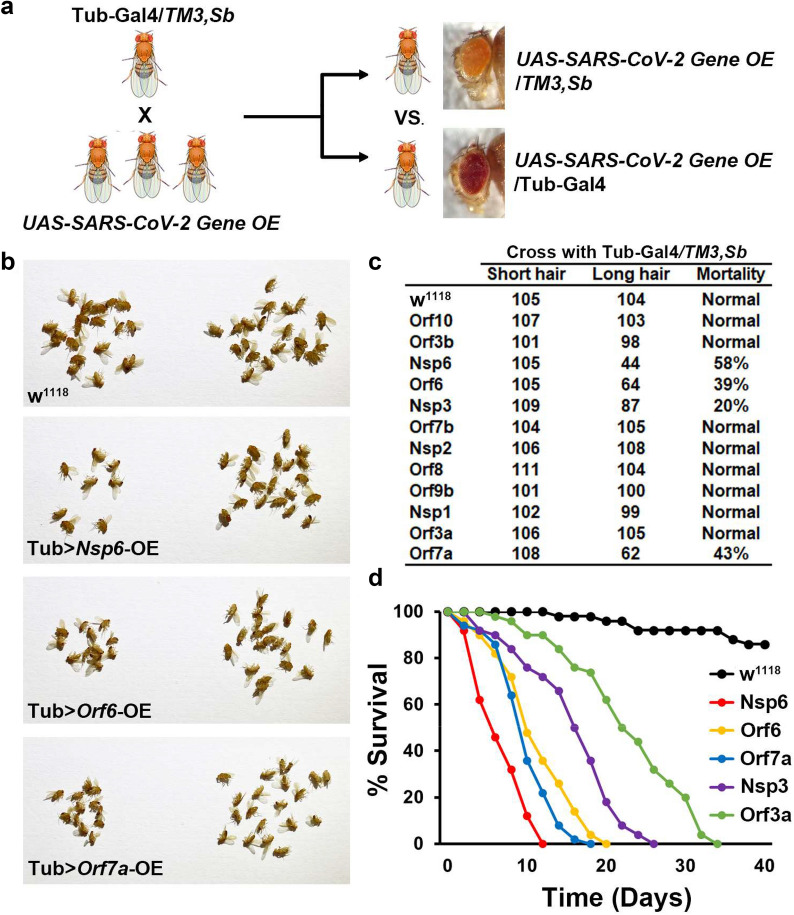
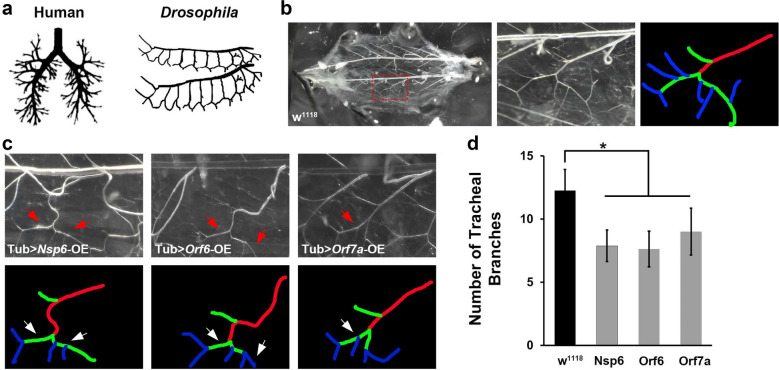
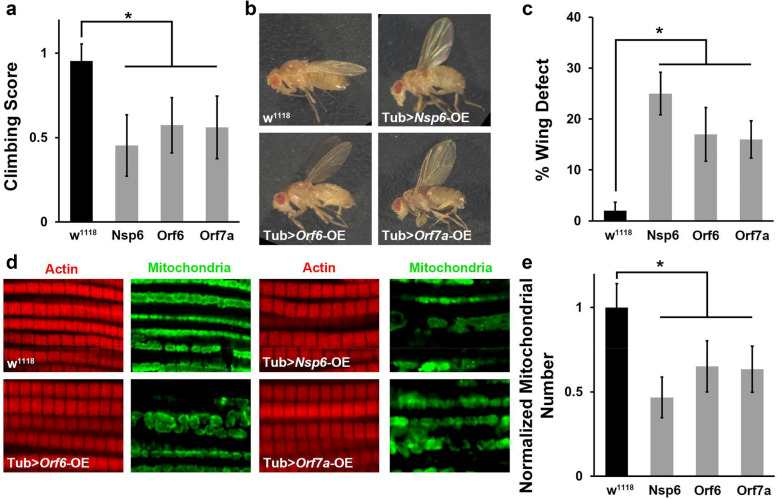
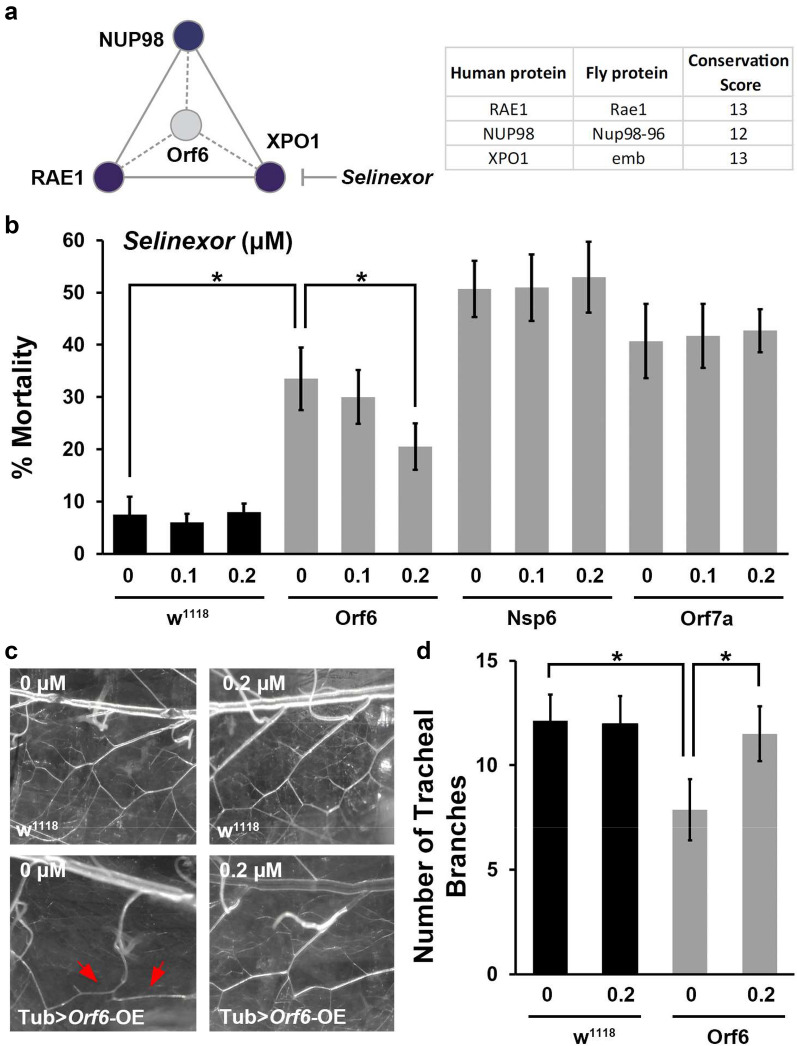
We found that the ubiquitous expression of Orf6, Nsp6 or Orf7a in Drosophila led to reduced viability and tissue defects, including reduced trachea branching as well as muscle deficits resulting in a "held-up" wing phenotype and poor climbing ability. Furthermore, muscles in these flies showed dramatically reduced mitochondria. Since Orf6 was found to interact with nucleopore proteins XPO1, we tested Selinexor, a drug that inhibits XPO1, and found that it could attenuate the Orf6-induced lethality and tissue-specific phenotypes observed in flies.
Our study established Drosophila as a model for studying the function of SARS-CoV2 genes, identified Orf6 as a highly pathogenic protein in various tissues, and demonstrated the potential of Selinexor for inhibiting Orf6 toxicity using an in vivo animal model system.
严重急性呼吸综合征冠状病毒2(SARS-CoV-2)导致的2019冠状病毒病(COVID-19)具有广泛多样的疾病特征,会影响许多不同组织。其在宿主生物体中的致病机制仍不清楚。目前缺乏用于研究SARS-CoV-2蛋白致病性的动物模型。
通过生物信息学分析,我们发现90%的病毒与宿主的相互作用涉及在果蝇中保守的人类蛋白质。因此,我们针对单个SARS-CoV-2基因构建了一系列转基因果蝇品系,并使用Gal4-UAS系统在果蝇中表达这些病毒基因,以研究它们的致病性。
我们发现,在果蝇中普遍表达Orf6、Nsp6或Orf7a会导致活力下降和组织缺陷,包括气管分支减少以及肌肉缺陷,从而导致“翅膀举起”的表型和攀爬能力差。此外,这些果蝇的肌肉中线粒体显著减少。由于发现Orf6与核孔蛋白XPO1相互作用,我们测试了一种抑制XPO1的药物塞利尼索,发现它可以减轻果蝇中观察到的Orf6诱导的致死率和组织特异性表型。
我们的研究将果蝇确立为研究SARS-CoV-2基因功能的模型,确定Orf6是一种在各种组织中具有高致病性的蛋白质,并证明了塞利尼索在体内动物模型系统中抑制Orf6毒性的潜力。