Department of Pharmacology, Physiology and Neuroscience, Rutgers, New Jersey Medical School, Newark, New Jersey, USA.
Institute for Computational Molecular Science, Temple University, Philadelphia, Pennsylvania, USA.
J Biol Chem. 2021 Jan-Jun;296:100573. doi: 10.1016/j.jbc.2021.100573. Epub 2021 Mar 23.
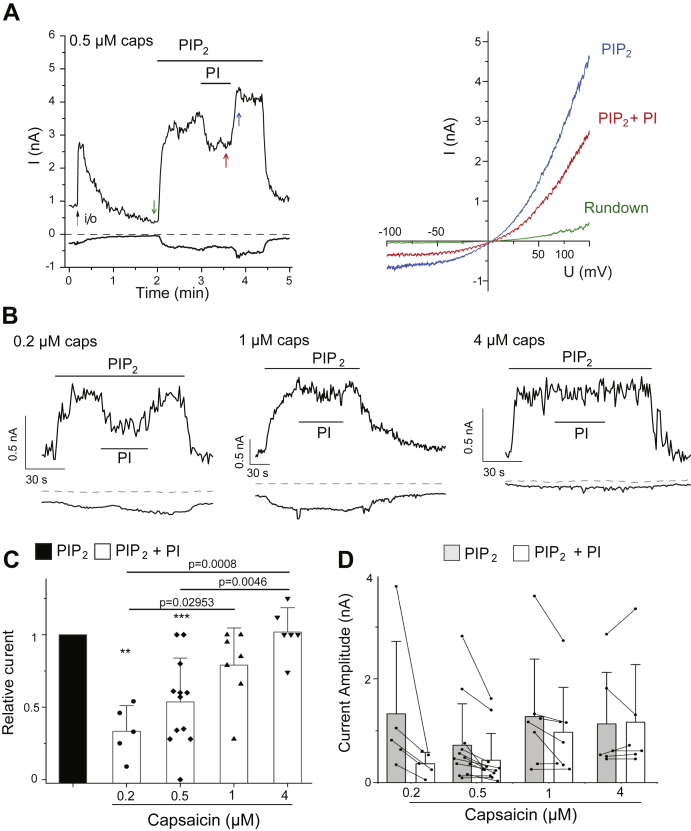
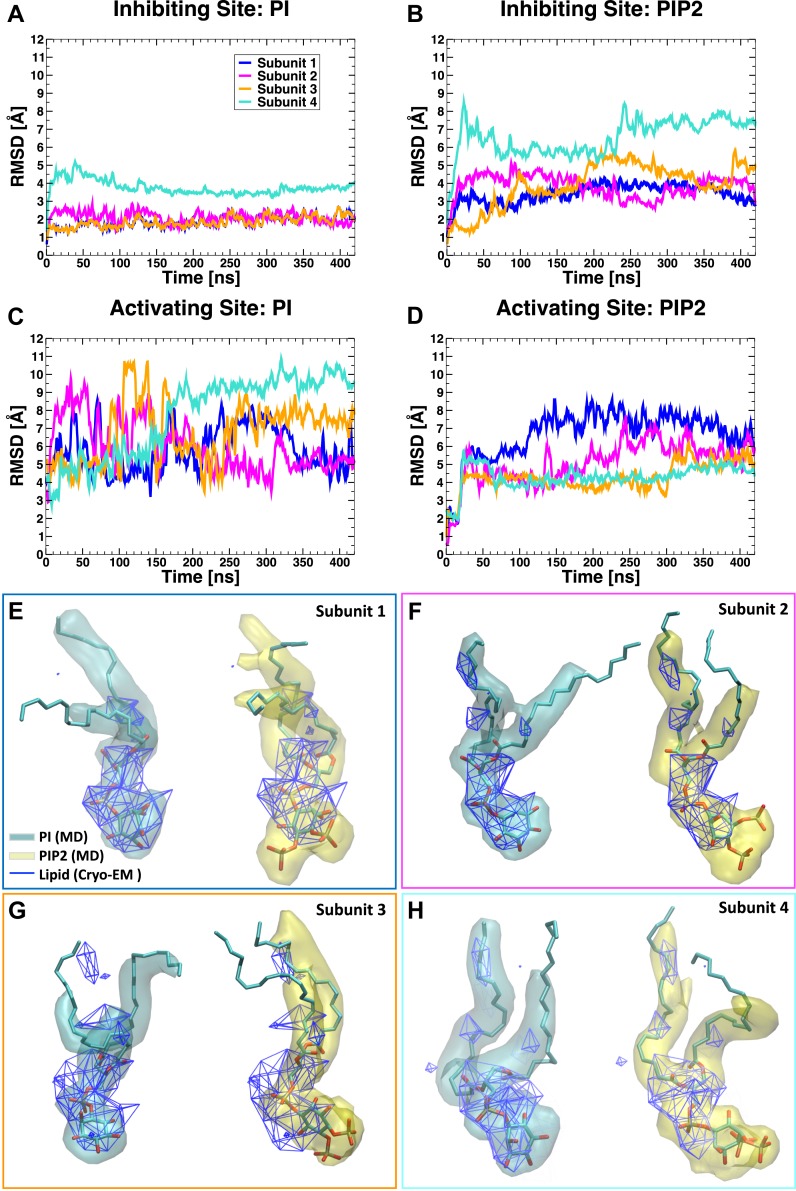
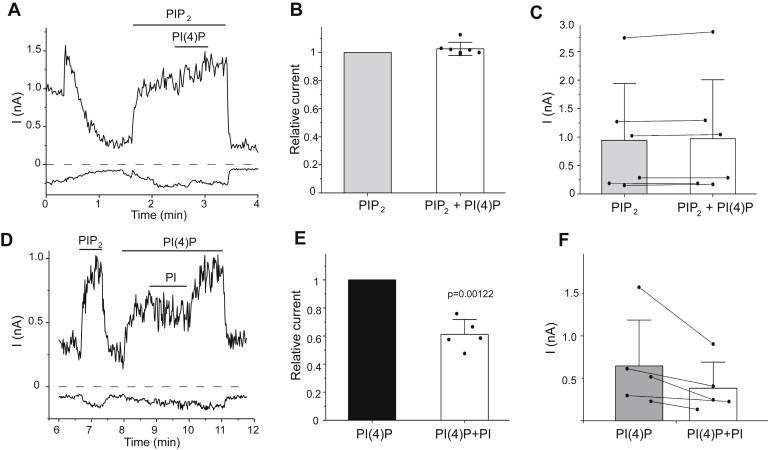
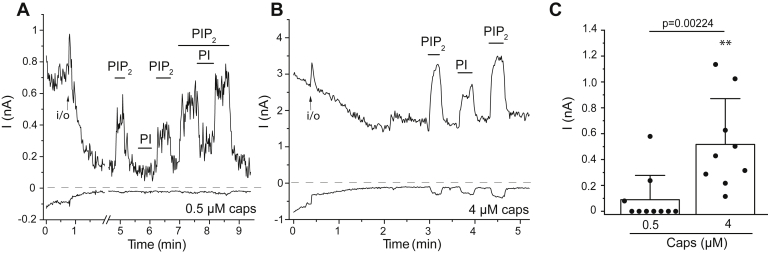
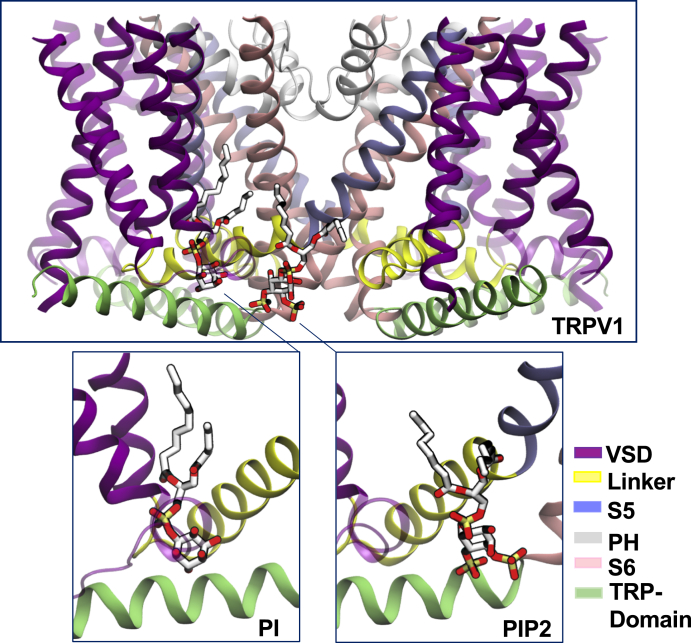
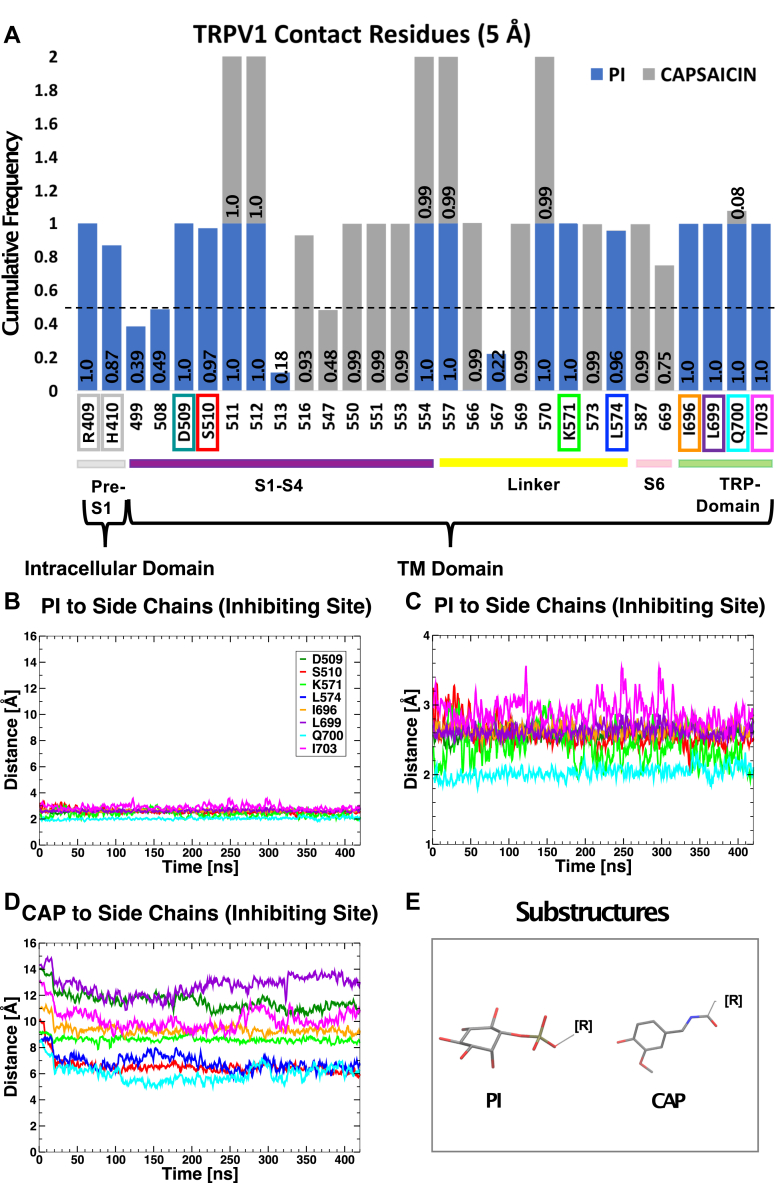
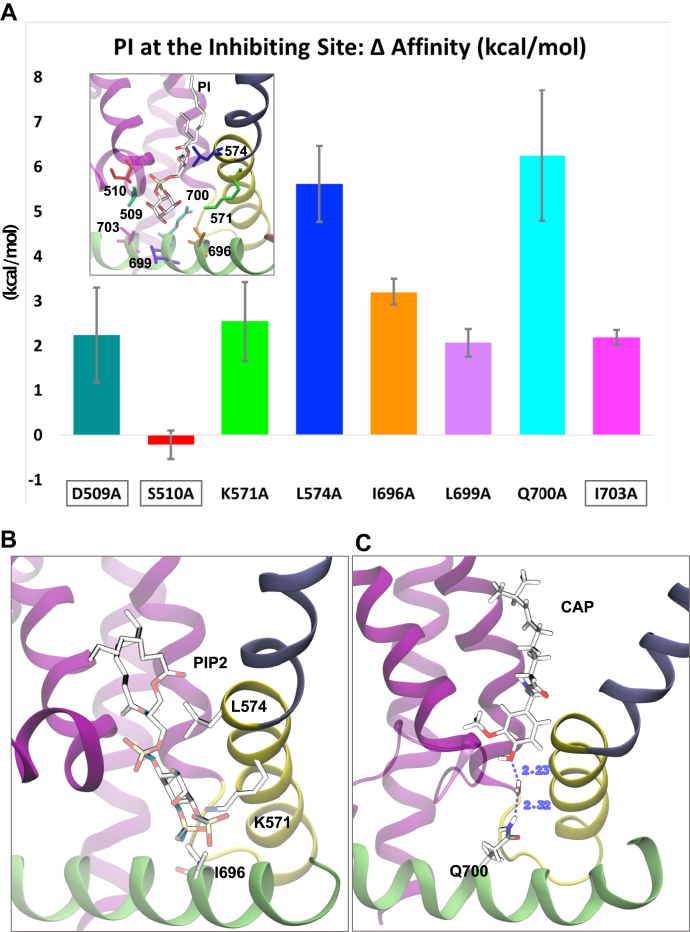
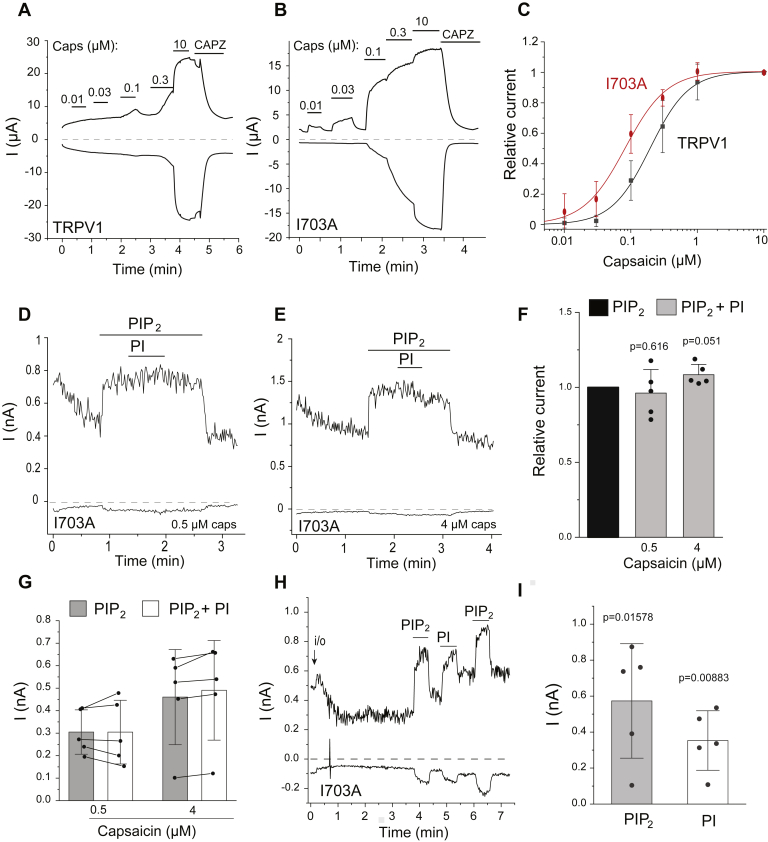
Regulation of the heat- and capsaicin-activated transient receptor potential vanilloid 1 (TRPV1) channel by phosphoinositides is complex and controversial. In the most recent TRPV1 cryo-EM structure, endogenous phosphatidylinositol (PtdIns) was detected in the vanilloid binding site, and phosphoinositides were proposed to act as competitive vanilloid antagonists. This model is difficult to reconcile with phosphatidylinositol 4,5-bisphosphate [PtdIns(4,5)P] being a well-established positive regulator of TRPV1. Here we show that in the presence of PtdIns(4,5)P in excised patches, PtdIns, but not PtdIns(4)P, partially inhibited TRPV1 activity at low, but not at high capsaicin concentrations. This is consistent with PtdIns acting as a competitive vanilloid antagonist. However, in the absence of PtdIns(4,5)P, PtdIns partially stimulated TRPV1 activity. We computationally identified residues, which are in contact with PtdIns, but not with capsaicin in the vanilloid binding site. The I703A mutant of TRPV1 showed increased sensitivity to capsaicin, as expected when removing the effect of an endogenous competitive antagonist. I703A was not inhibited by PtdIns in the presence of PtdIns(4,5)P, but it was still activated by PtdIns in the absence of PtdIns(4,5)P indicating that inhibition, but not activation by PtdIns proceeds via the vanilloid binding site. In molecular dynamics simulations, PtdIns was more stable than PtdIns(4,5)P in this inhibitory site, whereas PtdIns(4,5)P was more stable than PtdIns in a previously identified, nonoverlapping, putative activating binding site. Our data indicate that phosphoinositides regulate channel activity via functionally distinct binding sites, which may explain some of the complexities of the effects of these lipids on TRPV1.
磷脂酰肌醇对热激活瞬时受体电位香草酸 1(TRPV1)通道的调节作用复杂且存在争议。在最近的 TRPV1 冷冻电镜结构中,内源性磷脂酰肌醇(PtdIns)被检测到位于香草酸结合部位,并且提出磷脂酰肌醇可能作为竞争性香草酸拮抗剂。然而,该模型难以与磷脂酰肌醇 4,5-二磷酸(PtdIns(4,5)P)作为 TRPV1 的明确正向调节剂相协调。本文中,我们发现,在提取的膜片中存在 PtdIns(4,5)P 的情况下,PtdIns 而非 PtdIns(4)P 在低浓度但不在高浓度辣椒素存在下部分抑制 TRPV1 活性。这与 PtdIns 作为竞争性香草酸拮抗剂的作用一致。然而,在没有 PtdIns(4,5)P 的情况下,PtdIns 部分刺激 TRPV1 活性。我们通过计算确定了在香草酸结合部位与 PtdIns 但不与辣椒素接触的残基。与预期一样,TRPV1 的 I703A 突变体对辣椒素的敏感性增加,这是当去除内源性竞争性拮抗剂的作用时的结果。在存在 PtdIns(4,5)P 的情况下,I703A 不被 PtdIns 抑制,但在没有 PtdIns(4,5)P 的情况下仍被 PtdIns 激活,这表明抑制而非激活通过香草酸结合部位进行。在分子动力学模拟中,与 PtdIns(4,5)P 相比,PtdIns 在该抑制性结合部位更稳定,而与 PtdIns 相比,PtdIns(4,5)P 在先前鉴定的非重叠、假定的激活结合部位更稳定。我们的数据表明,磷脂酰肌醇通过功能上不同的结合部位调节通道活性,这可能解释了这些脂质对 TRPV1 作用的一些复杂性。