He Xi, Quan Shuo, Xu Min, Rodriguez Silveria, Goh Shih Lin, Wei Jiajie, Fridman Arthur, Koeplinger Kenneth A, Carroll Steve S, Grobler Jay A, Espeseth Amy S, Olsen David B, Hazuda Daria J, Wang Dai
Infectious Disease and Vaccines, Merck and Company, Inc., Kenilworth, NJ 07033.
Infectious Disease and Vaccines, Merck and Company, Inc., Kenilworth, NJ 07033
Proc Natl Acad Sci U S A. 2021 Apr 13;118(15). doi: 10.1073/pnas.2025866118.
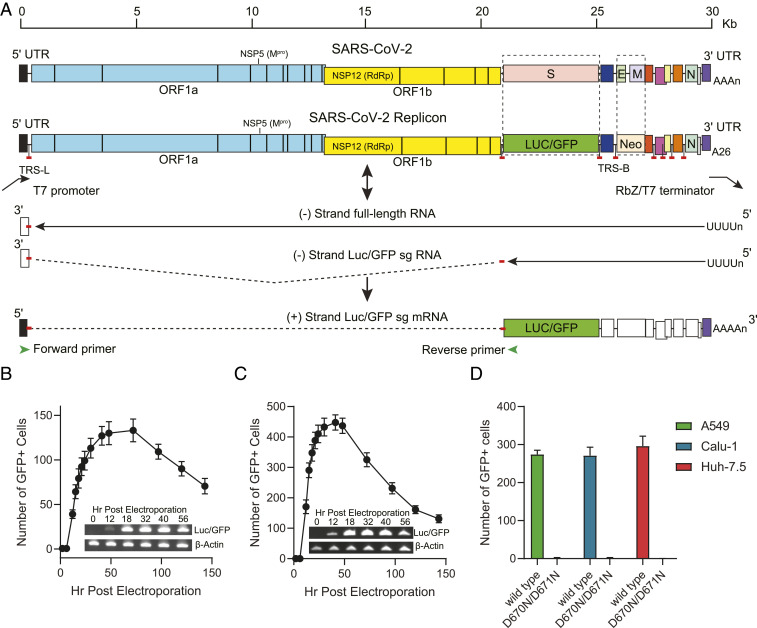
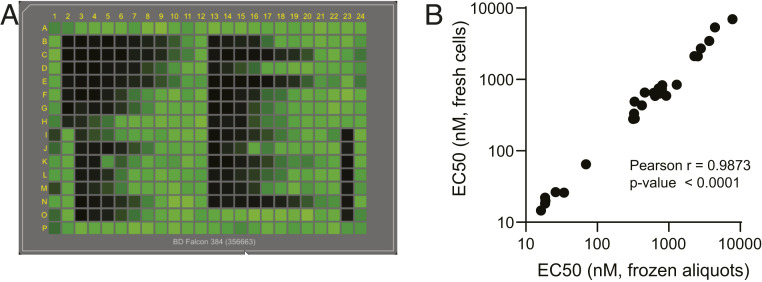
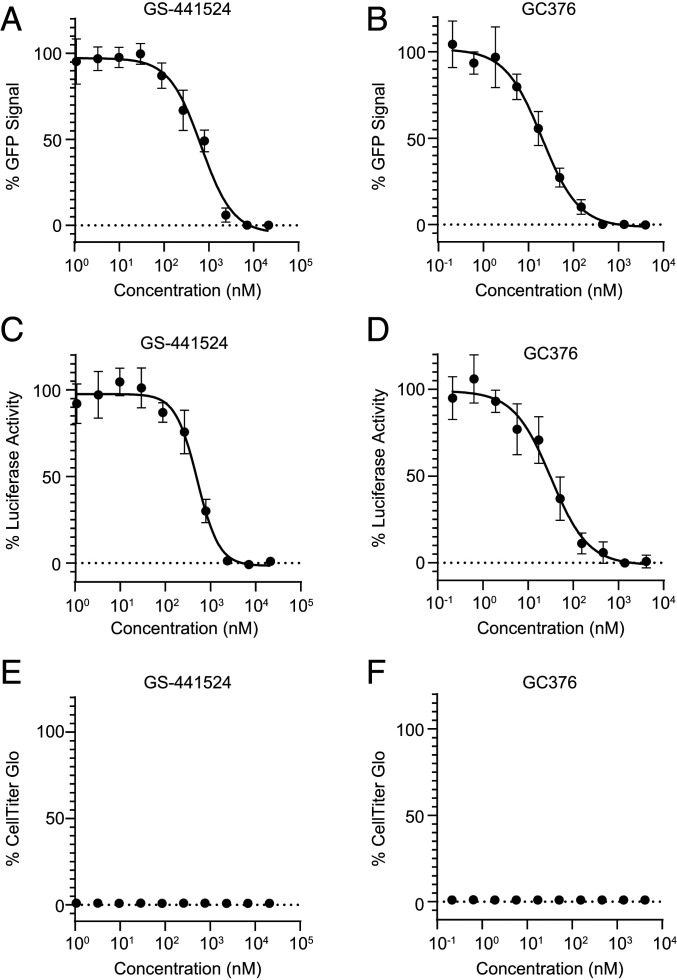
Severe acute respiratory syndrome coronavirus 2 (SARS-CoV-2) research and antiviral discovery are hampered by the lack of a cell-based virus replication system that can be readily adopted without biosafety level 3 (BSL-3) restrictions. Here, the construction of a noninfectious SARS-CoV-2 reporter replicon and its application in deciphering viral replication mechanisms and evaluating SARS-CoV-2 inhibitors are presented. The replicon genome is replication competent but does not produce progeny virions. Its replication can be inhibited by RdRp mutations or by known SARS-CoV-2 antiviral compounds. Using this system, a high-throughput antiviral assay has also been developed. Significant differences in potencies of several SARS-CoV-2 inhibitors in different cell lines were observed, which highlight the challenges of discovering antivirals capable of inhibiting viral replication in vivo and the importance of testing compounds in multiple cell culture models. The generation of a SARS-CoV-2 replicon provides a powerful platform to expand the global research effort to combat COVID-19.
严重急性呼吸综合征冠状病毒2(SARS-CoV-2)的研究和抗病毒药物发现受到缺乏一种无需生物安全3级(BSL-3)限制即可轻松采用的基于细胞的病毒复制系统的阻碍。在此,介绍了一种非感染性SARS-CoV-2报告基因复制子的构建及其在破译病毒复制机制和评估SARS-CoV-2抑制剂方面的应用。该复制子基因组具有复制能力,但不产生子代病毒颗粒。其复制可被RNA依赖性RNA聚合酶(RdRp)突变或已知的SARS-CoV-2抗病毒化合物抑制。利用该系统,还开发了一种高通量抗病毒检测方法。观察到几种SARS-CoV-2抑制剂在不同细胞系中的效力存在显著差异,这凸显了发现能够在体内抑制病毒复制的抗病毒药物的挑战以及在多种细胞培养模型中测试化合物的重要性。SARS-CoV-2复制子的产生为扩大全球抗击COVID-19的研究工作提供了一个强大的平台。