Institute of Human Virology, Key Laboratory of Tropical Disease Control of Ministry of Education, Guangdong Engineering Research Center for Antimicrobial Agent and Immunotechnology, Zhongshan School of Medicine, Sun Yat-sen University, Guangzhou, China.
School of Medicine, Sun Yat-sen University, Guangzhou/Shenzhen, China.
mBio. 2021 Jan 19;12(1):e02754-20. doi: 10.1128/mBio.02754-20.
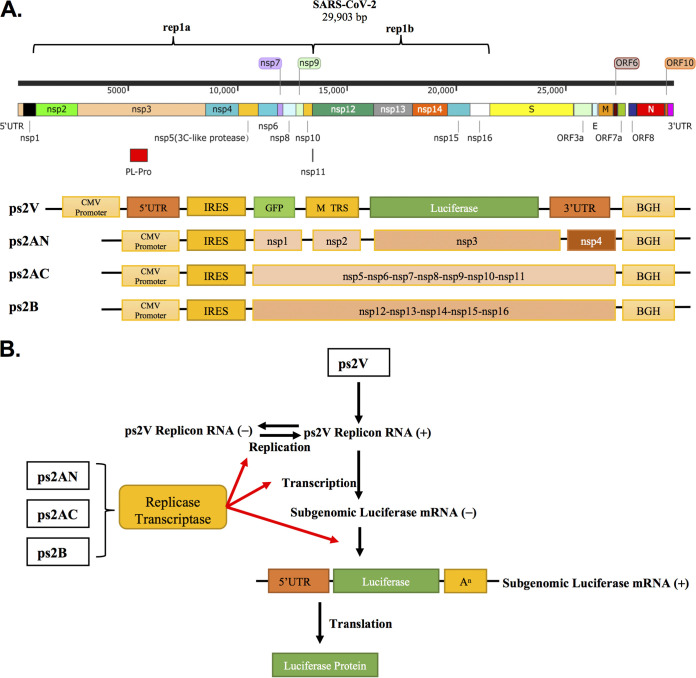
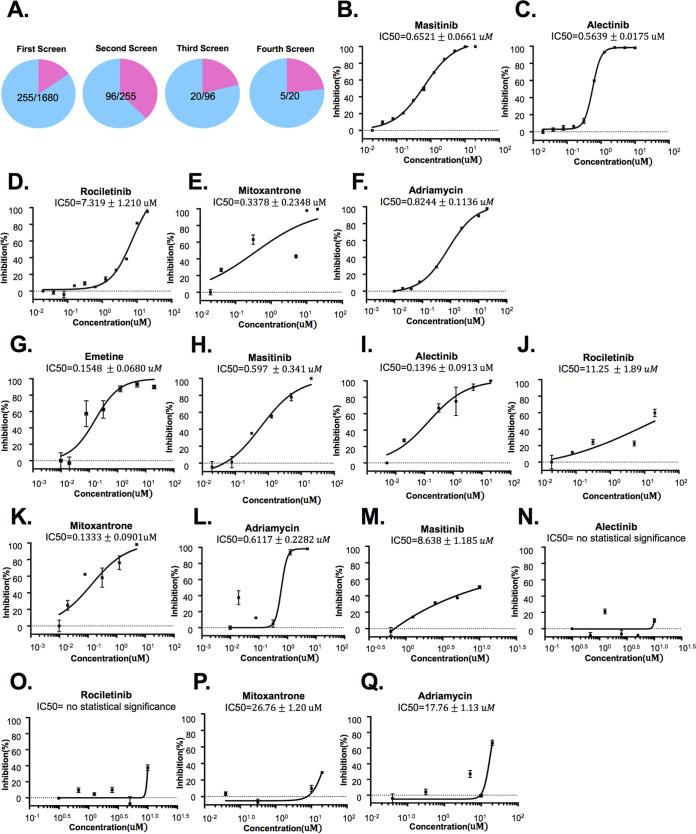
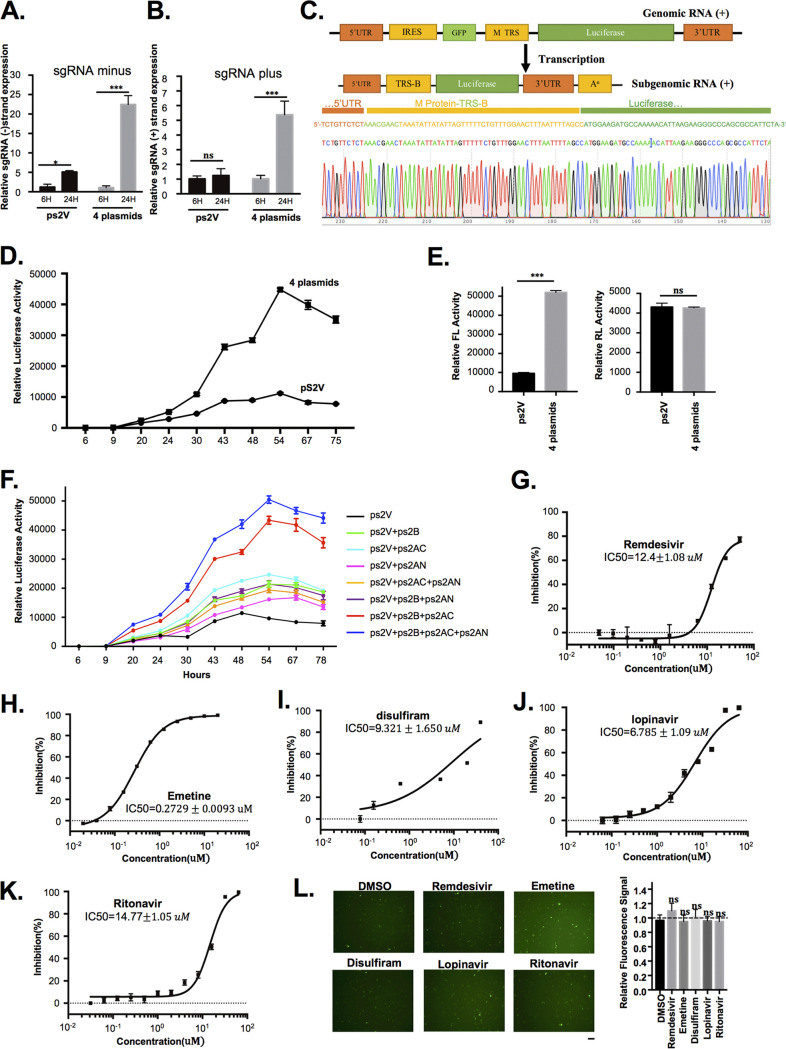
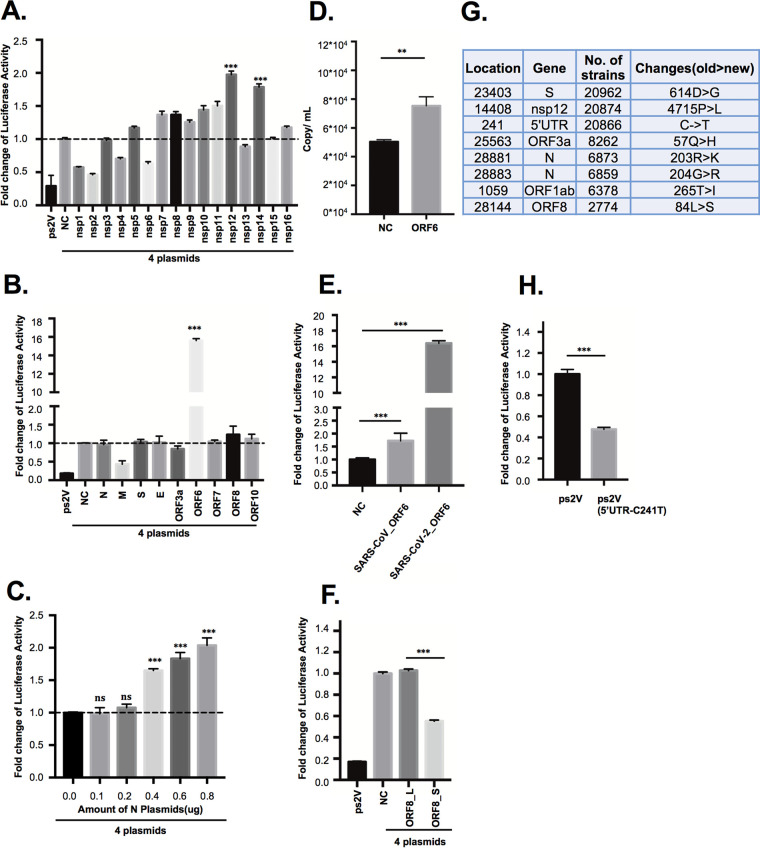
The etiologic agent of COVID-19 is highly contagious and has caused a severe global pandemic. Until now, there has been no simple and reliable system available in a lower-biosafety-grade laboratory for SARS-CoV-2 virologic research and inhibitor screening. In this study, we reported a replicon system which consists of four plasmids expressing the required segments of SARS-CoV-2. Our study revealed that the features for viral RNA synthesis and responses to antivirus drugs of the replicon are similar to those of wild-type viruses. Further analysis indicated that ORF6 provided potent in stimulation of the viral replication. Some viral variations, such as 5'UTR-C241T and ORF8-(T28144C) L84S mutation, also exhibit their different impact upon viral replication. Besides, the screening of clinically used drugs identified that several tyrosine kinase inhibitors and DNA-Top II inhibitors potently inhibit the replicon, as well as authentic SARS-CoV-2 viruses. Collectively, this replicon system provides a biosafety-worry-free platform for studying SARS-CoV-2 virology, monitoring the functional impact of viral mutations, and developing viral inhibitors. COVID-19 has caused a severe global pandemic. Until now, there has been no simple and reliable system available in a lower-biosafety-grade laboratory for SARS-CoV-2 virologic research and inhibitor screening. We reported a replicon system which consists of four ordinary plasmids expressing the required segments of SARS-CoV-2. Using the replicon system, we developed three application scenarios: (i) to identify the effects of viral proteins on virus replication, (ii) to identify the effects of mutations on viral replication during viral epidemics, and (iii) to perform high-throughput screening of antiviral drugs. Collectively, this replicon system would be useful for virologists to study SARS-CoV-2 virology, for epidemiologists to monitor virus mutations, and for industry to develop antiviral drugs.
新型冠状病毒病(COVID-19)的病原体传染性极强,引发了严重的全球大流行。到目前为止,在低生物安全级别的实验室中,还没有一个简单可靠的系统可用于研究 SARS-CoV-2 的病毒学和抑制剂筛选。在本研究中,我们报道了一个包含四个质粒的复制子系统,该系统可表达 SARS-CoV-2 的必需片段。我们的研究表明,该复制子在病毒 RNA 合成和对抗病毒药物的反应方面具有与野生型病毒相似的特征。进一步的分析表明,ORF6 可强烈刺激病毒复制。一些病毒变异,如 5'UTR-C241T 和 ORF8-(T28144C)L84S 突变,也表现出对病毒复制的不同影响。此外,对临床使用药物的筛选发现,几种酪氨酸激酶抑制剂和 DNA-Top II 抑制剂可有效地抑制复制子和真实的 SARS-CoV-2 病毒。总的来说,该复制子系统为研究 SARS-CoV-2 病毒学、监测病毒突变的功能影响以及开发病毒抑制剂提供了一个无生物安全隐患的平台。新型冠状病毒病(COVID-19)引发了严重的全球大流行。到目前为止,在低生物安全级别的实验室中,还没有一个简单可靠的系统可用于研究 SARS-CoV-2 的病毒学和抑制剂筛选。我们报道了一个复制子系统,该系统由四个普通质粒组成,可表达 SARS-CoV-2 的必需片段。使用该复制子系统,我们开发了三种应用场景:(i)鉴定病毒蛋白对病毒复制的影响,(ii)鉴定病毒流行期间病毒突变对病毒复制的影响,以及(iii)进行抗病毒药物的高通量筛选。总的来说,该复制子系统将有助于病毒学家研究 SARS-CoV-2 病毒学,有助于流行病学家监测病毒突变,有助于工业界开发抗病毒药物。