Department of Ophthalmology, Toho University Ohashi Medical Center, 2-22-36, Ohashi Meguro-ku, Tokyo, 153-8515, Japan.
Tajimi Iwase Eye Clinic, Tajimi, Gifu, Japan.
Sci Rep. 2021 Mar 25;11(1):6847. doi: 10.1038/s41598-021-86280-5.
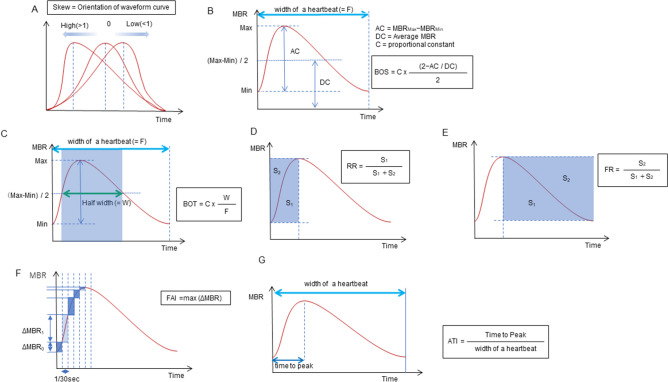
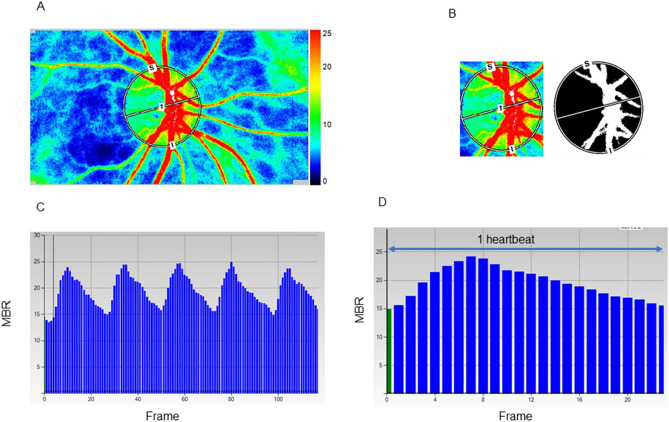
To characterize laser speckle flowgraphy (LSFG) pulse waveform parameters for ocular circulation evaluation, a multicenter, prospective, cross-sectional study was conducted in 111 eyes of 86 healthy Japanese individuals. Optic nerve head (ONH) tissue-area, vessel-area mean blur rate (MT and MV, respectively), and MT and MV pulse waveform parameters were obtained using LSFG and ONH structural parameters using planimetry. Multivariate linear mixed-effects modeled regression analysis identified factors contributing to MT- or MV-waveforms using age, gender, smoking history, body mass index, systolic and diastolic blood pressure, heart rate, intraocular pressure, axial length, disc, rim, and β-peripapillary atrophy areas, MT or MV, central retinal artery, and vein equivalents (CRAE and CRVE) as explanatory variables. MT- and MV-waveforms significantly correlated with one or more systemic factors, consistent with previous studies. Following confounding factor adjustment, MT-Skew significantly negatively correlated with β-PPA area (P = 0.026); MT- and MV-flow acceleration index positively correlated with CRAE, MT, and MV (P = 0.041-< 0.001), compatible with these parameters' observed correlations to systemic factors. Significantly negative correlations of the blowout score and acceleration time index to CRAE partly conflicted with their correlations to systemic factors, and other waveform parameters showed little correlation to ocular factors. Thus, Skew and flow acceleration index assisted the in vivo ocular circulation characterization.
为了描述用于眼部循环评估的激光散斑血流图 (LSFG) 脉冲波形参数,我们在 86 名日本健康个体的 111 只眼中进行了一项多中心、前瞻性、横断面研究。使用 LSFG 获得视盘组织区域(ONH)、血管区域平均模糊率(MT 和 MV)以及 MT 和 MV 脉冲波形参数,使用平面测量法获得 ONH 结构参数。多元线性混合效应模型回归分析确定了年龄、性别、吸烟史、体重指数、收缩压和舒张压、心率、眼压、眼轴、视盘、视盘边缘和β-视盘周围萎缩区、MT 或 MV、视网膜中央动脉和静脉等效物(CRAE 和 CRVE)等因素对 MT 或 MV 波形的影响。MT 和 MV 波形与一个或多个系统性因素显著相关,与先前的研究一致。在调整混杂因素后,MT-Skew 与β-PPA 区域显著负相关(P=0.026);MT 和 MV 流动加速指数与 CRAE、MT 和 MV 呈正相关(P=0.041-<0.001),这与这些参数与系统性因素的观察到的相关性一致。爆破评分和加速时间指数与 CRAE 的显著负相关与它们与系统性因素的相关性部分冲突,其他波形参数与眼部因素相关性较小。因此,Skew 和流动加速指数有助于对活体眼循环进行特征描述。