Fukami Marie, Iwase Takeshi, Yamamoto Kentaro, Ra Eimei, Murotani Kenta, Terasaki Hiroko
Department of Ophthalmology, Nagoya University Graduate School of Medicine, Showa-ku, Nagoya Division of Biostatistics, Clinical Research Center, Aichi Medical University, Nagakute, Aichi, Japan.
Medicine (Baltimore). 2017 Nov;96(44):e8312. doi: 10.1097/MD.0000000000008312.
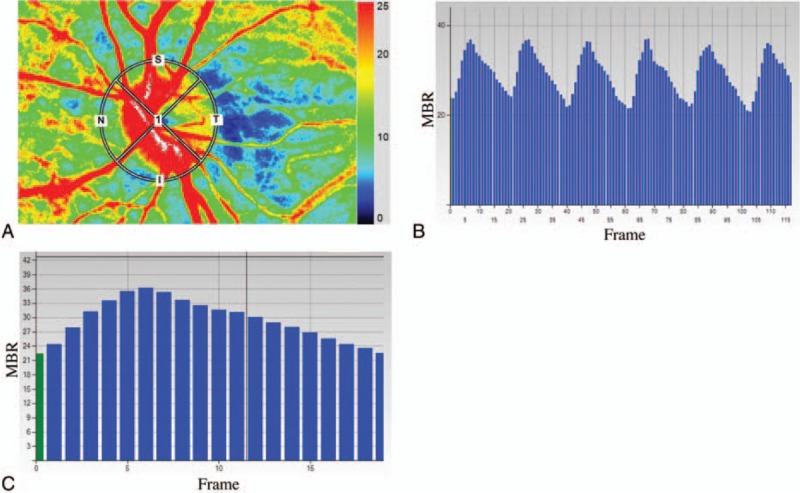
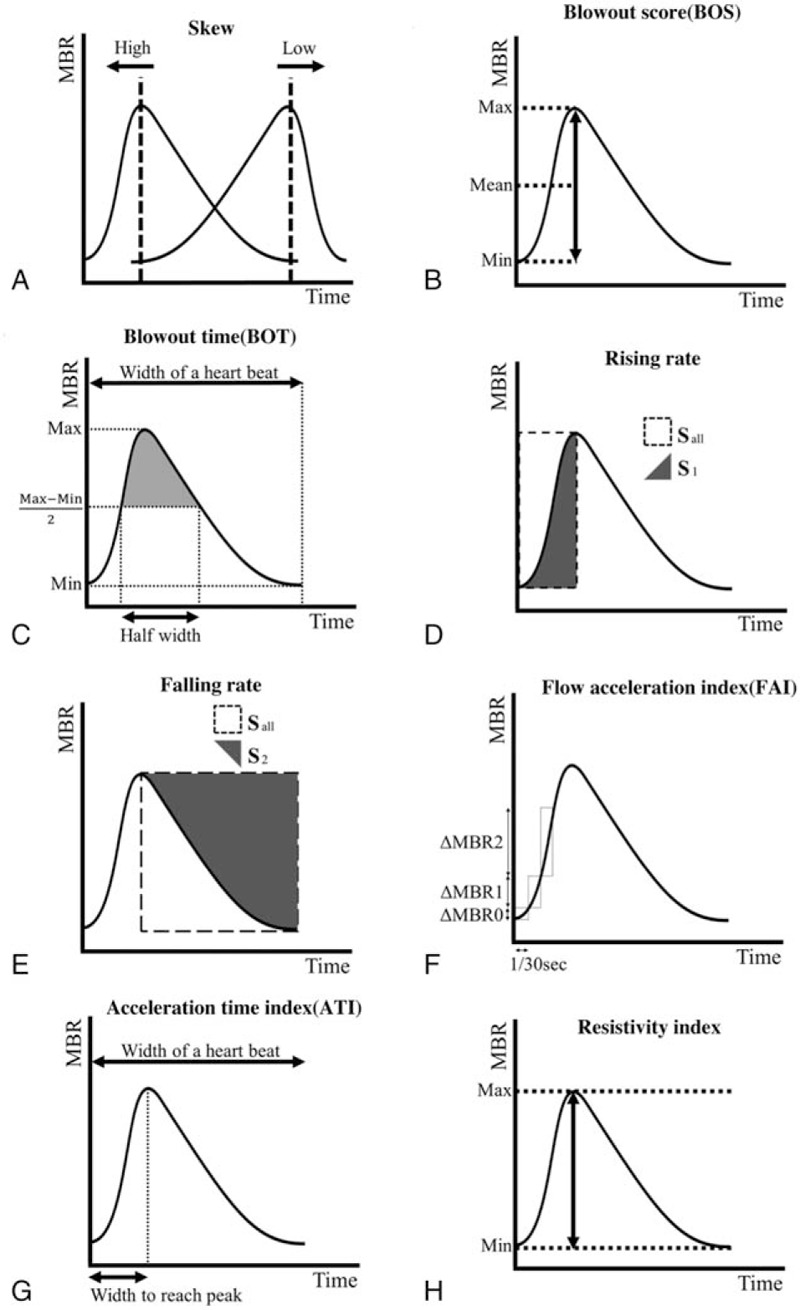
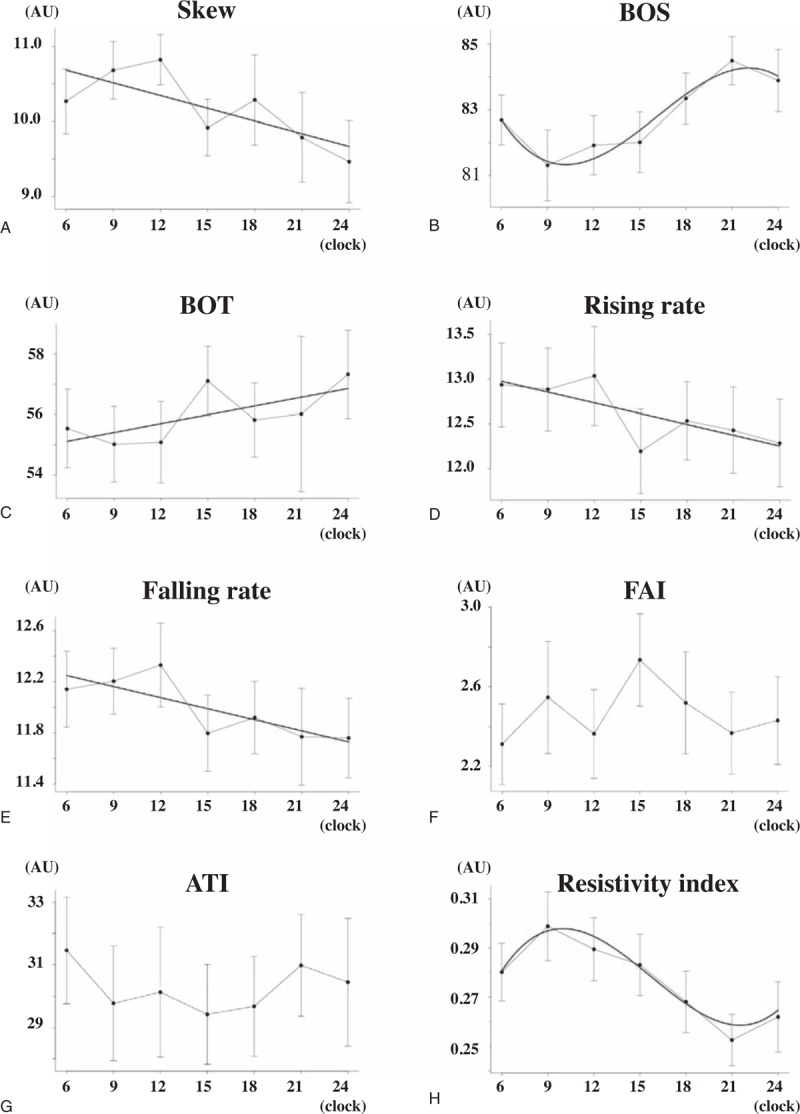
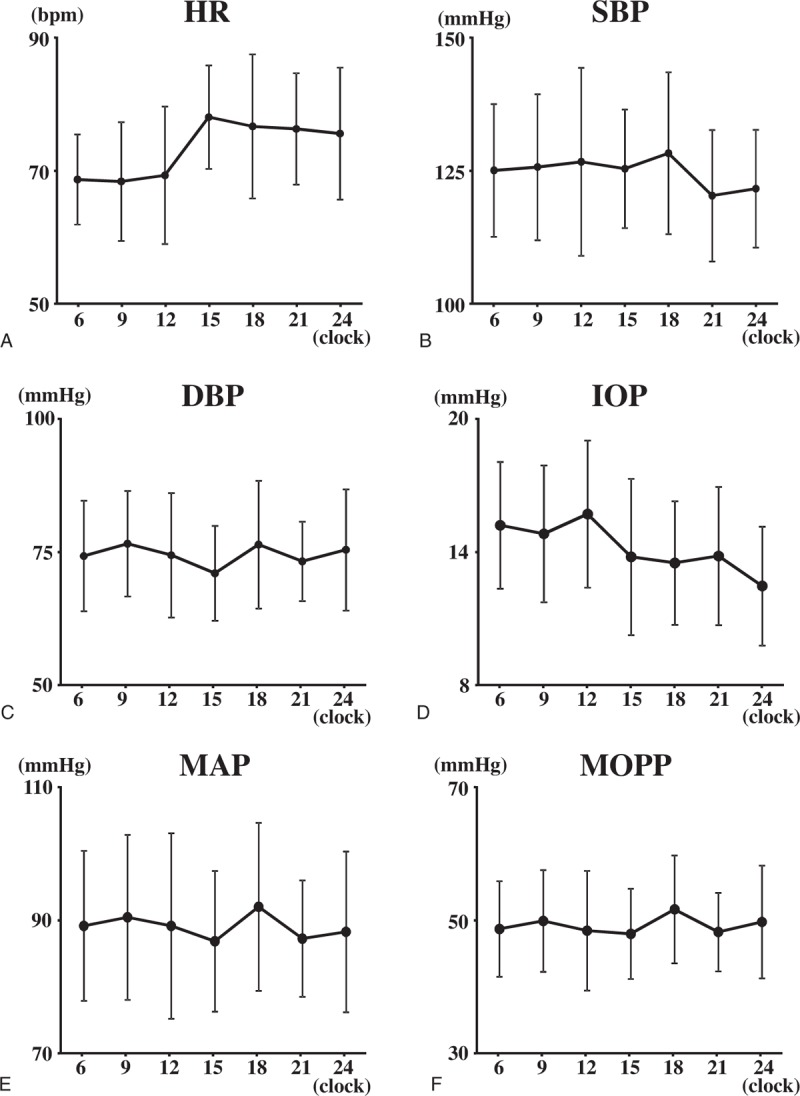
To investigate the diurnal variation of the pulse waveform parameters determined by laser speckle flowgraphy (LSFG) on the optic nerve head (ONH) in healthy subjects.This prospective cross sectional study was conducted at Nagoya University Hospital. We studied 13 healthy volunteers whose mean age was 33.5 ± 7.6 years. Eight pulse waveform parameters on the ONH were determined by LSFG (LSFG-NAVI) every 3 hours from 6 AM to 12 PM. The intraocular pressure (IOP), systolic (SBP) and diastolic (DBP) blood pressure, and heart rate (HR) in the brachial artery were also recorded. We evaluated the diurnal variations of the parameters and compared the pulse waveform parameters to the other parameters using a linear mixed model.Of the 8 parameters, skew (P < .001), blow out score (BOS, P < .001), blow out time (BOT, P = .028), rising rate (P < .001), falling rate (P < .001), resistivity index (P < .001) had a significant diurnal fluctuation. In addition, IOP (P < .001), SBP (P = .005), DBP (P = .001), and HR (P < .001) had significant diurnal fluctuations. The BOS and resistivity index were significantly correlated with the HR (P = .009, P = .012, respectively), and the BOT were significantly correlated with the DBP and mean ocular perfusion pressure (P = .042, P = .041, respectively).We found that there was significant diurnal variation in 6 waveform parameters on the ONH in LSFG. We believe that our results highlighting diurnal variations in these waveform parameters need to be considered when interpreting pulse waveform parameter data and in understanding the precise underlying mechanism of ocular diseases such as diabetic retinopathy, retinal vein occlusion, and glaucoma.
为研究健康受试者视神经乳头(ONH)激光散斑血流图(LSFG)测定的脉搏波形参数的昼夜变化。本前瞻性横断面研究在名古屋大学医院进行。我们研究了13名健康志愿者,平均年龄为33.5±7.6岁。从上午6点至中午12点,每3小时通过LSFG(LSFG-NAVI)测定ONH上的8个脉搏波形参数。同时记录眼内压(IOP)、肱动脉收缩压(SBP)、舒张压(DBP)和心率(HR)。我们评估了参数的昼夜变化,并使用线性混合模型将脉搏波形参数与其他参数进行比较。在8个参数中,偏度(P<0.001)、吹出评分(BOS,P<0.001)、吹出时间(BOT,P=0.028)上升速率(P<0.001)、下降速率(P<0.001)、阻力指数(P<0.001)有显著的昼夜波动。此外,IOP(P<0.001)、SBP(P=0.005)、DBP(P=0.001)和HR(P<0.001)有显著的昼夜波动。BOS和阻力指数与HR显著相关(分别为P=0.009、P=0.012),BOT与DBP和平均眼灌注压显著相关(分别为P=0.042、P=0.041)。我们发现LSFG中ONH的6个波形参数存在显著的昼夜变化。我们认为,在解释脉搏波形参数数据以及理解糖尿病视网膜病变、视网膜静脉阻塞和青光眼等眼部疾病的确切潜在机制时,需要考虑我们突出这些波形参数昼夜变化的结果。