Eke Iris, Bylicky Michelle A, Sandfort Veit, Chopra Sunita, Martello Shannon, Graves Edward E, Coleman C Norman, Aryankalayil Molykutty J
Department of Radiation Oncology, Stanford University School of Medicine, Center for Clinical Sciences Research (CCSR), Stanford, CA 94305, USA.
Radiation Oncology Branch, Center for Cancer Research, National Cancer Institute, National Institutes of Health, Bethesda, MD 20892, USA.
Mol Ther Nucleic Acids. 2021 Feb 24;24:175-187. doi: 10.1016/j.omtn.2021.02.024. eCollection 2021 Jun 4.
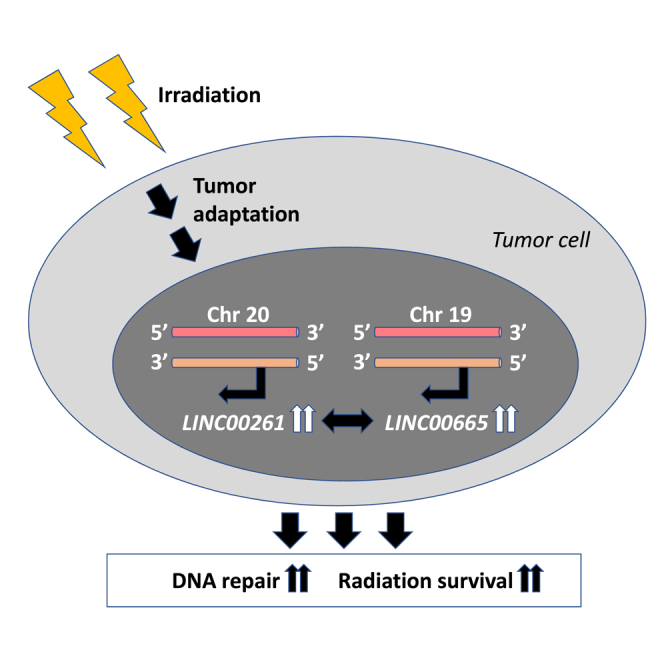
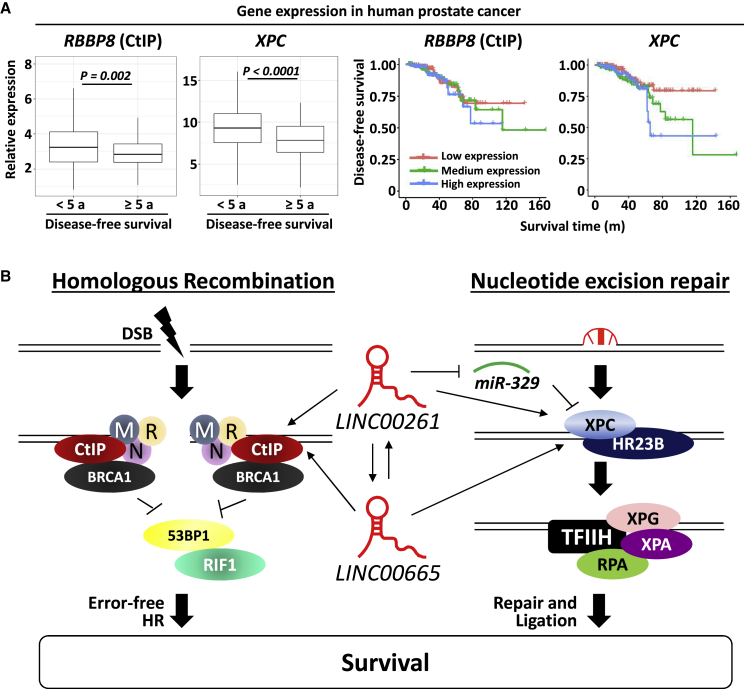
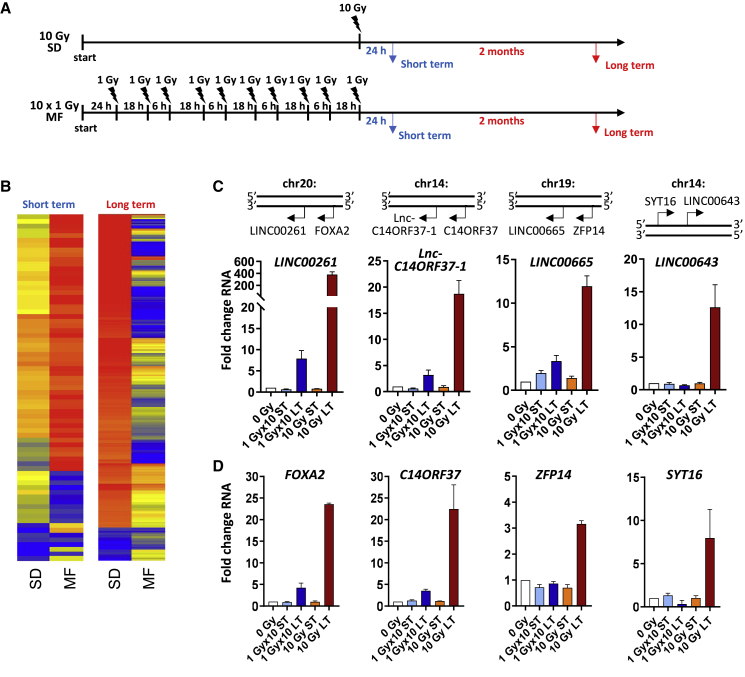
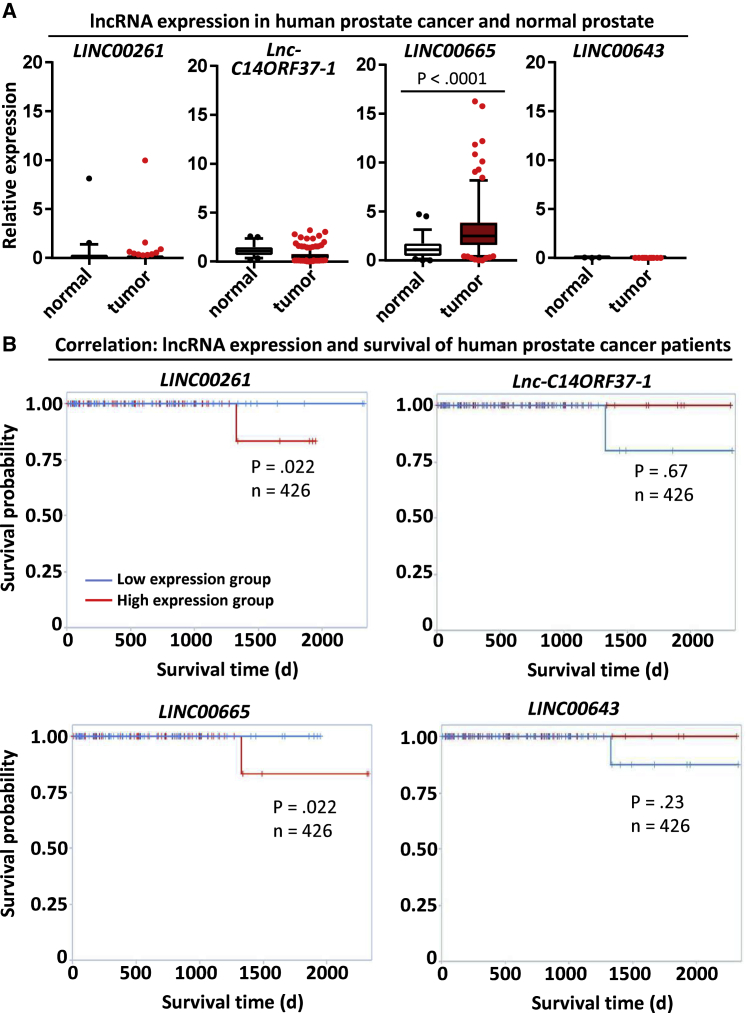
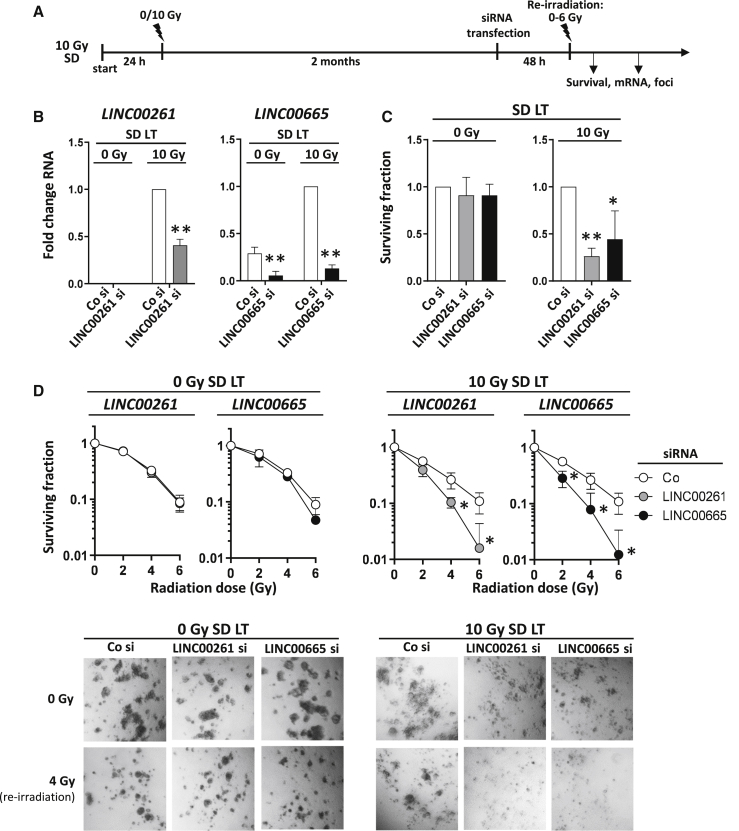
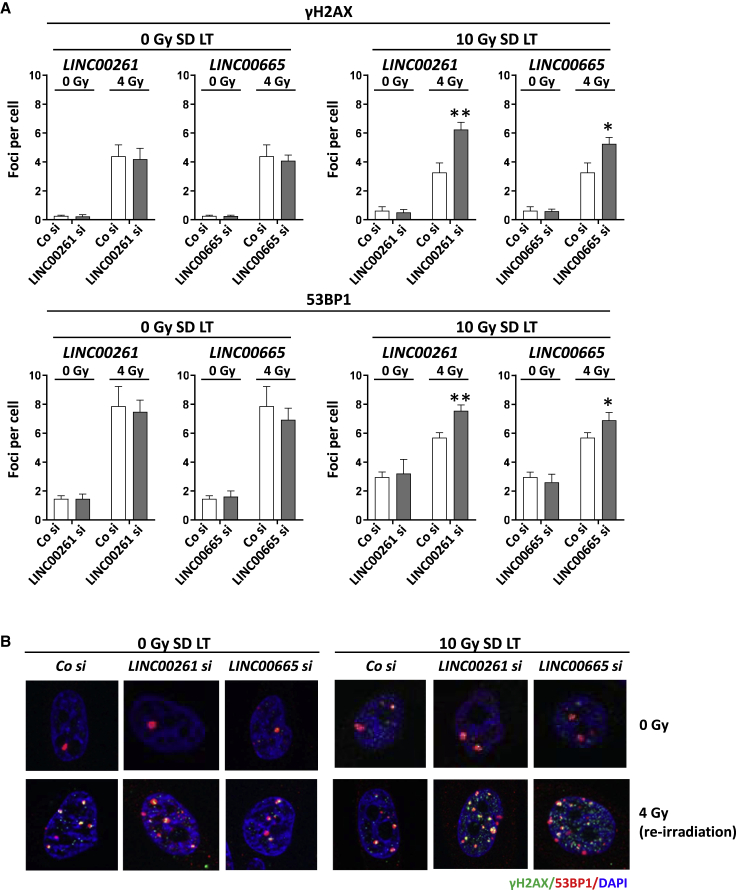
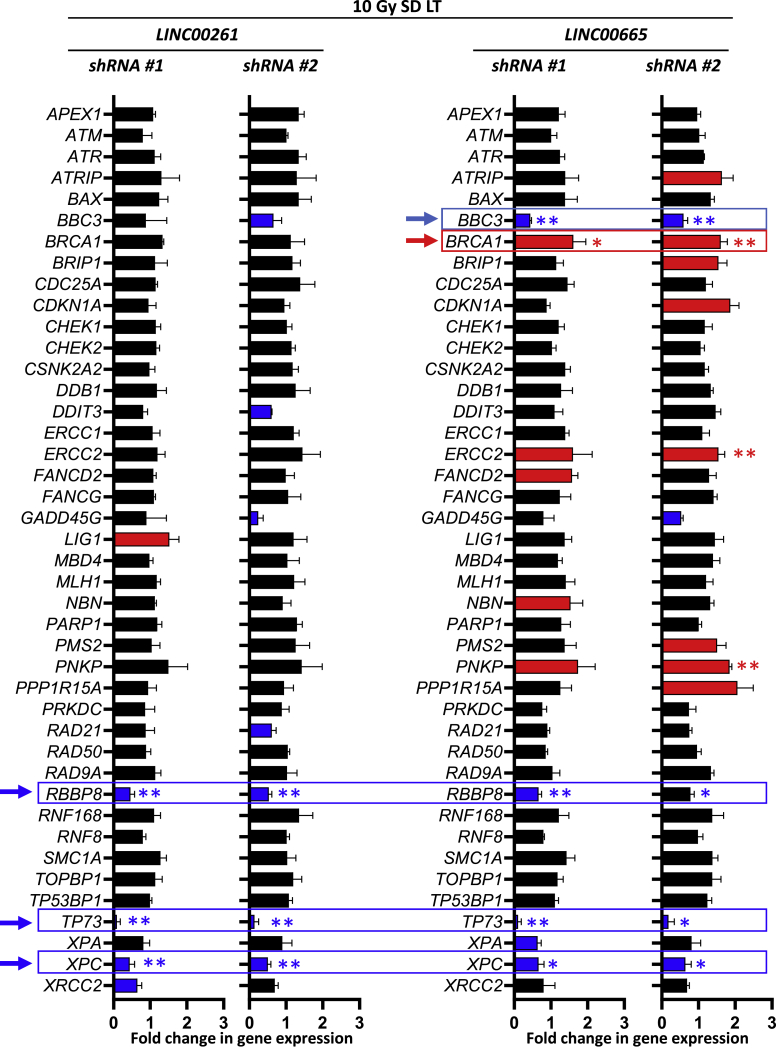
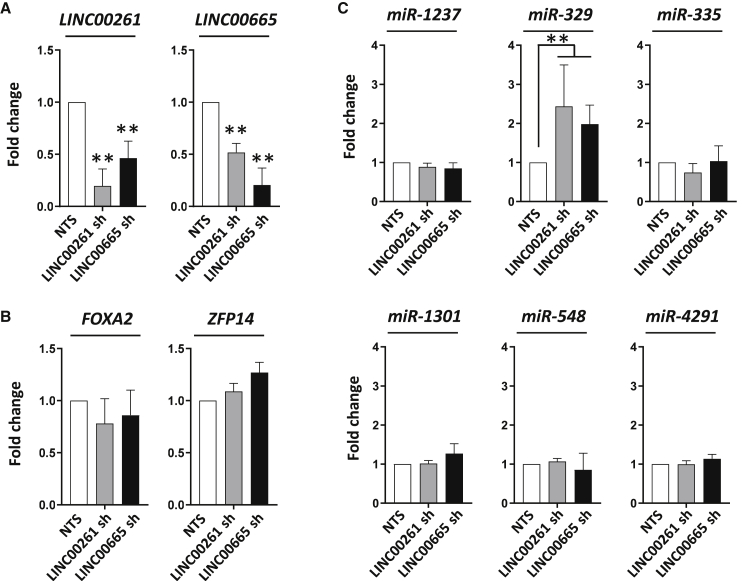
Long non-coding RNAs (lncRNAs) have been shown to impact important biological functions such as proliferation, survival, and genomic stability. To analyze radiation-induced lncRNA expression in human tumors, we irradiated prostate cancer cells with a single dose of 10 Gy or a multifractionated radiotherapeutic regimen of 10 fractions with a dose of 1 Gy (10 × 1 Gy) during 5 days. We found a stable upregulation of the lncRNA and at 2 months after radiotherapy that was more pronounced after single-dose irradiation. Analysis of the The Cancer Genome Atlas (TCGA) and The Atlas of Non-coding RNAs in Cancer (TANRIC) databases showed that high expression of these two lncRNAs may be a potential negative prognostic marker for overall survival of prostate cancer patients. Knockdown of and in long-term survivors decreased survival after re-irradiation and affected DNA double-strand break repair. Mechanistically, both lncRNAs showed an interdependent expression and regulated expression of the DNA repair proteins CtIP () and XPC as well as the microRNA . Identifying long-term tumor adaptation mechanisms can lead to the discovery of new molecular targets, in effect opening up new research directions and improving multimodal radiation oncologic treatment.
长链非编码RNA(lncRNAs)已被证明会影响重要的生物学功能,如增殖、存活和基因组稳定性。为了分析人类肿瘤中辐射诱导的lncRNA表达,我们用10 Gy的单剂量或在5天内给予1 Gy(10×1 Gy)的10次分割放射治疗方案照射前列腺癌细胞。我们发现放疗后2个月lncRNA 和 稳定上调,单剂量照射后更为明显。对癌症基因组图谱(TCGA)和癌症非编码RNA图谱(TANRIC)数据库的分析表明,这两种lncRNA的高表达可能是前列腺癌患者总生存的潜在负面预后标志物。在长期存活者中敲低 和 会降低再次照射后的存活率,并影响DNA双链断裂修复。从机制上讲,这两种lncRNA都表现出相互依赖的表达,并调节DNA修复蛋白CtIP( )和XPC以及微小RNA 的表达。确定长期肿瘤适应机制可导致发现新的分子靶点,实际上开辟新的研究方向并改善多模式放射肿瘤治疗。