Alves Marclesson, Borges Daniela de Paula, Kimberly Aline, Martins Neto Francisco, Oliveira Ana Claudia, de Sousa Juliana Cordeiro, Nogueira Cleto D, Carneiro Benedito A, Tavora Fabio
Department of Pathology, Federal University of Ceará, Fortaleza, Brazil.
Argos Pathology Laboratory, Department of Investigative Pathology, Fortaleza, Brazil.
Front Oncol. 2021 Mar 9;11:621050. doi: 10.3389/fonc.2021.621050. eCollection 2021.
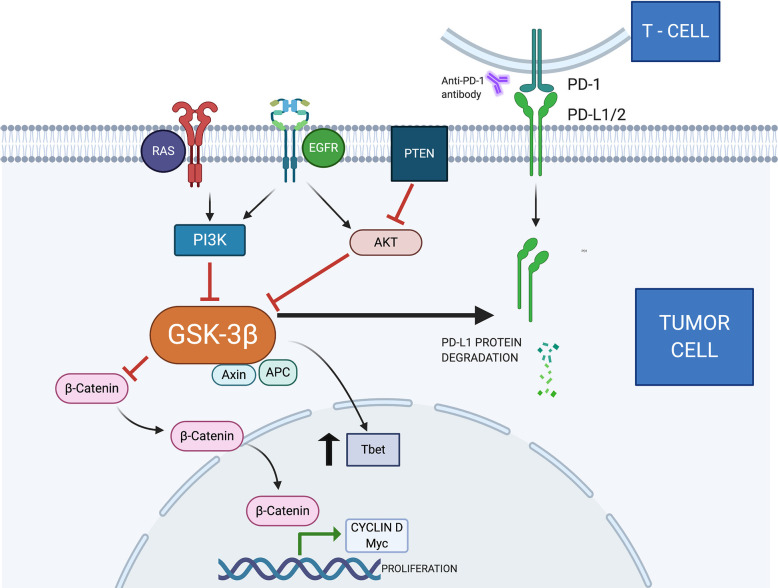
Glycogen Synthase Kinase-3 beta (GSK-3β) regulates diverse cell functions including metabolic activity, signaling and structural proteins. GSK-3β phosphorylates target pro-oncogenes and regulates programmed cell death-ligand 1 (PD-L1). This study investigated the correlation between GSK-3β expression and clinically relevant molecular features of lung adenocarcinoma (PDL1 score, PTEN expression and driver mutations).
We evaluated 95 lung cancer specimens from biopsies and surgical resections. Immunohistochemistry was performed to analyze the expression of GSK-3β, PTEN, and PDL1. Epidemiological data, molecular characteristics and staging were evaluated from medical records. The histologic classification was performed by an experienced pulmonary pathologist.
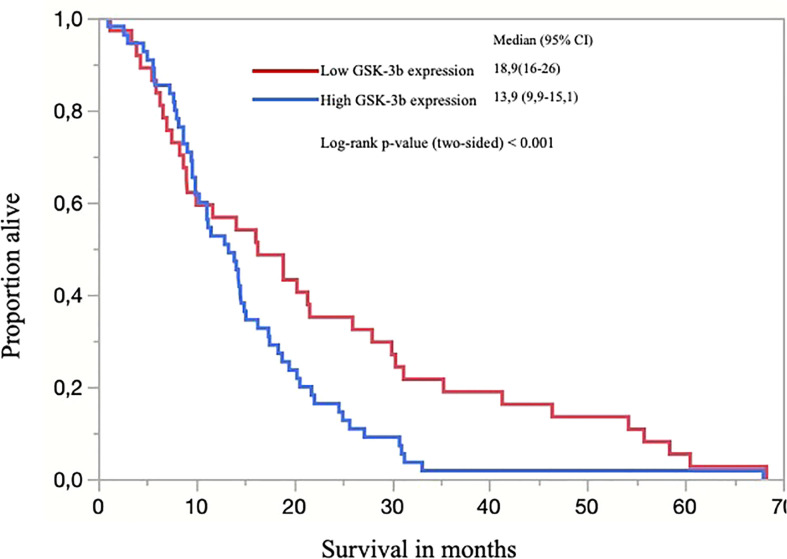
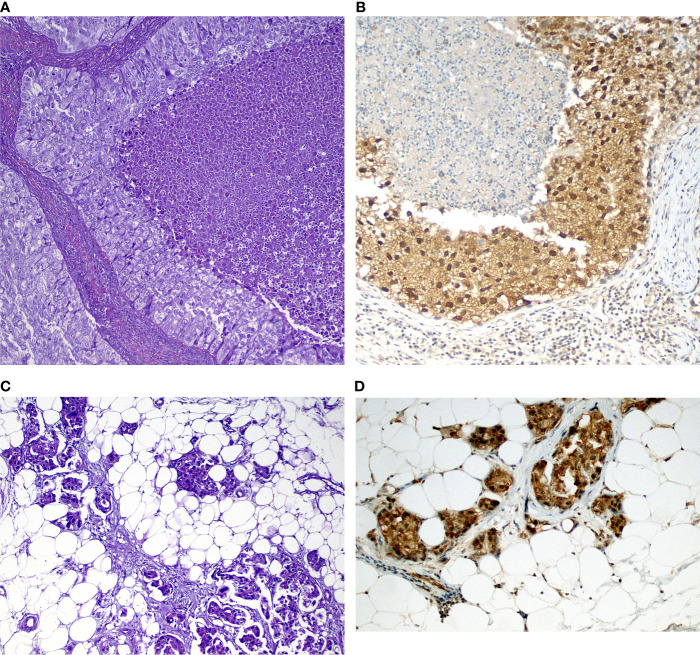
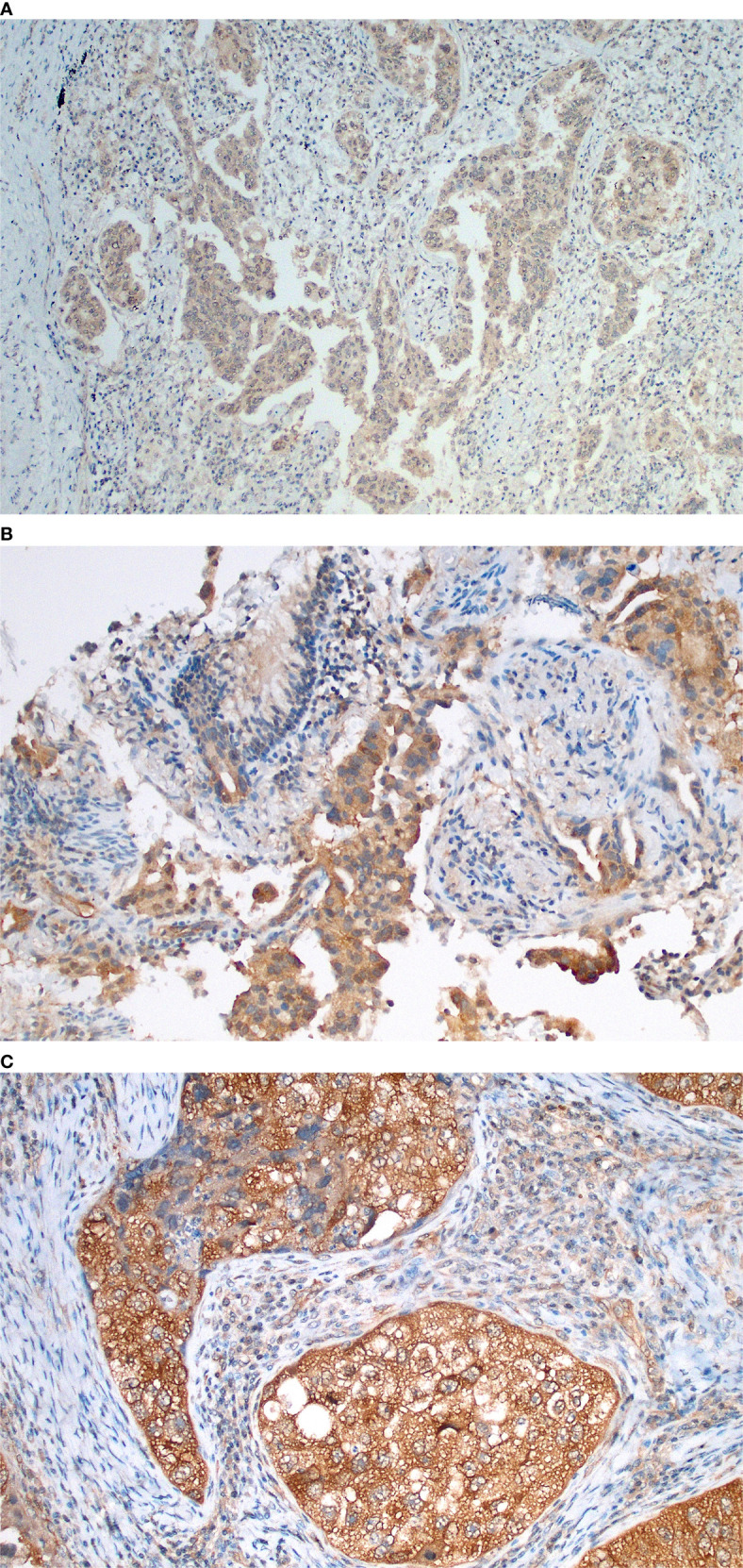
Most patients were female (52.6%) and the majority had a positive smoking history. The median age was 68.3 years, with individuals over 60 years accounting for 82.1%. The predominant histological subtype was adenocarcinoma (69.5%), followed by squamous cell carcinoma (20.0%). GSK-3β expression in tumors was cytoplasmic with a dotted pattern and perinuclear concentration, with associated membranous staining. Seven (7.3%) tumors had associated nuclear expression localization. Seventy-seven patients (81.1%) had advanced clinical-stage tumors. GSK-3β was positive in 75 tumors (78%) and GSK3-positive tumors tended to be diagnosed at advanced stages. Among stage III/IV tumors, 84% showed GSK3 positivity (p= 0.007). We identified a statistically significant association between GSK-3β and PTEN in the qualitative analysis (p 0.021); and when comparing PTEN to GSK-3β intensity 2+ (p 0.001) or 3+ expression (> 50%) - p 0.013. GSK-3β positive tumors with a high histological score had a worse overall survival.
We identified the histological patterns of GSK-3β expression and evaluated its potential as marker for overall survival, establishing a simple histological score to measure the evaluated status in resected tissues. The use of GSK-3β expression as an immune response biomarker remains a challenge. Future studies will seek to explain the role of its interaction with PTEN.
糖原合酶激酶-3β(GSK-3β)调节多种细胞功能,包括代谢活性、信号传导和结构蛋白。GSK-3β使靶原癌基因磷酸化并调节程序性细胞死亡配体1(PD-L1)。本研究调查了GSK-3β表达与肺腺癌临床相关分子特征(PD-L1评分、PTEN表达和驱动基因突变)之间的相关性。
我们评估了95例来自活检和手术切除的肺癌标本。进行免疫组织化学分析GSK-3β、PTEN和PD-L1的表达。从病历中评估流行病学数据、分子特征和分期。组织学分类由经验丰富的肺病理学家进行。
大多数患者为女性(52.6%),且大多数有吸烟史。中位年龄为68.3岁,60岁以上个体占82.1%。主要组织学亚型为腺癌(69.5%),其次为鳞状细胞癌(20.