Department of Machinery Exploitation, Ergonomics and Production Processes, University of Agriculture in Krakow, ul. Balicka 116B, 31-149, Krakow, Poland.
Department of Agricultural and Environmental Chemistry, University of Agriculture in Krakow, Al. Mickiewicza 21, 31-120, Krakow, Poland.
Sci Rep. 2021 Mar 26;11(1):6998. doi: 10.1038/s41598-021-86446-1.
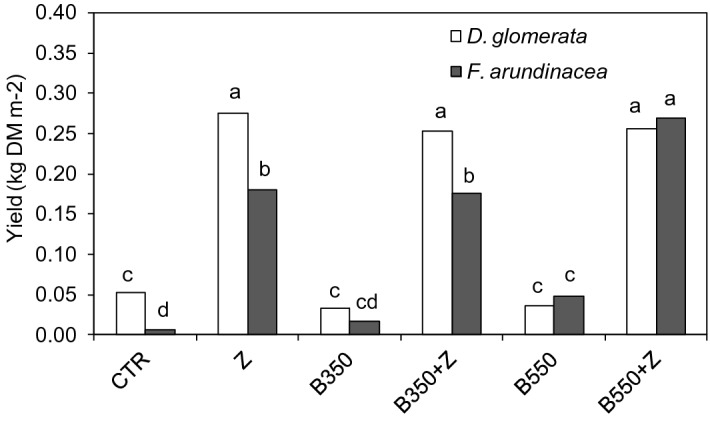
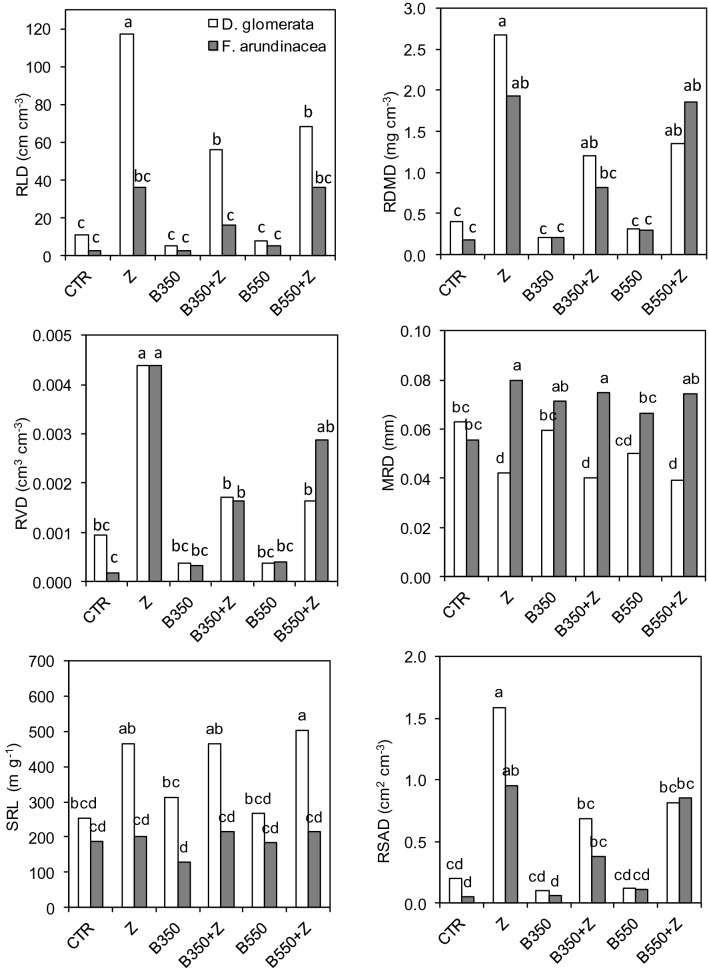
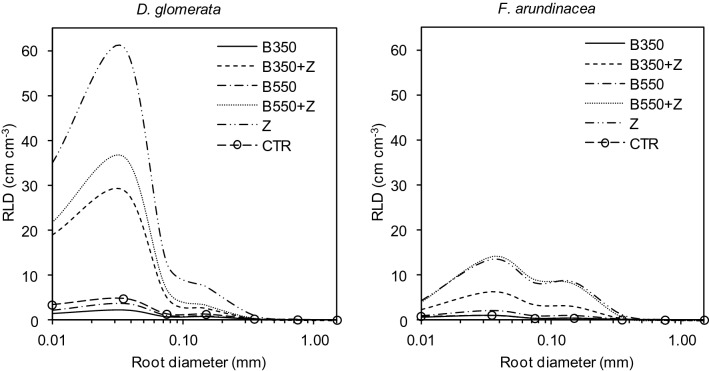
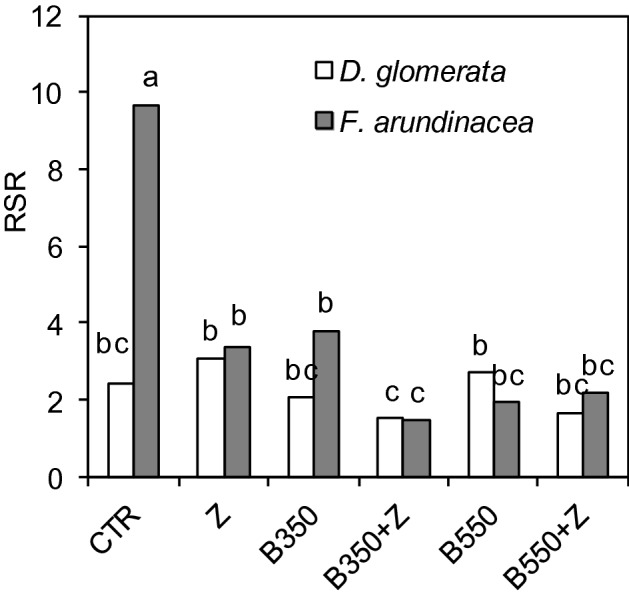
Biochar and zeolite are widely used in the remediation of soil contaminated with toxic heavy metals. However, the interaction of these amendments and their effects on grass productivity have not been comprehensively summarized. The aim of this study was to investigate the biological effects of zeolite and biochar used as soil amendments in the process of remediating soil contaminated with Cd, Pb and Zn. In a pot experiment, the following treatments were applied: zeolite, biochars produced at temperatures of 350 °C and 550 °C, mixtures of biochars and zeolite, and a control treatment without any amendments. The soil amendments were tested on two grass species: tall fescue (Festuca arundinacea Schreb.) and cocksfoot (Dactylis glomerata L.). The root morphometric parameters and aboveground production were determined in 2017 and 2018.Higher biomass production was observed in the tested grasses in the treatments with zeolite alone (0.229 kg DM m) or mixed with the biochars (0.239 kg DM m) than in control treatment (0.029 kg DM m). Zeolite used in contaminated soil significantly affected root biomass and root morphology parameters. Zeolite application resulted in significantly higher root biomass (2.30 mg cm) and root length (76.61 cm cm) than those in the treatments without zeolite (0.29 mg cm and 6.90 cm cm). Biochar as a soil amendment did not affect most root morphometric parameters. The application of biochars only slightly reduced the root diameter of cocksfoot. The root diameter of tall fescue was similar in all treatments (0.075 mm) except the control (0.063 mm) and biochar 550 treatments (0.067 mm), in which slightly thinner roots were observed.
生物炭和沸石广泛应用于修复受有毒重金属污染的土壤。然而,这些改良剂的相互作用及其对草类生产力的影响尚未得到全面总结。本研究旨在探讨沸石和生物炭作为土壤改良剂在修复受 Cd、Pb 和 Zn 污染土壤过程中的生物学效应。在盆栽试验中,设置了沸石、350°C 和 550°C 下制备的生物炭、生物炭和沸石混合物以及不添加任何改良剂的对照处理等 4 种处理方式。采用两种草种:高羊茅(Festuca arundinacea Schreb.)和黑麦草(Dactylis glomerata L.)进行土壤改良剂测试。在 2017 年和 2018 年测定了根形态计量参数和地上生物量。结果表明,单独施用沸石(0.229 kg DM m)或与生物炭混合施用(0.239 kg DM m)的两种草生物量均高于对照处理(0.029 kg DM m)。与对照处理相比,施用沸石显著影响根生物量和根形态参数。与不添加沸石的处理相比,施用沸石显著增加了根生物量(2.30 mg cm)和根长(76.61 cm cm)(分别为 0.29 mg cm 和 6.90 cm cm)。生物炭作为土壤改良剂,对大多数根形态计量参数没有影响。仅施用生物炭略微降低了黑麦草根直径。高羊茅的根直径在所有处理中相似(0.075 mm),除对照(0.063 mm)和 550°C 生物炭处理(0.067 mm)外,这两个处理中观察到的根略细。