Oslo Centre for Biostatistics and Epidemiology, Department of Biostatistics, University of Oslo, Oslo, Norway.
Cambodia-Oxford Medical Research Unit, Angkor Hospital for Children, Siem Reap, Cambodia.
BMC Bioinformatics. 2021 Mar 27;22(1):164. doi: 10.1186/s12859-021-04079-7.
Heritability is a central measure in genetics quantifying how much of the variability observed in a trait is attributable to genetic differences. Existing methods for estimating heritability are most often based on random-effect models, typically for computational reasons. The alternative of using a fixed-effect model has received much more limited attention in the literature.
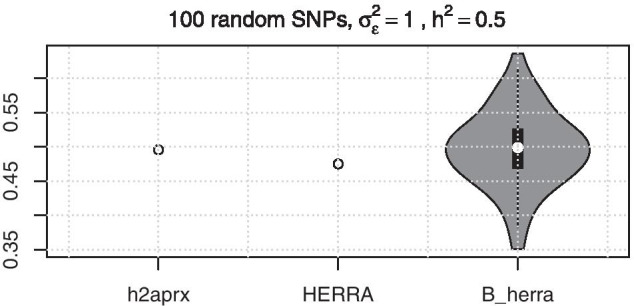
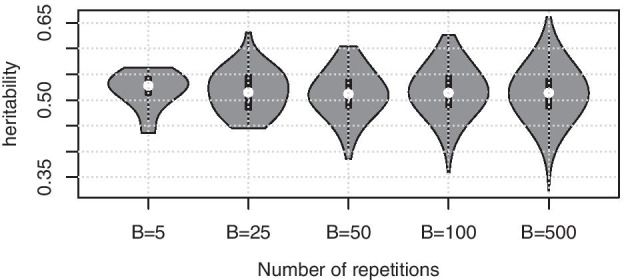
In this paper, we propose a generic strategy for heritability inference, termed as "boosting heritability", by combining the advantageous features of different recent methods to produce an estimate of the heritability with a high-dimensional linear model. Boosting heritability uses in particular a multiple sample splitting strategy which leads in general to a stable and accurate estimate. We use both simulated data and real antibiotic resistance data from a major human pathogen, Sptreptococcus pneumoniae, to demonstrate the attractive features of our inference strategy.
Boosting is shown to offer a reliable and practically useful tool for inference about heritability.
遗传力是遗传学中的一个核心衡量指标,用于量化观察到的特征变异中有多少归因于遗传差异。现有的遗传力估计方法大多基于随机效应模型,这主要是出于计算方面的原因。在文献中,使用固定效应模型的方法受到的关注要少得多。
在本文中,我们通过结合不同的最新方法的优点,提出了一种通用的遗传力推断策略,称为“提升遗传力”,通过使用高维线性模型来生成遗传力的估计值。提升遗传力特别使用了一种多样本分裂策略,这通常会导致稳定且准确的估计值。我们使用模拟数据和来自主要人类病原体肺炎链球菌的真实抗生素耐药性数据来证明我们推断策略的吸引力。
提升被证明是一种可靠且实用的遗传力推断工具。