Department of Microbiology, Hospital Universitario Severo Ochoa, Leganés, Madrid, Spain.
Department of Nursing, School of Medicine and Nursing, University of the Basque Country UPV/EHU, Bilbao, Spain.
Ann Clin Microbiol Antimicrob. 2021 Mar 27;20(1):21. doi: 10.1186/s12941-021-00427-w.
Although most bloodstream yeast infections are caused by Candida spp., infections by rare or less common species have increased in recent years. Diagnosis of infections caused by these species is difficult due to the lack of specific symptoms and adequate diagnostic tools.
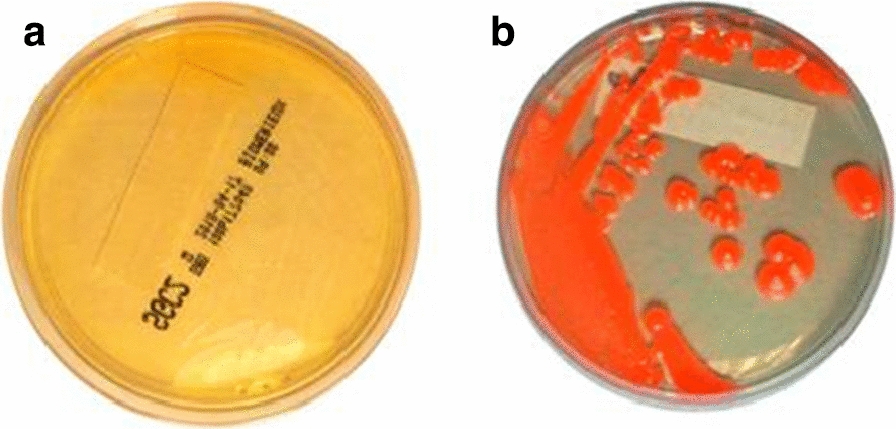
We describe two cases of fungemia by Rhodotorula mucilaginosa within a few months of each other, in a secondary Spanish hospital. In both cases, diagnosis was challenging. Blood subcultures in conventional fungal media were persistently negatives and the use of non-conventional fungal media was essential for isolating the yeasts and achieving a correct diagnosis. 1-3 beta-D-glucan detection and a panfungal PCR assay were helpful techniques to confirm the diagnosis CONCLUSION: It is highly important to establish an early diagnosis for fungemia. The process is challenging because often non-specific symptoms are presents. When yeasts grow in blood cultures other genera than Candida spp. could be the cause of infection. Patient risk factors should be assessed to incorporate alternative culture media and the available rapid diagnostic test, in order to provide an early recognition of the pathogen.
虽然大多数血流真菌感染是由念珠菌属引起的,但近年来由罕见或不太常见的物种引起的感染有所增加。由于缺乏特定症状和足够的诊断工具,这些物种引起的感染的诊断很困难。
我们描述了在一家西班牙二级医院,在几个月的时间里,先后发生的两例由粘红酵母引起的菌血症。在这两种情况下,诊断都具有挑战性。常规真菌培养基中的血液亚培养持续呈阴性,必须使用非常规真菌培养基才能分离出酵母菌并做出正确诊断。1-3β-D-葡聚糖检测和泛真菌 PCR 检测是有助于确认诊断的技术。
早期诊断菌血症非常重要。这个过程具有挑战性,因为通常会出现非特异性症状。当血液培养中出现除念珠菌属以外的酵母时,可能是感染的原因。应评估患者的风险因素,以纳入替代培养物和现有的快速诊断测试,以便及早识别病原体。