Willette Auriel A, Pappas Colleen, Hoth Nathan, Wang Qian, Klinedinst Brandon, Willette Sara A, Larsen Brittany, Pollpeter Amy, Li Tianqi, Le Scott, Collazo-Martinez Ana D, Mochel Jonathan P, Allenspach Karin, Dantzer Robert
Department of Food Science and Human Nutrition, Iowa State University, Ames, IA, USA; Neuroscience Graduate Program, Iowa State University, Ames, IA, USA; Department of Psychology, Iowa State University, Ames, IA, USA; Department of Neurology, University of Iowa, Iowa City, IA, USA; Bioinformatics and Computational Biology Graduate Program, Iowa State University, Ames, IA, USA; Department of Biomedical Sciences, Iowa State University, Ames, IA, USA.
Department of Food Science and Human Nutrition, Iowa State University, Ames, IA, USA.
Brain Behav Immun. 2021 Jul;95:216-225. doi: 10.1016/j.bbi.2021.03.019. Epub 2021 Mar 26.
Depressive symptoms in Alzheimer's disease (AD) predict worse cognitive and functional outcomes. Both AD and major depression inflammatory processes are characterized by shunted tryptophan metabolism away from serotonin (5-HT) and toward the neuroinflammatory kynurenine (Kyn) pathway. The present study assessed associations between Kyn and behavioral, neuroanatomical, neuropathological, and physiological outcomes common to both AD and negative affect across the AD continuum.
In 58 cognitively normal, 396 mild cognitive impairment, and 112 AD participants from the Alzheimer's Disease Neuroimaging Initiative-1 (ADNI1) cohort, serum markers of 5-HT, tryptophan, and Kyn were measured and their relationships investigated with immunologic markers, affect and functional outcomes, CSF markers of beta-amyloid (Aβ) and tau, and regional gray matter.
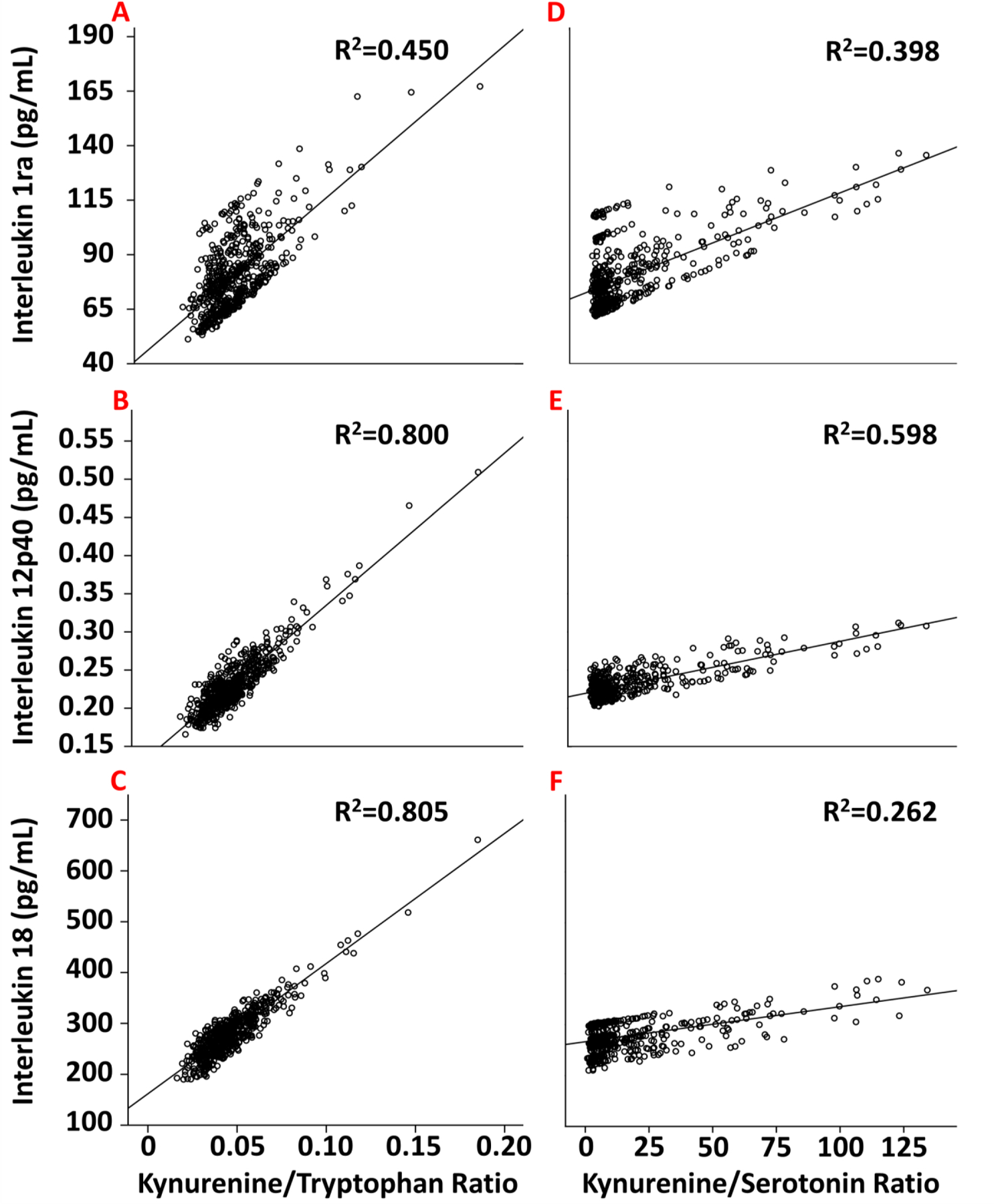
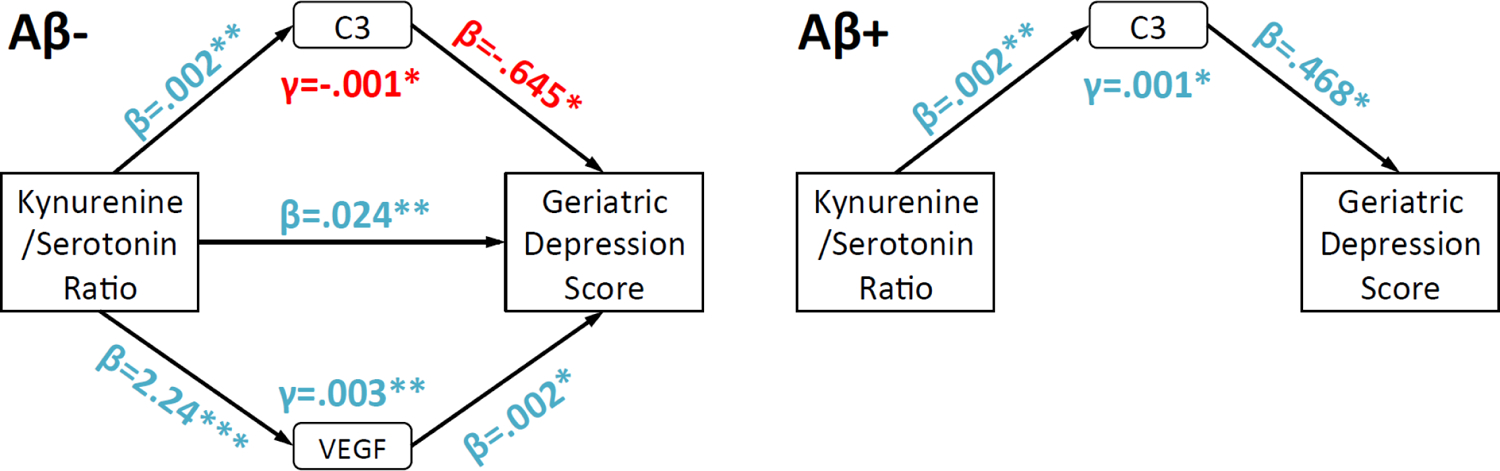
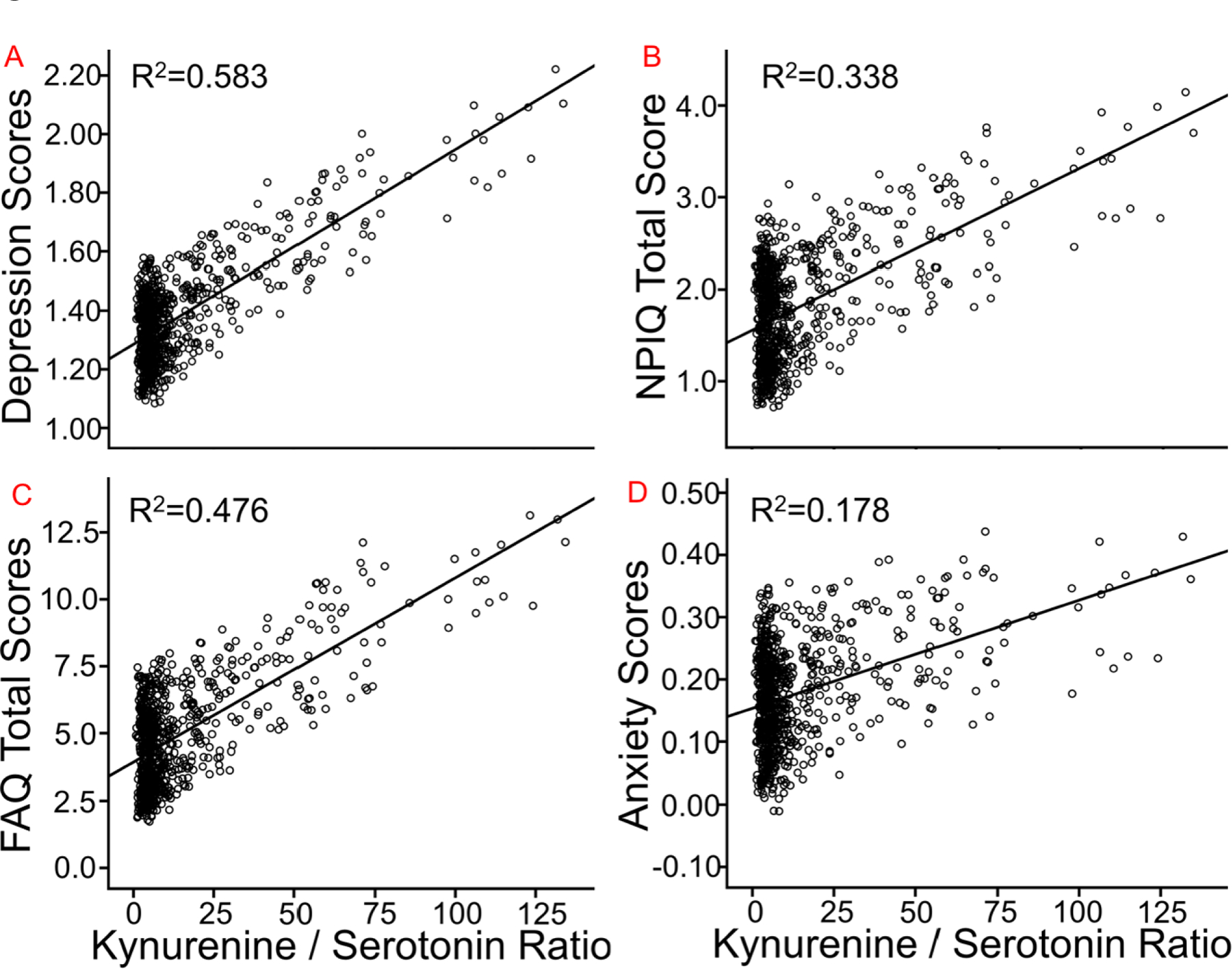
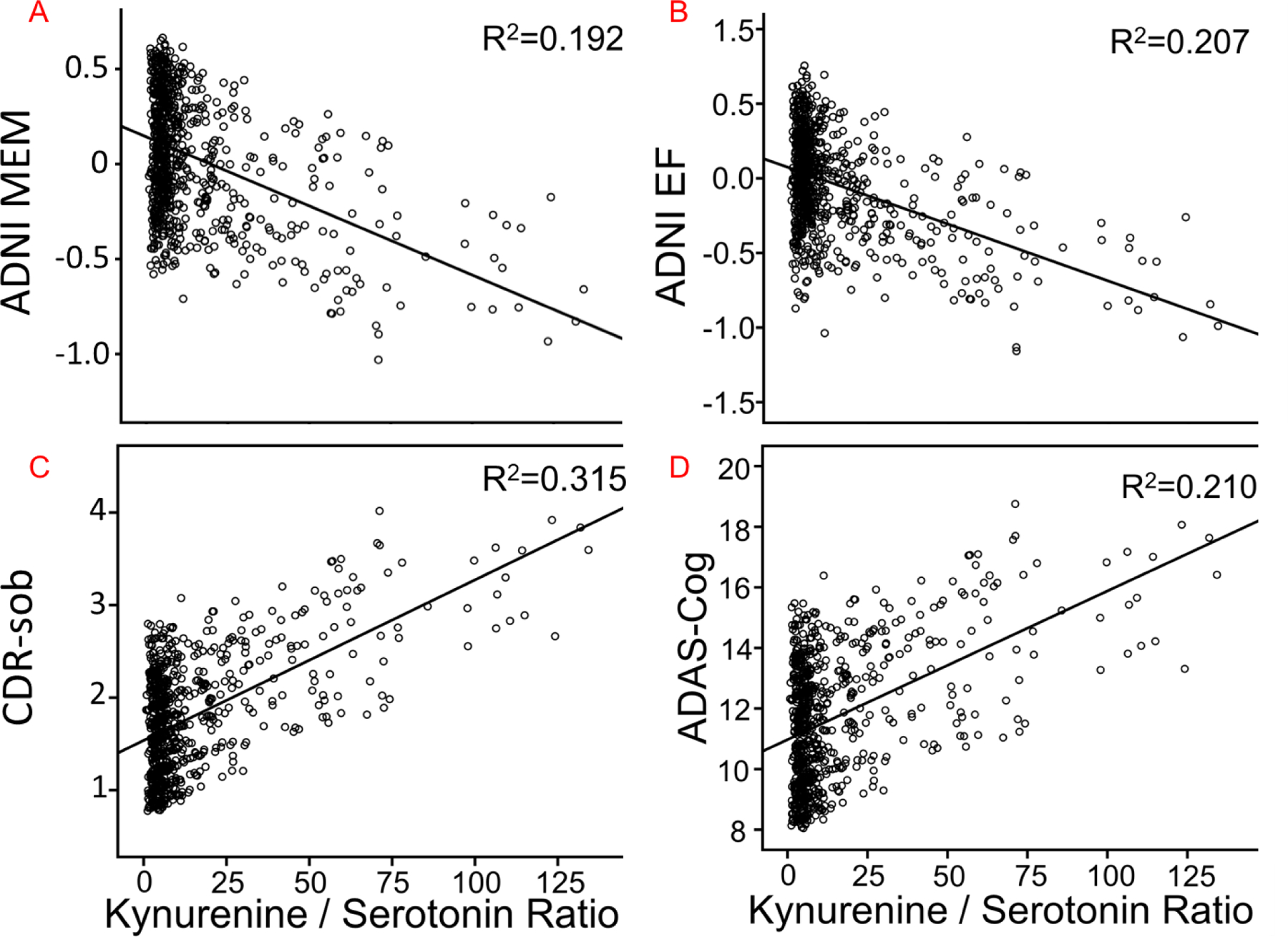
A higher Kyn/Tryptophan ratio was linked to many inflammatory markers, as well as lower functional independence and memory scores. A higher Kyn/5-HT ratio showed similar associations, but also strong relationships with negative affect and neuropsychiatric disturbance, executive dysfunction, and global cognitive decline. Further, gray matter atrophy was seen in hippocampus, anterior cingulate, and prefrontal cortices, as well as greater amyloid and total tau deposition. Finally, using moderated-mediation, several pro-inflammatory factors partially mediated Kyn/5-HT and negative affect scores in participants with subclinical Aβ (i.e., Aβ-), whereas such associations were fully mediated by Complement 3 in Aβ+ participants.
These findings suggest that inflammatory signaling cascades may occur during AD, which is associated with increased Kyn metabolism that influences the pathogenesis of negative affect. Aβ and the complement system may be critical contributing factors in this process.
阿尔茨海默病(AD)中的抑郁症状预示着更差的认知和功能结局。AD和重度抑郁症的炎症过程都具有色氨酸代谢从血清素(5-HT)转向神经炎症性犬尿氨酸(Kyn)途径的特征。本研究评估了Kyn与AD和整个AD病程中负面影响所共有的行为、神经解剖学、神经病理学和生理结局之间的关联。
在来自阿尔茨海默病神经影像倡议-1(ADNI1)队列的58名认知正常、396名轻度认知障碍和112名AD参与者中,测量了5-HT、色氨酸和Kyn的血清标志物,并研究了它们与免疫标志物、情感和功能结局、β-淀粉样蛋白(Aβ)和tau的脑脊液标志物以及区域灰质的关系。
较高的Kyn/色氨酸比值与许多炎症标志物相关,以及较低的功能独立性和记忆评分。较高的Kyn/5-HT比值显示出类似的关联,但也与负面影响和神经精神障碍、执行功能障碍和整体认知衰退有很强的关系。此外,在海马体、前扣带回和前额叶皮质观察到灰质萎缩,以及更大的淀粉样蛋白和总tau沉积。最后,使用调节中介分析,几种促炎因子部分介导了亚临床Aβ(即Aβ-)参与者的Kyn/5-HT和负面影响评分,而在Aβ+参与者中,这种关联完全由补体3介导。
这些发现表明,AD期间可能发生炎症信号级联反应,这与Kyn代谢增加有关,而Kyn代谢增加会影响负面影响的发病机制。Aβ和补体系统可能是这一过程中的关键促成因素。