Hanga Mariana P, Nienow Alvin W, Murasiewicz Halina, Pacek Andrzej W, Hewitt Christopher J, Coopman Karen
Department of Biosciences, School of Life and Health Sciences Aston University Birmingham UK.
Centre for Biological Engineering, School of AACME, Chemical Engineering Department Loughborough University Loughborough UK.
J Chem Technol Biotechnol. 2021 Apr;96(4):930-940. doi: 10.1002/jctb.6601. Epub 2020 Nov 8.
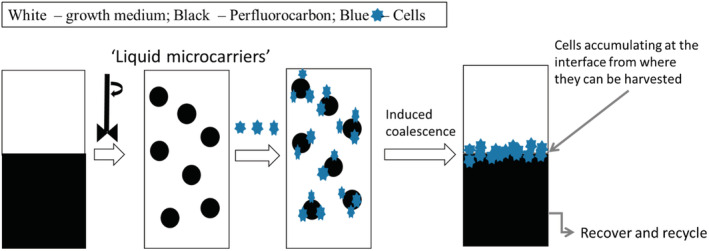
Traditional large-scale culture systems for human mesenchymal stem/stromal cells (hMSCs) use solid microcarriers as attachment substrates. Although the use of such substrates is advantageous because of the high surface-to-volume ratio, cell harvest from the same substrates is a challenge as it requires enzymatic treatment, often combined with agitation. Here, we investigated a two-phase system for expansion and non-enzymatic recovery of hMSCs. Perfluorocarbon droplets were dispersed in a protein-rich growth medium and were used as temporary liquid microcarriers for hMSC culture.
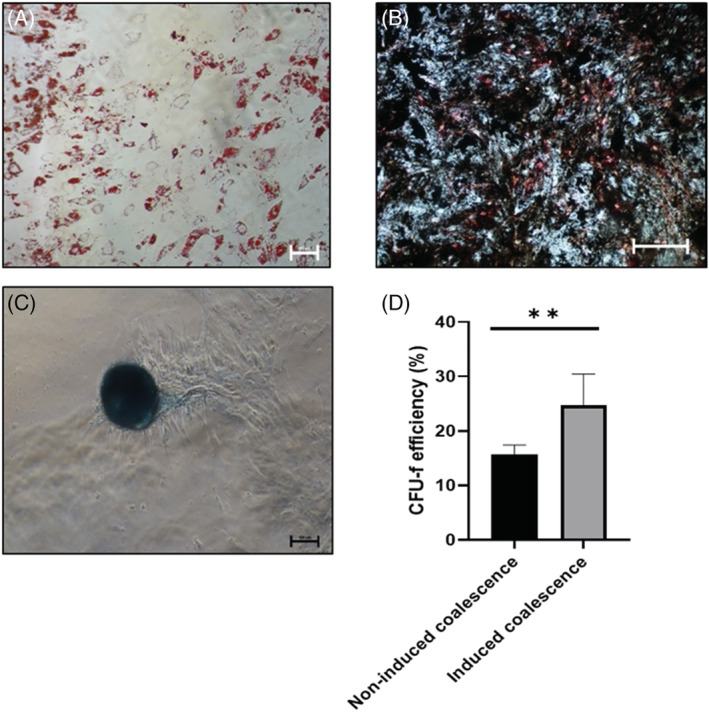
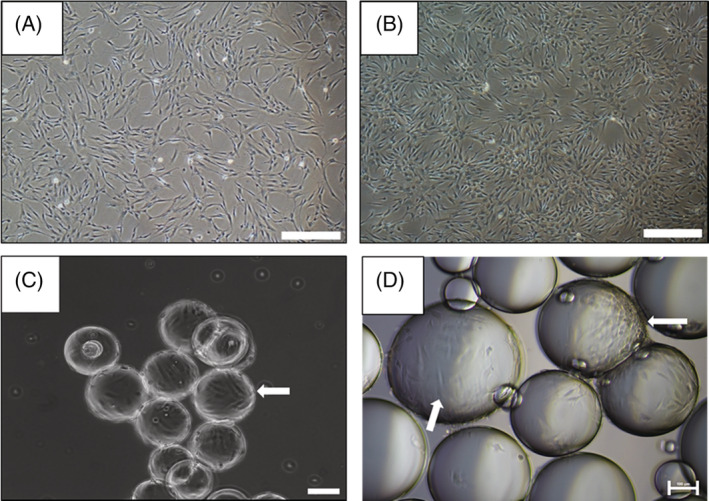
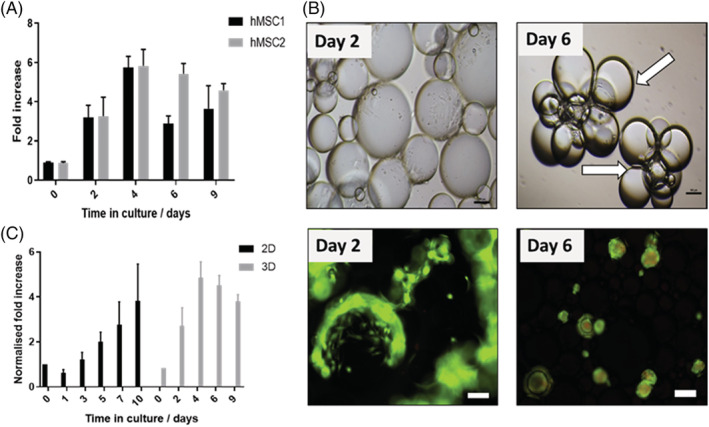
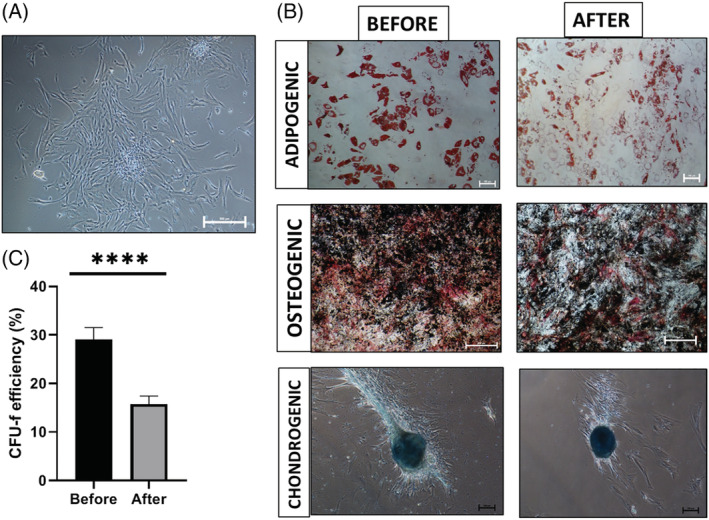
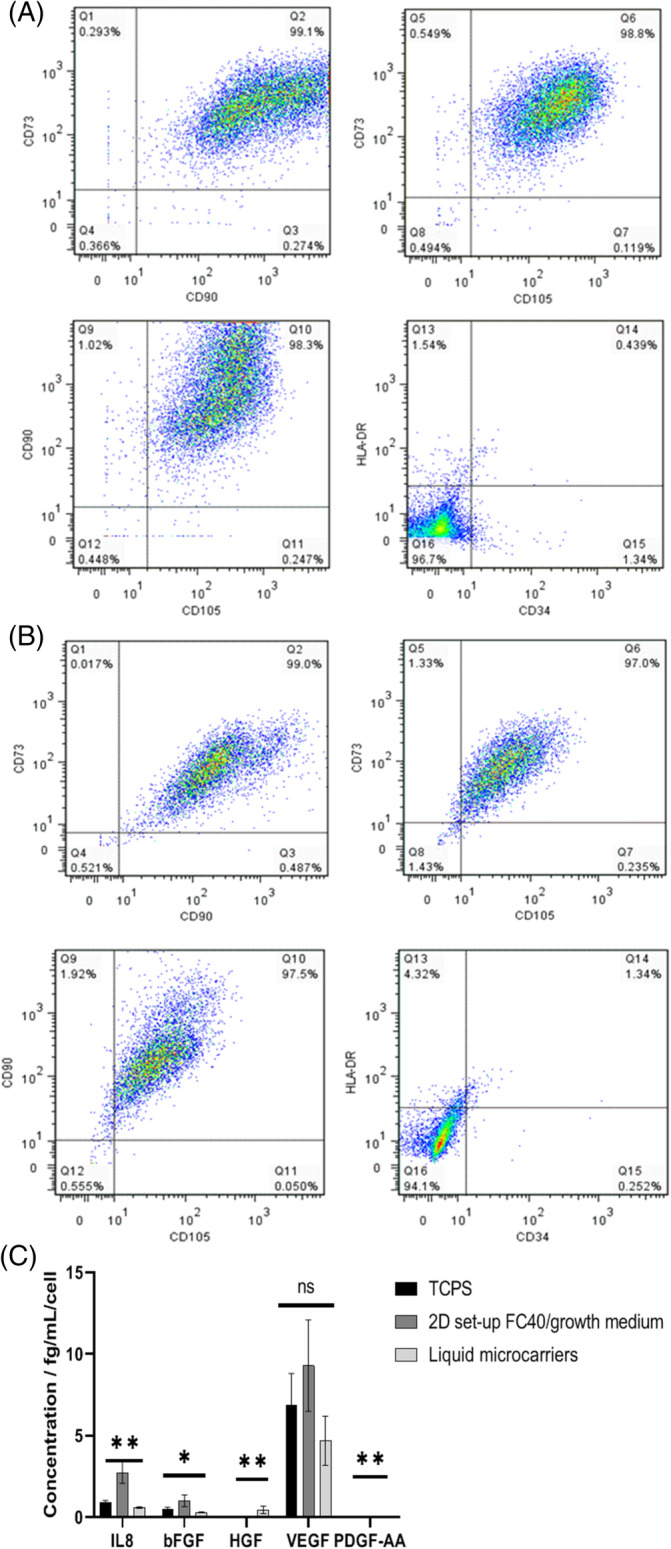
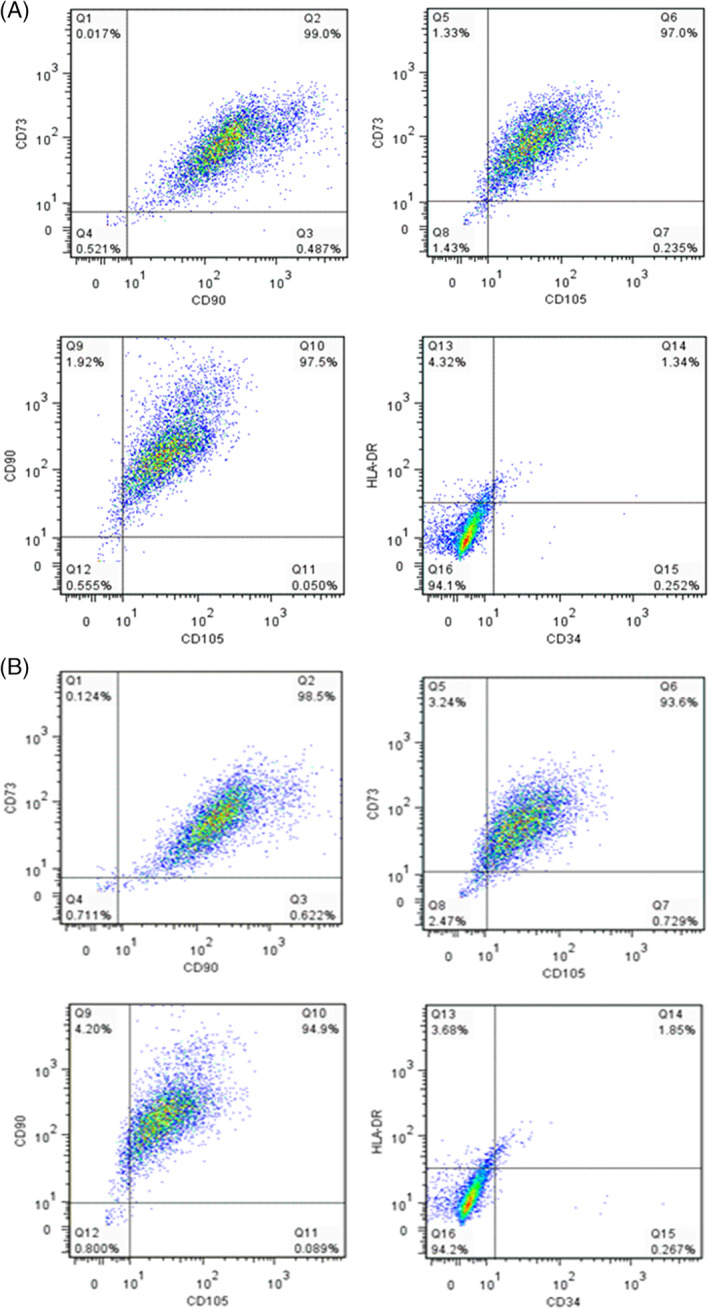
hMSCs successfully attached to these liquid microcarriers, exhibiting similar morphologies to those cultured on solid ones. Fold increases of 3.03 ± 0.98 (hMSC1) and 3.81 ± 0.29 (hMSC2) were achieved on day 9. However, the maximum expansion folds were recorded on day 4 (4.79 ± 0.47 (hMSC1) and 4.856 ± 0.7 (hMSC2)). This decrease was caused by cell aggregation upon reaching confluency due to the contraction of the interface between the two phases. Cell quality, as assessed by differentiation, cell surface marker expression and clonogenic ability, was retained post expansion on the liquid microcarriers. Cell harvesting was achieved non-enzymatically in two steps: first by inducing droplet coalescence and then aspirating the interface. Quality characteristics of hMSCs continued to be retained even after inducing droplet coalescence.
The prospect of a temporary microcarrier that can be used to expand cells and then 'disappear' for cell release without using proteolytic enzymes is a very exciting one. Here, we have demonstrated that hMSCs can attach and proliferate on these perfluorocarbon liquid microcarriers while, very importantly, retaining their quality.
用于人间充质干/基质细胞(hMSCs)的传统大规模培养系统使用固体微载体作为附着底物。尽管使用此类底物具有高表面积与体积比的优势,但从同一底物上收获细胞却是一项挑战,因为这需要酶处理,通常还需结合搅拌。在此,我们研究了一种用于hMSCs扩增和非酶回收的两相系统。全氟碳液滴分散在富含蛋白质的生长培养基中,并用作hMSC培养的临时液体微载体。
hMSCs成功附着于这些液体微载体上,其形态与在固体微载体上培养的细胞相似。在第9天实现了3.03±0.98(hMSC1)和3.81±0.29(hMSC2)的倍增。然而,最大扩增倍数记录在第4天(4.79±0.47(hMSC1)和4.856±0.7(hMSC2))。这种下降是由于两相之间界面收缩导致细胞达到汇合后聚集所致。通过分化、细胞表面标志物表达和克隆形成能力评估的细胞质量在液体微载体上扩增后得以保留。细胞收获通过两步非酶法实现:首先诱导液滴聚结,然后抽吸界面。即使在诱导液滴聚结后,hMSCs的质量特性仍得以保留。
一种可用于扩增细胞然后“消失”以便在不使用蛋白水解酶的情况下释放细胞的临时微载体前景十分令人兴奋。在此,我们已证明hMSCs可附着并在这些全氟碳液体微载体上增殖,同时非常重要的是,保留其质量。