Riva Antonio, Palma Elena, Devshi Dhruti, Corrigall Douglas, Adams Huyen, Heaton Nigel, Menon Krishna, Preziosi Melissa, Zamalloa Ane, Miquel Rosa, Ryan Jennifer M, Wright Gavin, Fairclough Sarah, Evans Alexander, Shawcross Debbie, Schierwagen Robert, Klein Sabine, Uschner Frank E, Praktiknjo Michael, Katzarov Krum, Hadzhiolova Tanya, Pavlova Slava, Simonova Marieta, Trebicka Jonel, Williams Roger, Chokshi Shilpa
Institute of Hepatology, Foundation for Liver Research, London, United Kingdom.
Faculty of Life Sciences & Medicine, King's College London, London, United Kingdom.
Front Physiol. 2021 Mar 10;12:632502. doi: 10.3389/fphys.2021.632502. eCollection 2021.
Immunoregulatory checkpoint receptors (CR) contribute to the profound immunoparesis observed in alcohol-related liver disease (ALD) and neutralization of inhibitory-CRs TIM3/PD1 on anti-bacterial T-cells can rescue innate and adaptive anti-bacterial immunity. Recently described soluble-CR forms can modulate immunity in inflammatory conditions, but the contributions of soluble-TIM3 and soluble-PD1 and other soluble-CRs to immune derangements in ALD remain unclear.
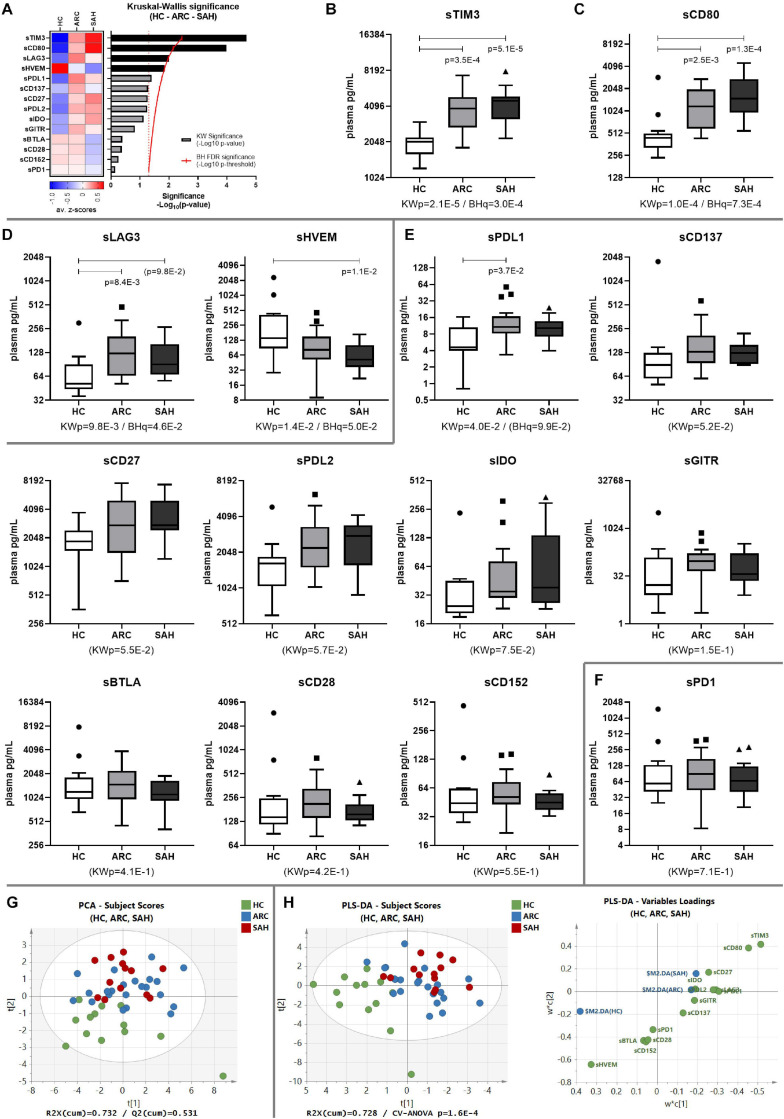
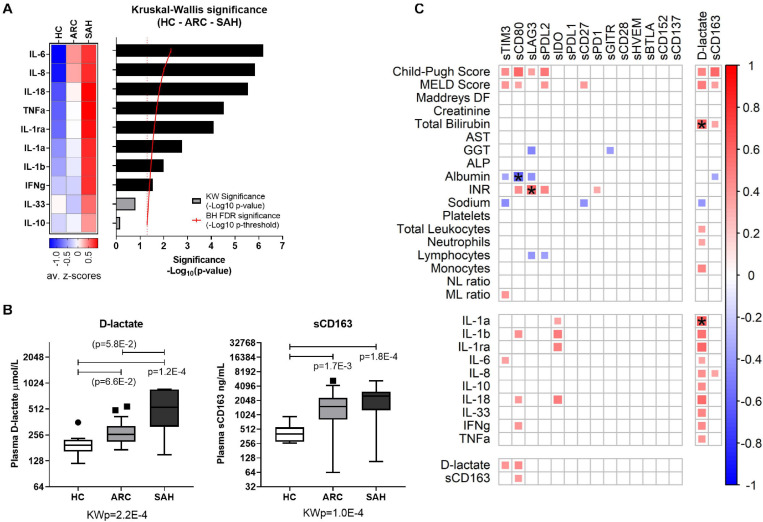
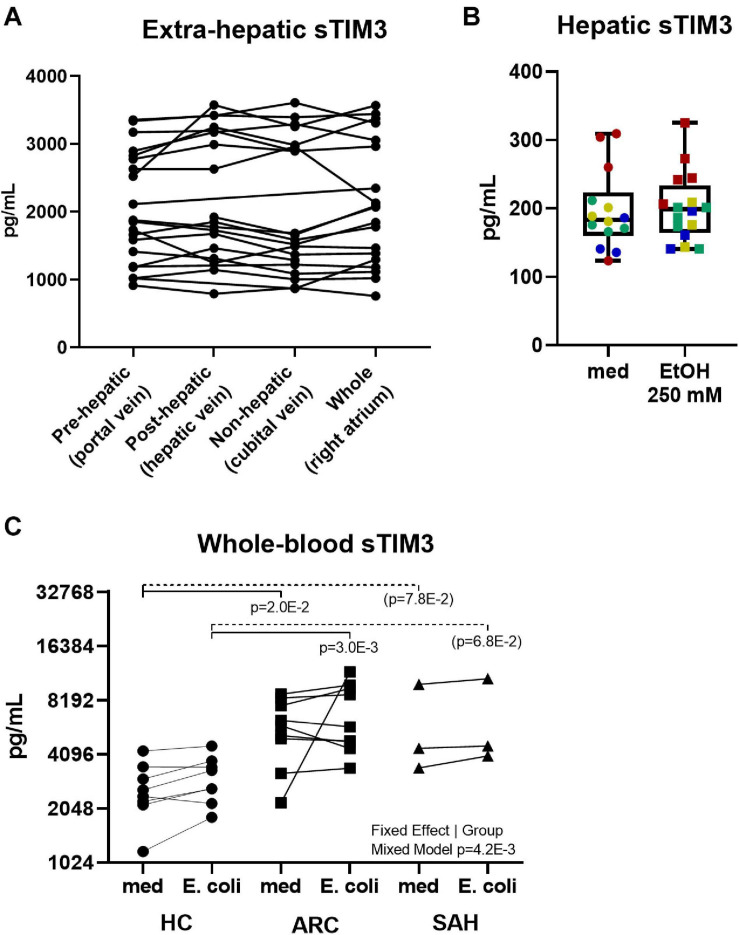
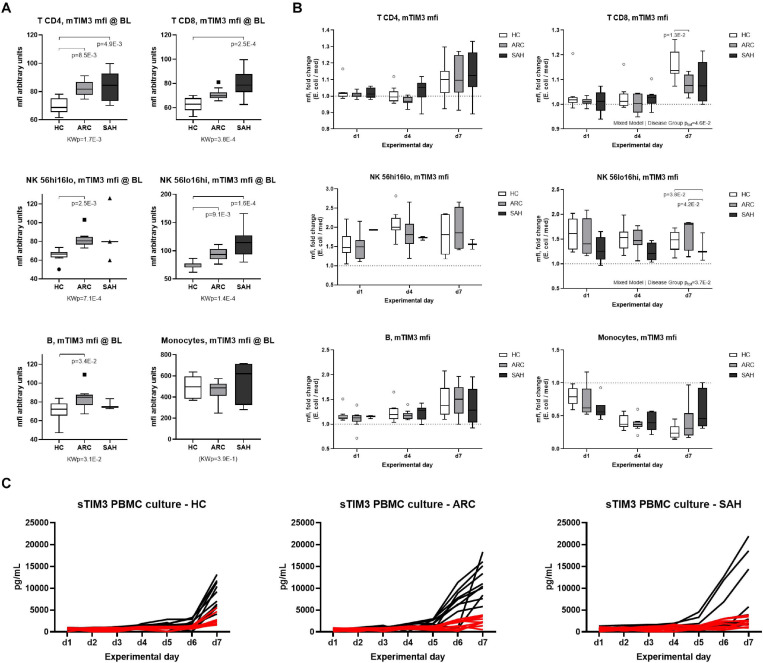
In Alcoholic Hepatitis (AH; = 19), alcohol-related cirrhosis (ARC; = 53) and healthy control (HC; = 27) subjects, we measured by Luminex technology (i) plasma levels of 16 soluble-CRs, 12 pro/anti-inflammatory cytokines and markers of gut bacterial translocation; (ii) pre-hepatic, post-hepatic and non-hepatic soluble-CR plasma levels in ARC patients undergoing TIPS; (iii) soluble-CRs production from ethanol-treated immunocompetent precision cut human liver slices (PCLS); (iv) whole-blood soluble-CR expression upon bacterial challenge. By FACS, we assessed the relationship between soluble-TIM3 and membrane-TIM3 and rescue of immunity in bacterial-challenged PBMCs.
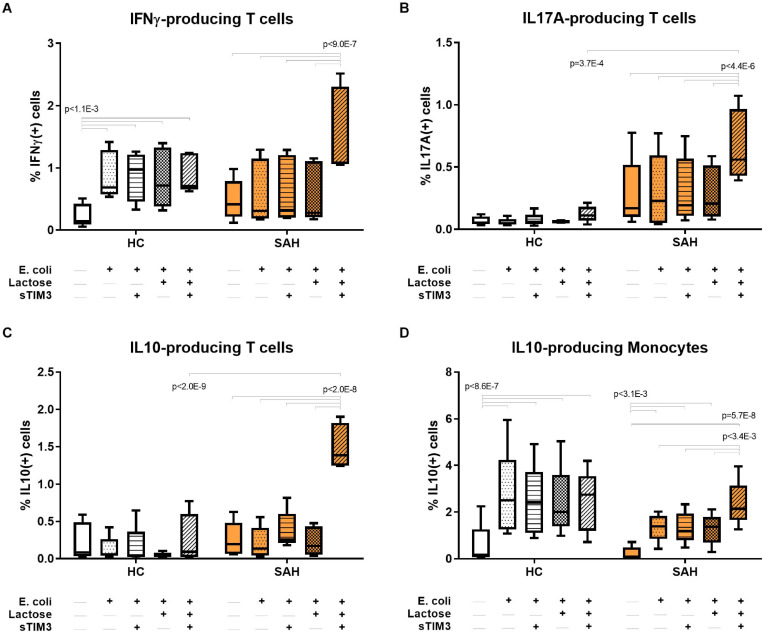
Soluble-TIM3 was the dominant plasma soluble-CR in ALD vs. HC ( = 0.00002) and multivariate analysis identified it as the main driver of differences between groups. Soluble-CRs were strongly correlated with pro-inflammatory cytokines, gut bacterial translocation markers and clinical indices of disease severity. Ethanol exposure or bacterial challenge did not induce soluble-TIM3 production from PCLS nor from whole-blood. Bacterial challenge prompted membrane-TIM3 hyperexpression on PBMCs from ALD patient's vs. HC ( < 0.002) and was inversely correlated with plasma soluble-TIM3 levels in matched patients. TIM3 ligands soluble-Galectin-9 and soluble-CEACAM1 were elevated in ALD plasma (AH > ARC; < 0.002). neutralization of Galectin-9 and soluble-CEACAM1 improved the defective anti-bacterial and anti-inflammatory cytokine production from -challenged PBMCs in ALD patients.
Alcohol-related liver disease patients exhibit supra-physiological plasma levels of soluble-TIM3, particularly those with greater disease severity. This is also associated with increased levels of soluble TIM3-ligands and membrane-TIM3 expression on immune cells. Soluble-TIM3 can block the TIM3-ligand synapse and improve anti-bacterial immunity; however, the increased levels of soluble TIM3-binding ligands in patients with ALD negate any potential immunostimulatory effects. We believe that anti-TIM3 neutralizing antibodies currently in Phase I clinical trials or soluble-TIM3 should be investigated further for their ability to enhance anti-bacterial immunity. These agents could potentially represent an innovative immune-based supportive approach to rescue anti-bacterial defenses in ALD patients.
免疫调节性检查点受体(CR)导致酒精性肝病(ALD)中出现严重的免疫麻痹,而中和抗菌性T细胞上的抑制性CR TIM3/PD1可挽救先天性和适应性抗菌免疫。最近描述的可溶性CR形式可在炎症条件下调节免疫,但可溶性TIM3、可溶性PD1和其他可溶性CR对ALD免疫紊乱的作用仍不清楚。
在酒精性肝炎(AH;n = 19)、酒精性肝硬化(ARC;n = 53)和健康对照(HC;n = 27)受试者中,我们通过Luminex技术测量:(i)16种可溶性CR、12种促炎/抗炎细胞因子和肠道细菌易位标志物的血浆水平;(ii)接受经颈静脉肝内门体分流术(TIPS)的ARC患者肝前、肝后和非肝性可溶性CR血浆水平;(iii)乙醇处理的具有免疫活性的精密切割人肝切片(PCLS)产生的可溶性CR;(iv)细菌攻击后全血可溶性CR表达。通过流式细胞术,我们评估了可溶性TIM3与膜TIM3之间的关系以及细菌攻击的外周血单核细胞(PBMC)中免疫的挽救情况。
与HC相比,可溶性TIM3是ALD中主要的血浆可溶性CR(P = 0.00002),多变量分析确定其为组间差异的主要驱动因素。可溶性CR与促炎细胞因子、肠道细菌易位标志物和疾病严重程度的临床指标密切相关。乙醇暴露或细菌攻击均未诱导PCLS或全血产生可溶性TIM3。与HC相比,细菌攻击促使ALD患者PBMC上的膜TIM3过度表达(P < 0.002),且与匹配患者的血浆可溶性TIM3水平呈负相关。TIM3配体可溶性半乳糖凝集素-9和可溶性癌胚抗原相关细胞黏附分子1在ALD血浆中升高(AH > ARC;P < 0.002)。中和半乳糖凝集素-9和可溶性癌胚抗原相关细胞黏附分子1可改善ALD患者中细菌攻击的PBMC产生的缺陷抗菌和抗炎细胞因子。
酒精性肝病患者表现出可溶性TIM3的超生理血浆水平,尤其是疾病严重程度较高的患者。这也与免疫细胞上可溶性TIM3配体水平升高和膜TIM3表达增加有关。可溶性TIM3可阻断TIM3配体突触并改善抗菌免疫;然而,ALD患者中可溶性TIM3结合配体水平的升高抵消了任何潜在的免疫刺激作用。我们认为,目前处于I期临床试验的抗TIM3中和抗体或可溶性TIM3应进一步研究其增强抗菌免疫的能力。这些药物可能代表一种创新的基于免疫的支持方法,以挽救ALD患者的抗菌防御。