Amendola Simone, von Wyl Agnes, Volken Thomas, Zysset Annina, Huber Marion, Dratva Julia
School of Applied Psychology, Zurich University of Applied Sciences, Zurich, Switzerland.
Department of Dynamic and Clinical Psychology, Faculty of Medicine and Psychology, Sapienza University of Rome, Rome, Italy.
Front Psychol. 2021 Mar 11;12:643171. doi: 10.3389/fpsyg.2021.643171. eCollection 2021.
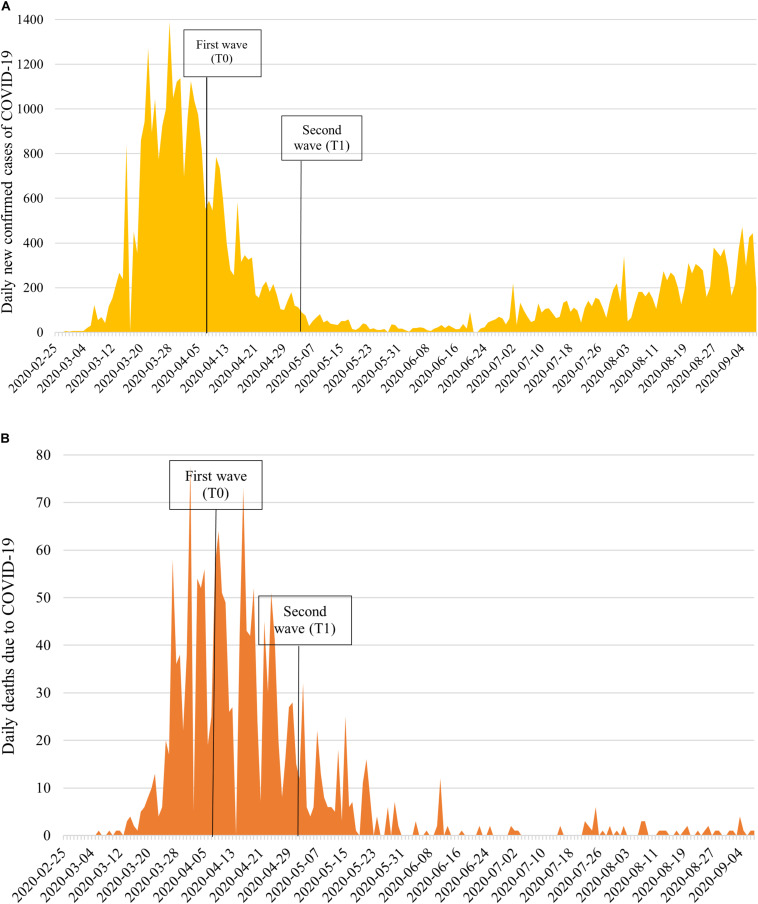
The COVID-19 pandemic and government measures implemented to counter the spread of the infection may be a major stressor affecting the psychological health of university students. This study aimed to explore how anxiety symptoms changed during the pandemic.
676 students (76% females) at Zurich University of Applied Sciences participated in the first (T0) and second (T1) survey waves. Anxiety symptoms were assessed using the Generalized Anxiety Disorder-Scale-7 (GAD-7). Risk and protective factors (e.g., COVID-19-related variables) were examined.
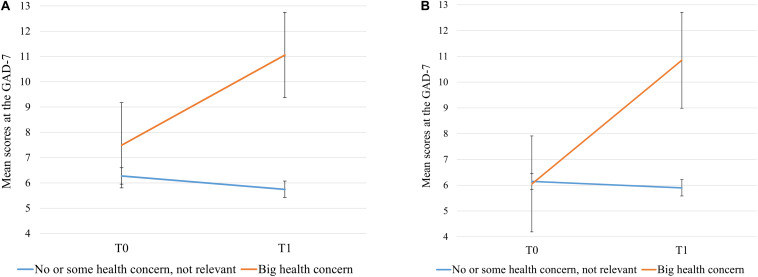
GAD-7 scores decreased significantly from T0 to T1 (mean change: -0.446, SE = 0.132, 95% CI: -0.706, -0.186, = -3.371, = 659, = 0.001). Participants with moderate-to-severe anxiety score were 20.2 and 15.6% at T0 and T1, respectively. The following positively predicted anxiety: older age, female gender, non-Swiss nationality, loneliness, participants' concern about their own health, and interaction between time and participants' concern about their own health. Resilience and social support negatively predicted anxiety.
Our findings provide information for public health measures and psychological interventions supporting the mental health of university students during the COVID-19 emergency.
2019年冠状病毒病(COVID-19)大流行以及为应对感染传播而实施的政府措施可能是影响大学生心理健康的主要压力源。本研究旨在探讨大流行期间焦虑症状如何变化。
苏黎世应用科学大学的676名学生(76%为女性)参与了第一轮(T0)和第二轮(T1)调查。使用广泛性焦虑障碍量表-7(GAD-7)评估焦虑症状。研究了风险和保护因素(如与COVID-19相关的变量)。
从T0到T1,GAD-7得分显著下降(平均变化:-0.446,标准误=0.132,95%置信区间:-0.706,-0.186,t=-3.371,自由度=659,P=0.001)。中度至重度焦虑得分的参与者在T0和T1时分别为20.2%和15.6%。以下因素正向预测焦虑:年龄较大、女性、非瑞士国籍、孤独感、参与者对自身健康的担忧以及时间与参与者对自身健康担忧之间的相互作用。心理韧性和社会支持负向预测焦虑。
我们的研究结果为在COVID-19紧急情况期间支持大学生心理健康的公共卫生措施和心理干预提供了信息。