Massafra Raffaella, Latorre Agnese, Fanizzi Annarita, Bellotti Roberto, Didonna Vittorio, Giotta Francesco, La Forgia Daniele, Nardone Annalisa, Pastena Maria, Ressa Cosmo Maurizio, Rinaldi Lucia, Russo Anna Orsola Maria, Tamborra Pasquale, Tangaro Sabina, Zito Alfredo, Lorusso Vito
Struttura Semplice Dipartimentale di Fisica Sanitaria, IRCCS Istituto Tumori "Giovanni Paolo II", Bari, Italy.
Unitá Opertiva Complessa di Oncologia Medica, IRCCS Istituto Tumori "Giovanni Paolo II", Bari, Italy.
Front Oncol. 2021 Mar 11;11:576007. doi: 10.3389/fonc.2021.576007. eCollection 2021.
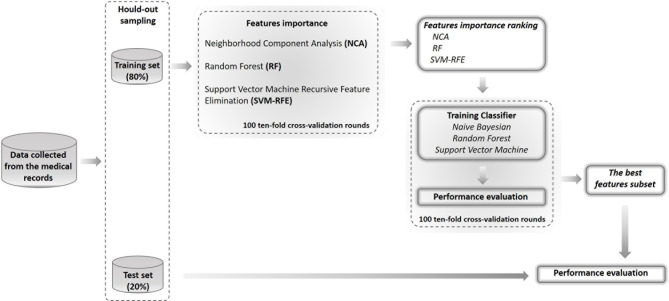
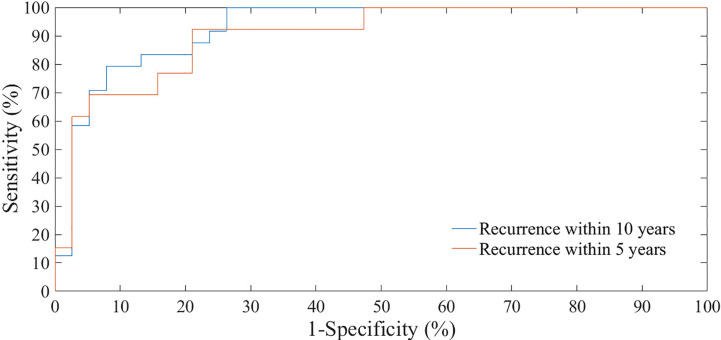
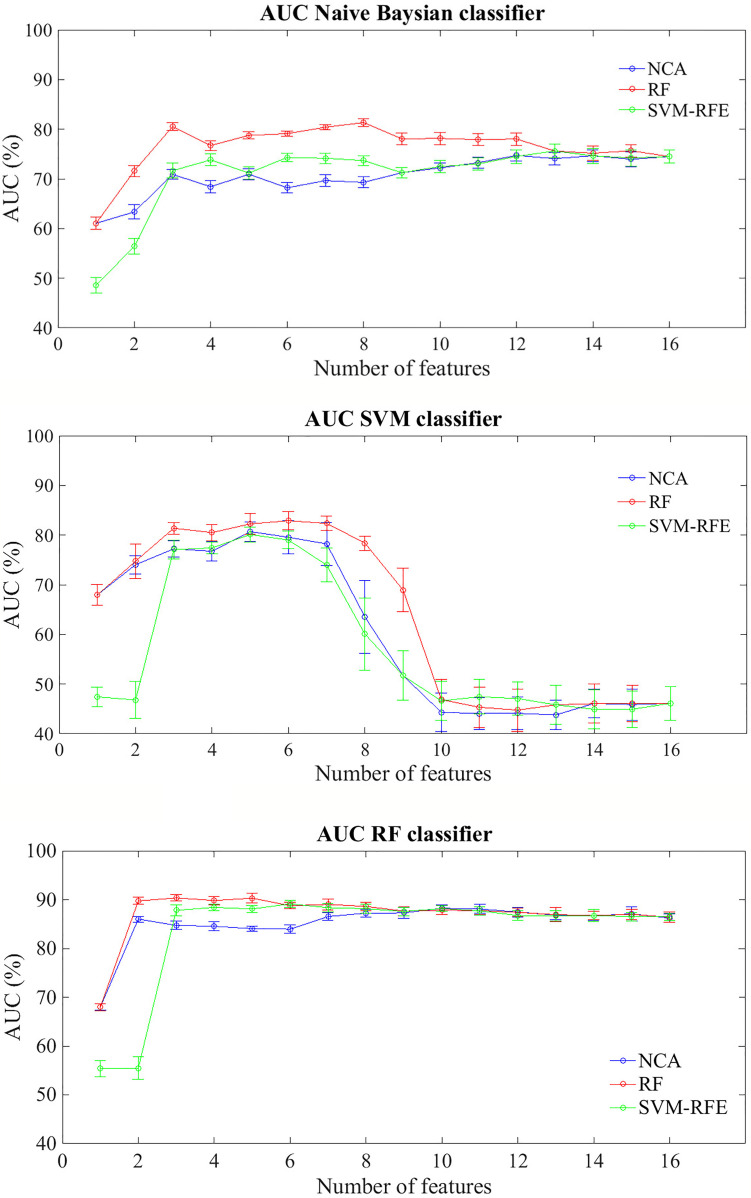
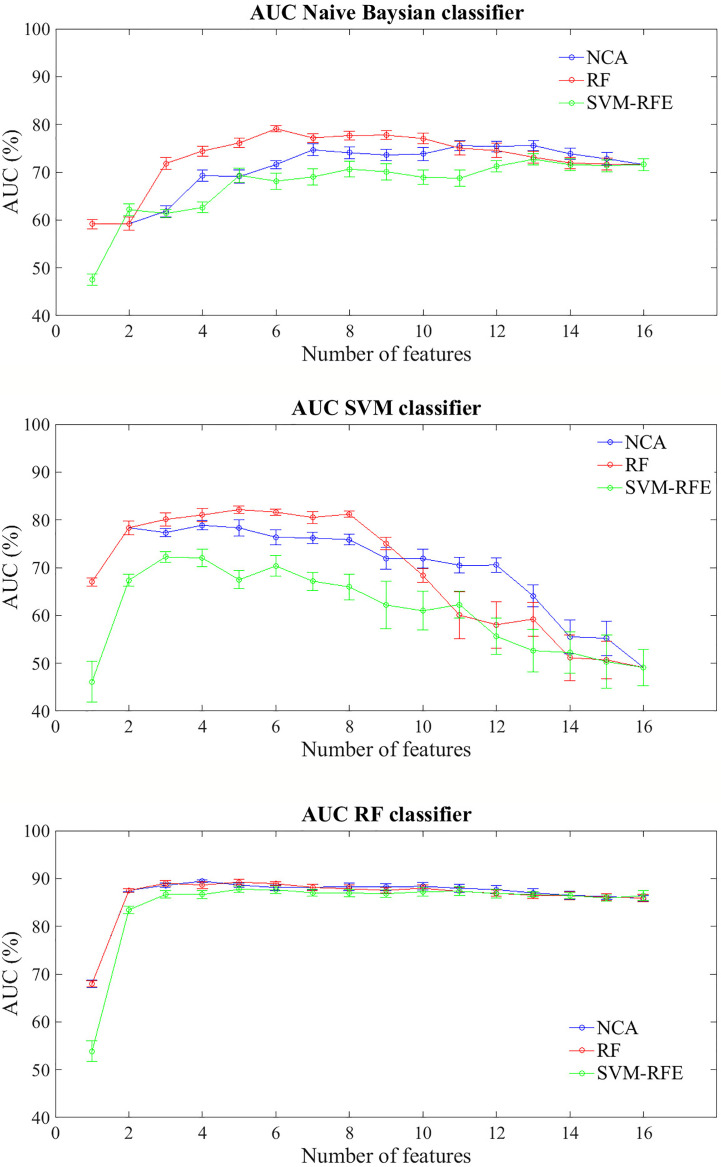
The mortality associated to breast cancer is in many cases related to metastasization and recurrence. Personalized treatment strategies are critical for the outcomes improvement of BC patients and the Clinical Decision Support Systems can have an important role in medical practice. In this paper, we present the preliminary results of a prediction model of the Breast Cancer Recurrence (BCR) within five and ten years after diagnosis. The main breast cancer-related and treatment-related features of 256 patients referred to Istituto Tumori "Giovanni Paolo II" of Bari (Italy) were used to train machine learning algorithms at the-state-of-the-art. Firstly, we implemented several feature importance techniques and then we evaluated the prediction performances of BCR within 5 and 10 years after the first diagnosis by means different classifiers. By using a small number of features, the models reached highly performing results both with reference to the BCR within 5 years and within 10 years with an accuracy of 77.50% and 80.39% and a sensitivity of 92.31% and 95.83% respectively, in the hold-out sample test. Despite validation studies are needed on larger samples, our results are promising for the development of a reliable prognostic supporting tool for clinicians in the definition of personalized treatment plans.
与乳腺癌相关的死亡率在许多情况下与转移和复发有关。个性化治疗策略对于改善乳腺癌患者的治疗结果至关重要,而临床决策支持系统在医疗实践中可以发挥重要作用。在本文中,我们展示了一个关于乳腺癌诊断后五年和十年内复发(BCR)预测模型的初步结果。来自意大利巴里“乔瓦尼·保罗二世”肿瘤研究所的256名患者的主要乳腺癌相关特征和治疗相关特征被用于训练当前最先进的机器学习算法。首先,我们实施了几种特征重要性技术,然后通过不同的分类器评估首次诊断后5年和10年内BCR的预测性能。通过使用少量特征,在留出样本测试中,这些模型在5年内和10年内的BCR预测方面均取得了高性能结果,准确率分别为77.50%和80.39%,灵敏度分别为92.31%和95.83%。尽管需要对更大样本进行验证研究,但我们的结果对于开发一种可靠的预后支持工具以帮助临床医生制定个性化治疗方案很有前景。