I.R.C.C.S. Istituto Tumori "Giovanni Paolo II", viale O. Flacco 65, Bari, Italy.
Dip. Interateneo di Fisica "M. Merlin", Università degli Studi di Bari "A. Moro", via G. Amendola 173, Bari, Italy.
BMC Bioinformatics. 2020 Mar 11;21(Suppl 2):91. doi: 10.1186/s12859-020-3358-4.
Screening programs use mammography as primary diagnostic tool for detecting breast cancer at an early stage. The diagnosis of some lesions, such as microcalcifications, is still difficult today for radiologists. In this paper, we proposed an automatic binary model for discriminating tissue in digital mammograms, as support tool for the radiologists. In particular, we compared the contribution of different methods on the feature selection process in terms of the learning performances and selected features.
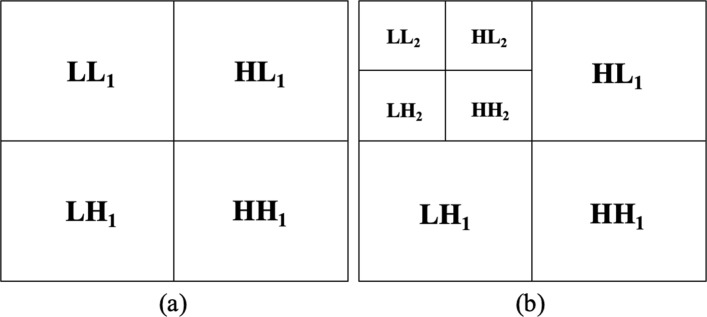
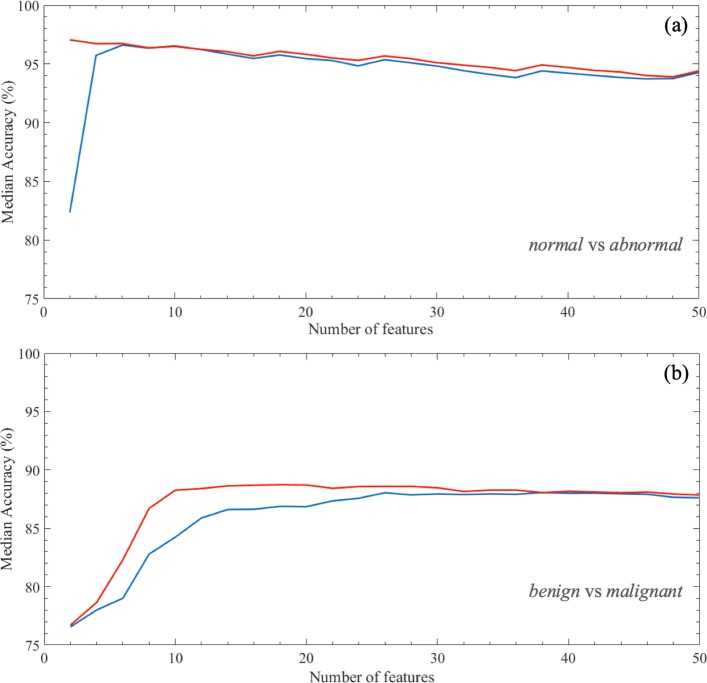
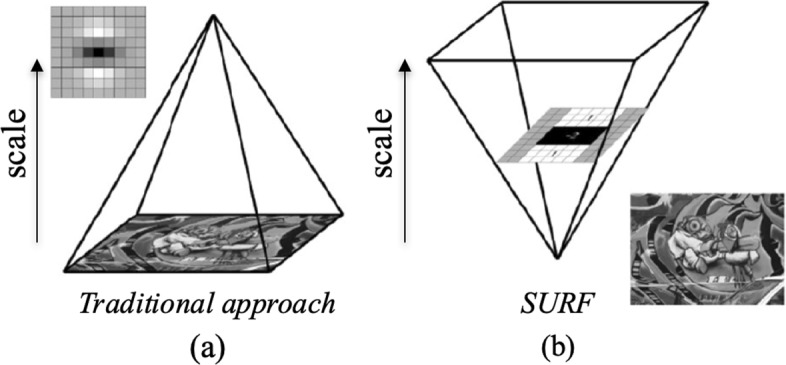
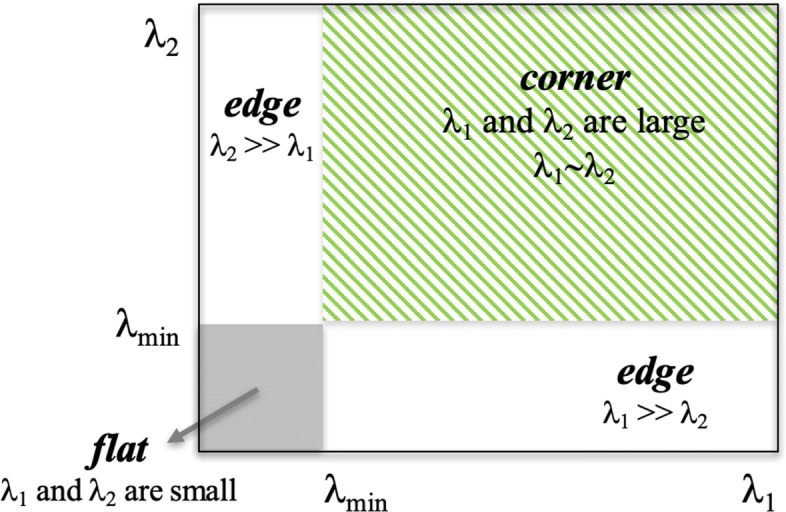
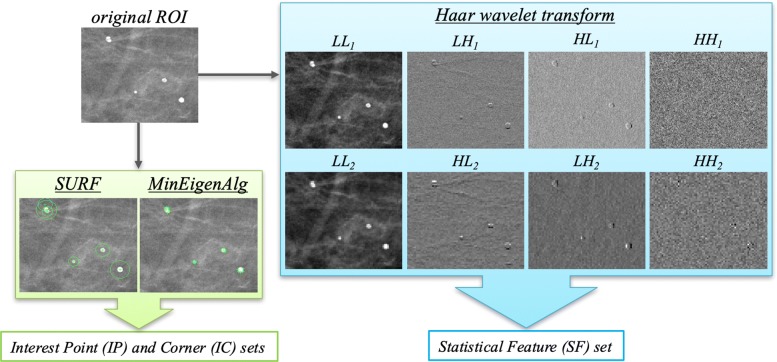
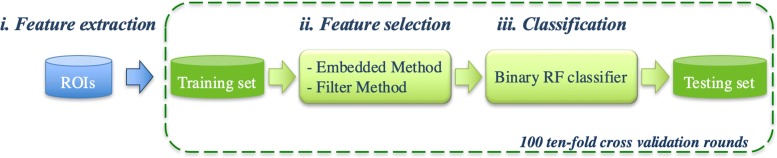
For each ROI, we extracted textural features on Haar wavelet decompositions and also interest points and corners detected by using Speeded Up Robust Feature (SURF) and Minimum Eigenvalue Algorithm (MinEigenAlg). Then a Random Forest binary classifier is trained on a subset of a sub-set features selected by two different kinds of feature selection techniques, such as filter and embedded methods. We tested the proposed model on 260 ROIs extracted from digital mammograms of the BCDR public database. The best prediction performance for the normal/abnormal and benign/malignant problems reaches a median AUC value of 98.16% and 92.08%, and an accuracy of 97.31% and 88.46%, respectively. The experimental result was comparable with related work performance.
The best performing result obtained with embedded method is more parsimonious than the filter one. The SURF and MinEigen algorithms provide a strong informative content useful for the characterization of microcalcification clusters.
筛查项目使用乳房 X 光摄影术作为早期发现乳腺癌的主要诊断工具。然而,对于放射科医生来说,某些病变(如微钙化)的诊断仍然具有挑战性。在本文中,我们提出了一种用于区分数字乳房 X 光片中组织的自动二分类模型,作为放射科医生的辅助工具。特别是,我们比较了不同方法在特征选择过程中对学习性能和所选特征的贡献。
对于每个感兴趣区域(ROI),我们在 Haar 小波分解上提取纹理特征,还使用加速稳健特征(SURF)和最小特征值算法(MinEigenAlg)检测感兴趣点和角点。然后,随机森林二分类器在通过两种不同的特征选择技术(如过滤法和嵌入式方法)选择的子集中的特征子集上进行训练。我们在 BCDR 公共数据库的数字乳房 X 光片中提取的 260 个 ROI 上测试了所提出的模型。正常/异常和良性/恶性问题的最佳预测性能达到了中位数 AUC 值 98.16%和 92.08%,准确性分别为 97.31%和 88.46%。实验结果与相关工作的性能相当。
嵌入式方法获得的最佳性能结果比过滤法更简洁。SURF 和 MinEigen 算法提供了对微钙化簇特征描述非常有用的丰富信息内容。